# Digital Sovereignty and Data Mesh 2.0: Building Border-Respecting Enterprise Data Architectures
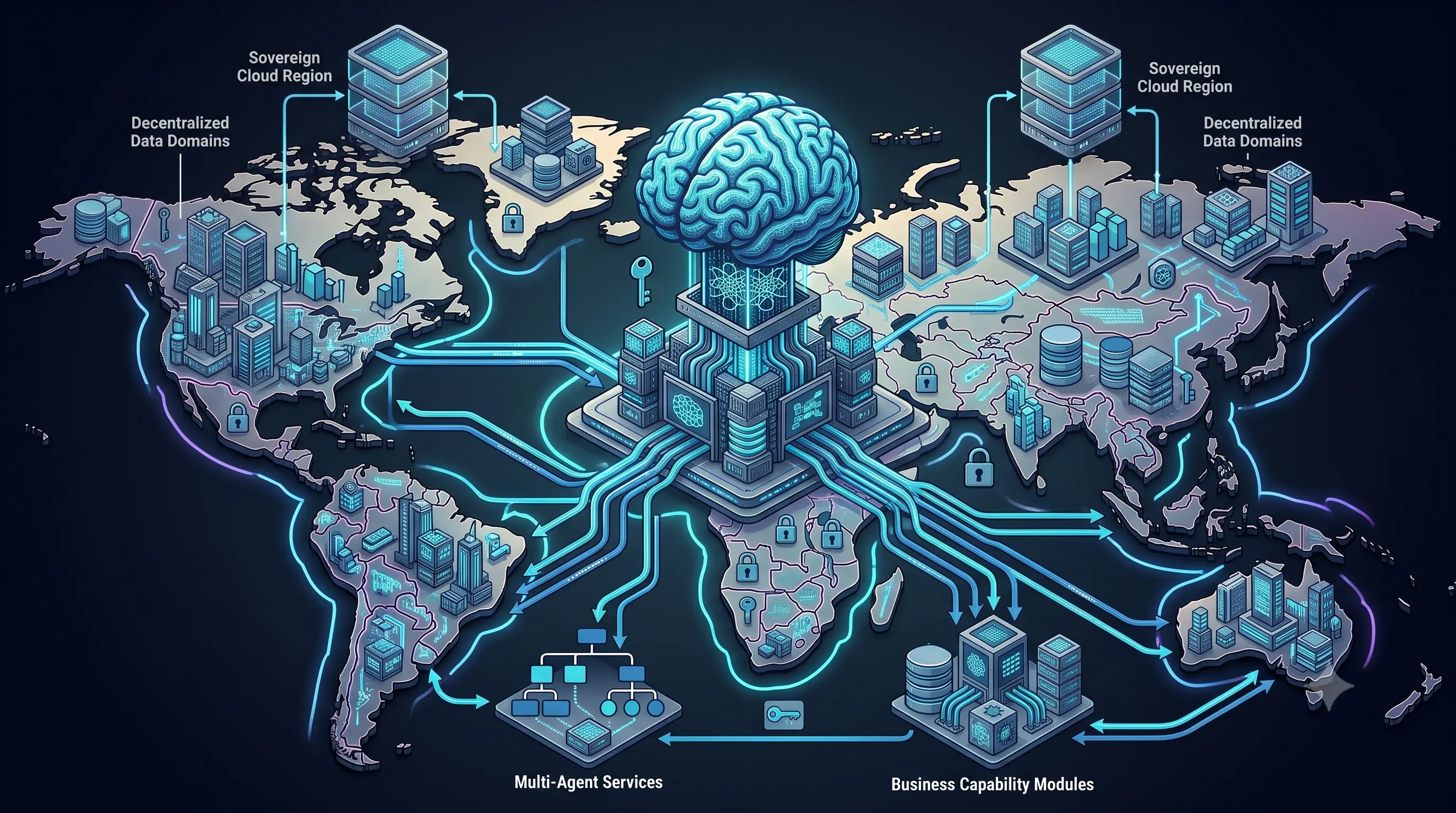
Global enterprises are increasingly challenged by regulations that dictate where data can be stored, processed, and accessed. As organizations expand across multiple countries and cloud environments, balancing compliance with innovation has become a strategic priority. Digital Sovereignty and Data Mesh 2.0 together provide a modern architectural approach that enables organizations to build scalable, intelligent, and compliant data platforms without compromising regional governance requirements.
Rather than treating compliance as a limitation, leading enterprises are designing architectures where sovereignty, security, and interoperability work together as core capabilities.
---
Understanding Digital Sovereignty
Digital Sovereignty refers to an organization's ability to maintain control over its digital assets according to regional laws, business policies, and security requirements. It extends beyond data residency by encompassing governance, identity, infrastructure, encryption, operational control, and regulatory compliance.
Modern enterprises must address challenges such as:
- ◆Regional data residency requirements
- ◆Cross-border privacy regulations
- ◆Industry-specific compliance frameworks
- ◆Secure cloud adoption
- ◆AI governance
- ◆Data ownership and accountability
Instead of relying on centralized global platforms, organizations increasingly deploy region-aware architectures that respect jurisdictional boundaries while maintaining enterprise-wide visibility.
---
What is Data Mesh 2.0?
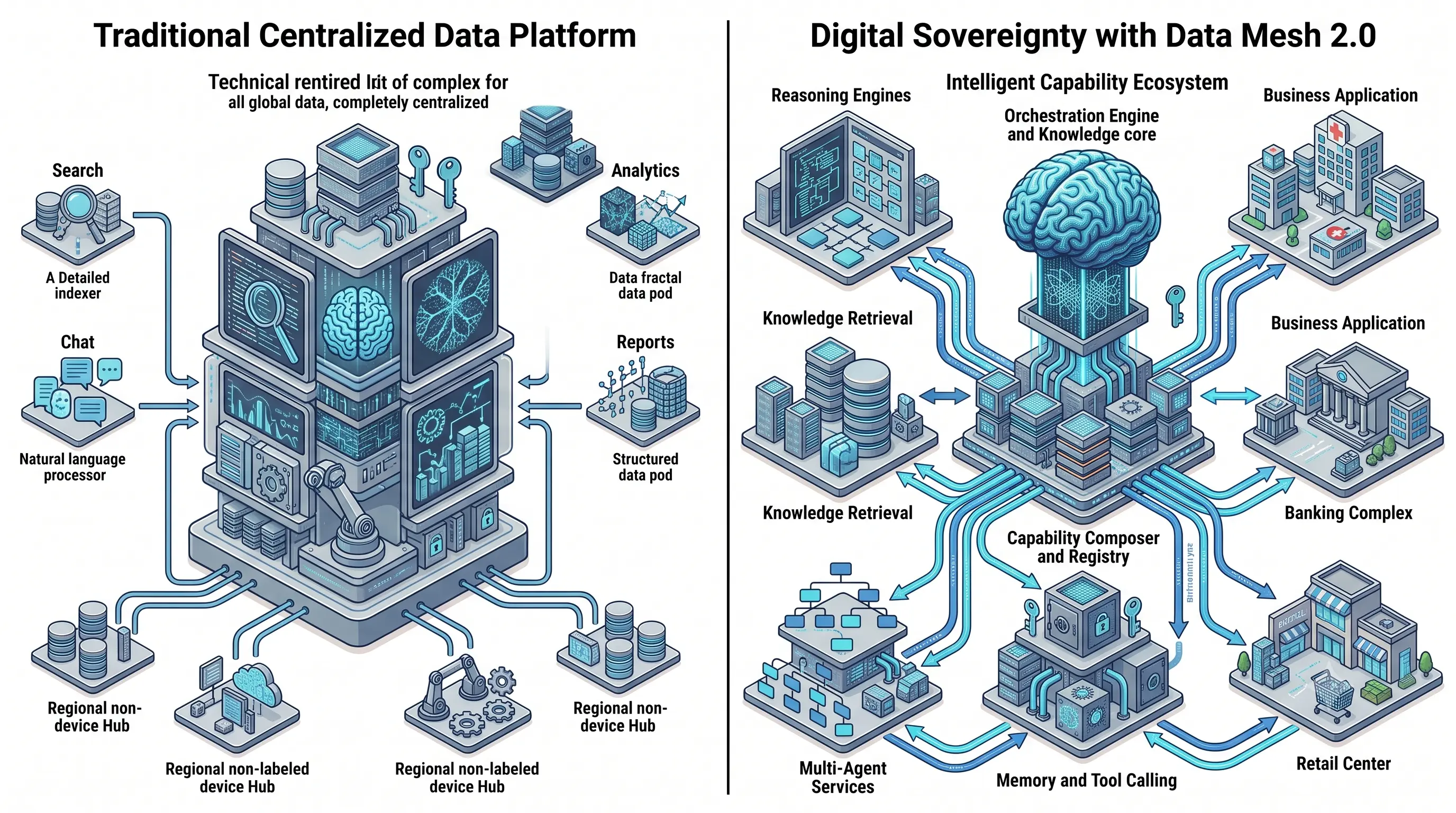
Data Mesh 2.0 evolves the original Data Mesh concept by combining decentralized data ownership with standardized governance and platform automation.
Each business domain owns and manages its own data products while following enterprise-wide standards for:
- ◆Metadata
- ◆Security
- ◆Access control
- ◆Quality
- ◆Discoverability
- ◆Policy enforcement
Unlike traditional centralized data lakes, Data Mesh 2.0 distributes ownership without sacrificing consistency.
The result is an architecture that scales organizationally as well as technically.
---
Why Traditional Centralized Data Platforms Struggle
Many enterprise data platforms were designed around centralized storage and governance. While effective for smaller environments, they become increasingly difficult to manage across multiple regions.
Common limitations include:
- ◆Increased compliance risks
- ◆Cross-border data transfer restrictions
- ◆Governance bottlenecks
- ◆Limited scalability
- ◆High operational complexity
- ◆Reduced business agility
These challenges become even more significant as AI workloads require access to trusted, high-quality, and regionally compliant datasets.
---
Core Components of a Sovereign Data Mesh
A modern Digital Sovereignty architecture typically includes several foundational capabilities.
Regional Data Domains
Each geographic region manages its own compliant data products while maintaining local ownership.
Federated Governance
Global governance standards ensure consistency without removing domain autonomy.
Policy-as-Code
Compliance rules become automated policies that enforce security, privacy, retention, and regulatory requirements across every domain.
Metadata Catalog
A centralized catalog enables teams to discover trusted datasets without moving sensitive information across borders.
Identity and Access Management
Unified authentication combined with regional authorization policies ensures secure data access.
Secure Interoperability Layer
Standardized APIs allow approved cross-domain collaboration while respecting residency constraints and governance policies.
---
Benefits for Enterprise AI
AI initiatives depend on trusted and well-governed enterprise data. Data Mesh 2.0 enables AI systems to consume regional data products without violating sovereignty requirements.
Organizations gain:
- ◆Higher-quality AI training data
- ◆Improved regulatory compliance
- ◆Faster AI deployment
- ◆Better governance
- ◆Reduced operational risk
- ◆Scalable enterprise intelligence
This architecture enables AI innovation while maintaining full visibility into how data is accessed and processed.
---
Best Practices for Implementation
Organizations planning Digital Sovereignty initiatives should focus on both technology and operating models.
Recommended practices include:
- ◆Define domain ownership early
- ◆Standardize governance across all regions
- ◆Automate compliance using Policy-as-Code
- ◆Build reusable data products
- ◆Implement centralized metadata management
- ◆Adopt Zero Trust security principles
- ◆Monitor compliance continuously
- ◆Design APIs for secure cross-border interoperability
These practices help organizations scale globally while remaining compliant with evolving regulations.
---
The Future of Border-Aware Data Architectures
As privacy regulations continue to evolve, enterprises will increasingly move toward architectures that combine decentralization with intelligent governance.
Future platforms will integrate:
- ◆AI-powered governance
- ◆Automated compliance monitoring
- ◆Sovereign cloud services
- ◆Federated AI platforms
- ◆Privacy-preserving analytics
- ◆Cross-region policy orchestration
Rather than centralizing everything, organizations will build intelligent ecosystems where data remains local while insights become globally accessible.
---
Conclusion
Digital Sovereignty and Data Mesh 2.0 represent the next generation of enterprise data architecture. Together they enable organizations to respect regional regulations, strengthen governance, improve security, and accelerate AI adoption without creating operational silos.
By combining decentralized ownership with enterprise-wide standards, businesses can build resilient, compliant, and future-ready platforms that support global innovation while respecting local boundaries.