Introduction
Containers have rapidly become a foundational technology for modern application deployment. Organizations are increasingly packaging microservices, web applications, REST APIs, background workers, and data processing services as lightweight Docker containers that can be deployed consistently across development, testing, and production environments.
As container adoption expands, managing individual Docker hosts becomes increasingly difficult. Enterprise workloads require orchestration capabilities including service scheduling, cluster management, service discovery, rolling updates, fault recovery, and load balancing.
Docker Swarm Mode, introduced as part of Docker Engine 1.12, addresses these operational challenges by integrating orchestration directly into the Docker platform. One of its most significant capabilities is the ingress routing system, commonly referred to as the routing mesh, which enables cluster-wide service access regardless of where individual containers are running.
As of December 2016, Docker Swarm Mode represents an important step toward simplifying production container orchestration for organizations seeking a native clustering solution without introducing a separate orchestration platform.
Industry Background
Container adoption continues accelerating across enterprise software development.
Organizations increasingly deploy:
- ◆Microservices
- ◆RESTful APIs
- ◆Web applications
- ◆Continuous integration workers
- ◆Event-driven services
- ◆Background processing systems
- ◆Cloud-native applications
Operating dozens or hundreds of containers across multiple servers requires automated orchestration rather than manual deployment.
Native clustering solutions seek to simplify this operational complexity.
The Business Problem
Organizations managing distributed container workloads commonly encounter:
- ◆Manual service placement
- ◆Host-specific networking
- ◆Complex load balancer configuration
- ◆Difficult service discovery
- ◆Uneven traffic distribution
- ◆Operational scaling challenges
- ◆Infrastructure management overhead
As container clusters grow, application availability increasingly depends upon reliable networking and automated traffic routing.
Understanding Docker Swarm Mode
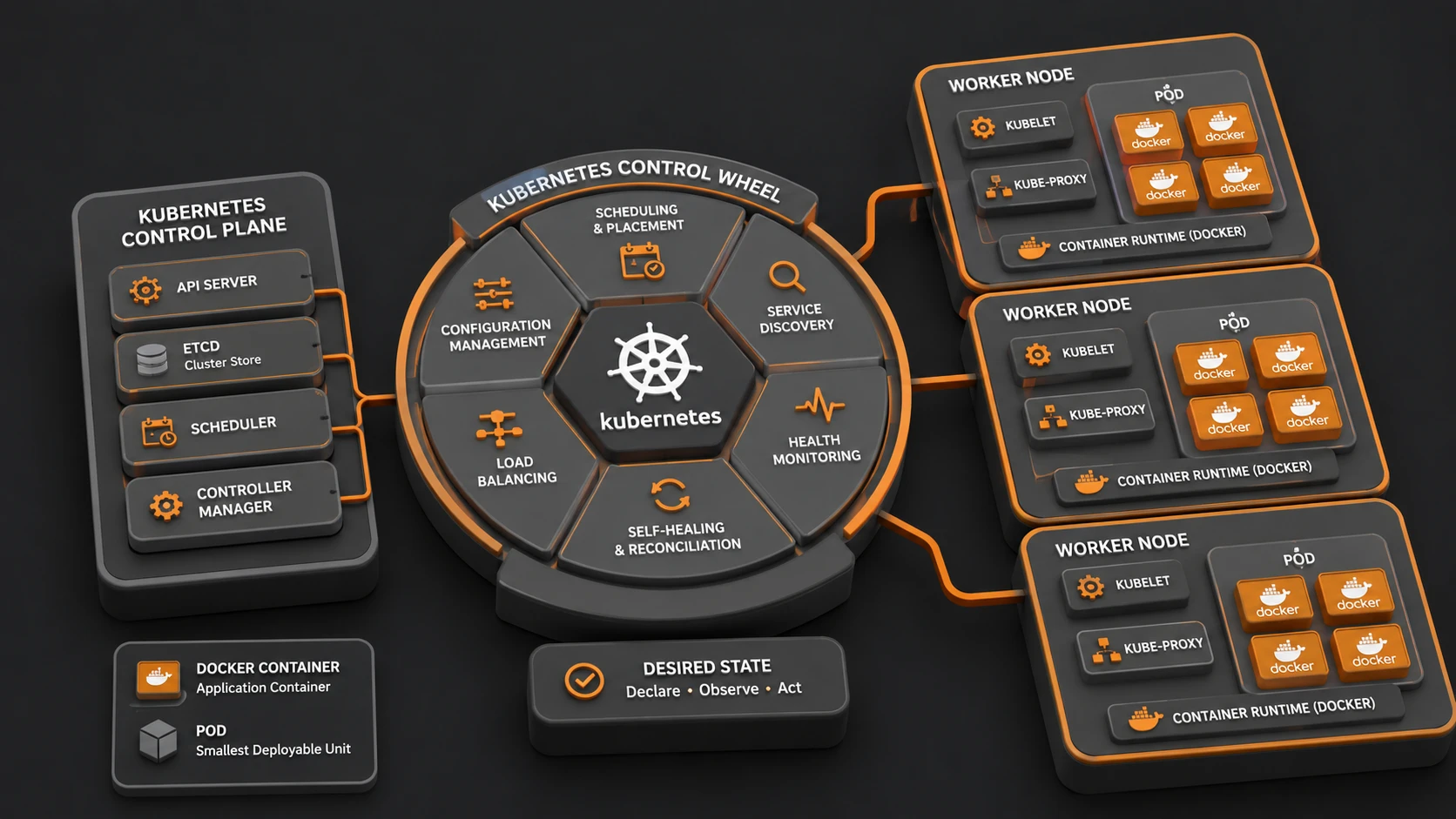
Docker Swarm Mode transforms multiple Docker hosts into a unified cluster.
The cluster consists of manager nodes responsible for orchestration and worker nodes responsible for running application services.
Major capabilities include:
- ◆Cluster management
- ◆Service scheduling
- ◆Desired state reconciliation
- ◆Service discovery
- ◆Rolling updates
- ◆Integrated networking
- ◆Ingress routing
These capabilities provide a unified operational model for distributed container deployment.
Core Architecture
| Component | Responsibility |
|---|---|
| Manager Node | Maintains cluster state and schedules services |
| Worker Node | Executes container workloads |
| Swarm Scheduler | Assigns tasks across the cluster |
| Routing Mesh | Distributes incoming requests |
| Overlay Network | Connects services across hosts |
| Service | Defines desired application state |
Together these components create a resilient platform for running distributed containerized applications.
Understanding Ingress Routing
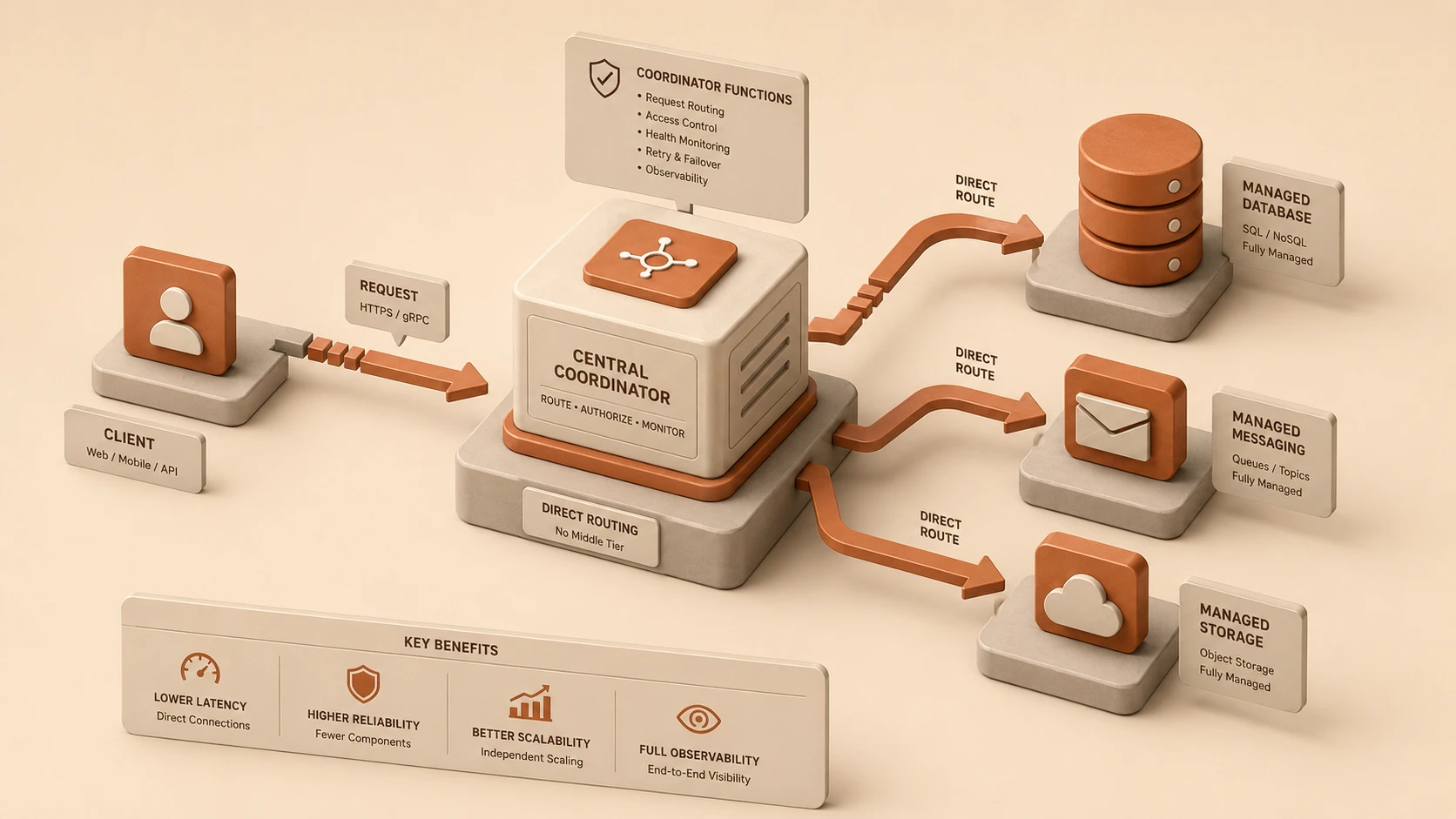
Ingress routing enables clients to access a service through published ports regardless of which node currently hosts the service instance.
Rather than exposing each container individually, Docker Swarm presents services through a cluster-wide routing layer.
This abstraction simplifies application deployment by allowing clients to communicate with the cluster instead of individual containers.
The Routing Mesh
# Creating a Docker Swarm overlay network and deploying a service with port routing
docker network create --driver overlay shivam-overlay-net

# Deploy service with 3 replicas. Traffic on port 80 will route to any node hosting container
docker service create \
  --name web-app-service \
  --network shivam-overlay-net \
  --replicas 3 \
  --publish published=80,target=80 \
  nginx:latest
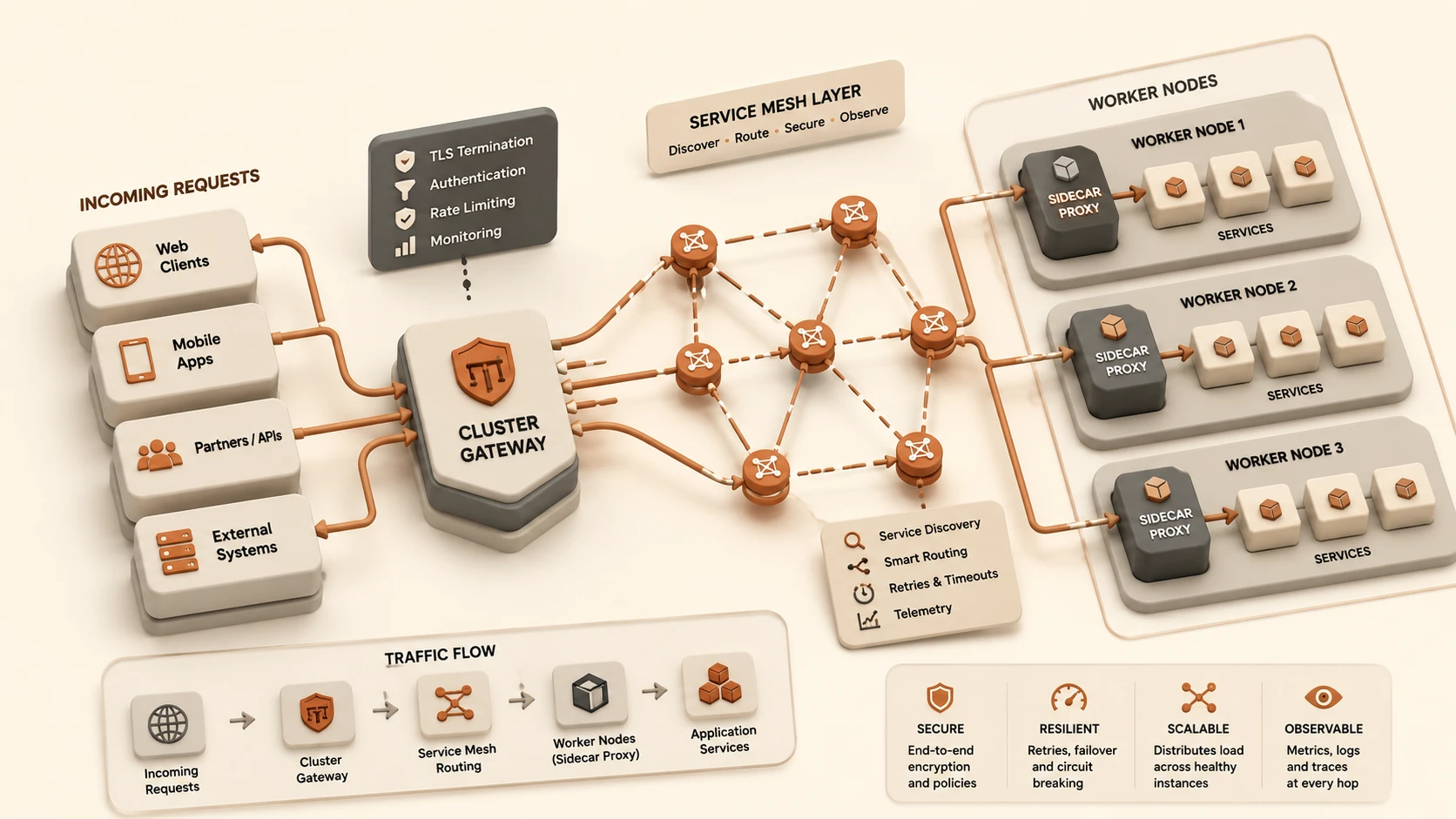
The routing mesh is the primary mechanism behind Docker Swarm ingress routing.
When a request reaches a published service port on any cluster node, Docker determines whether the requested service is running locally.
If the service is hosted elsewhere, the request is forwarded across the cluster to an available task.
A typical request lifecycle includes:
- 1.A client sends a request.
- 2.The request reaches any Swarm node.
- 3.The routing mesh receives the connection.
- 4.The appropriate service task is selected.
- 5.Traffic is forwarded through the overlay network.
- 6.The container processes the request.
- 7.The response returns to the client.
This process allows applications to remain accessible without requiring clients to know container locations.
Overlay Networking
Docker Swarm relies on overlay networking to enable communication across multiple hosts.
The overlay network provides:
- ◆Inter-container communication
- ◆Cluster-wide connectivity
- ◆Service isolation
- ◆Network abstraction
Applications communicate using logical service identities rather than physical host addresses.
Service Discovery
Each service deployed within the cluster receives a logical identity.
Instead of configuring applications with changing IP addresses, services locate one another through Docker's integrated service discovery mechanism.
Benefits include:
- ◆Reduced configuration complexity
- ◆Dynamic scaling
- ◆Simplified deployment
- ◆Improved operational flexibility
Service discovery complements ingress routing by removing dependencies on fixed infrastructure.
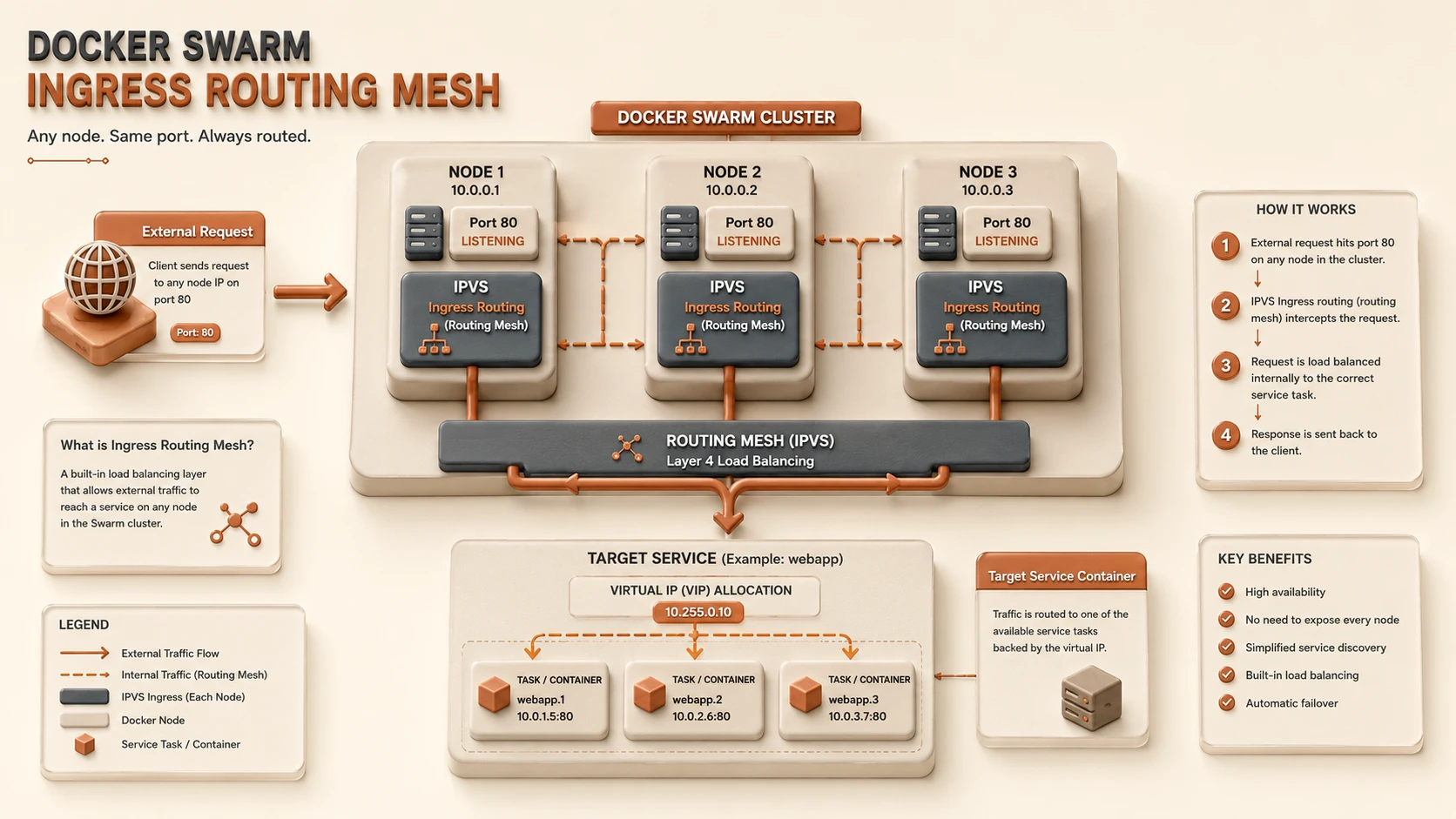
System architecture diagram and conceptual workflow layout for Docker Swarm Ingress Routing.
Scheduling and High Availability
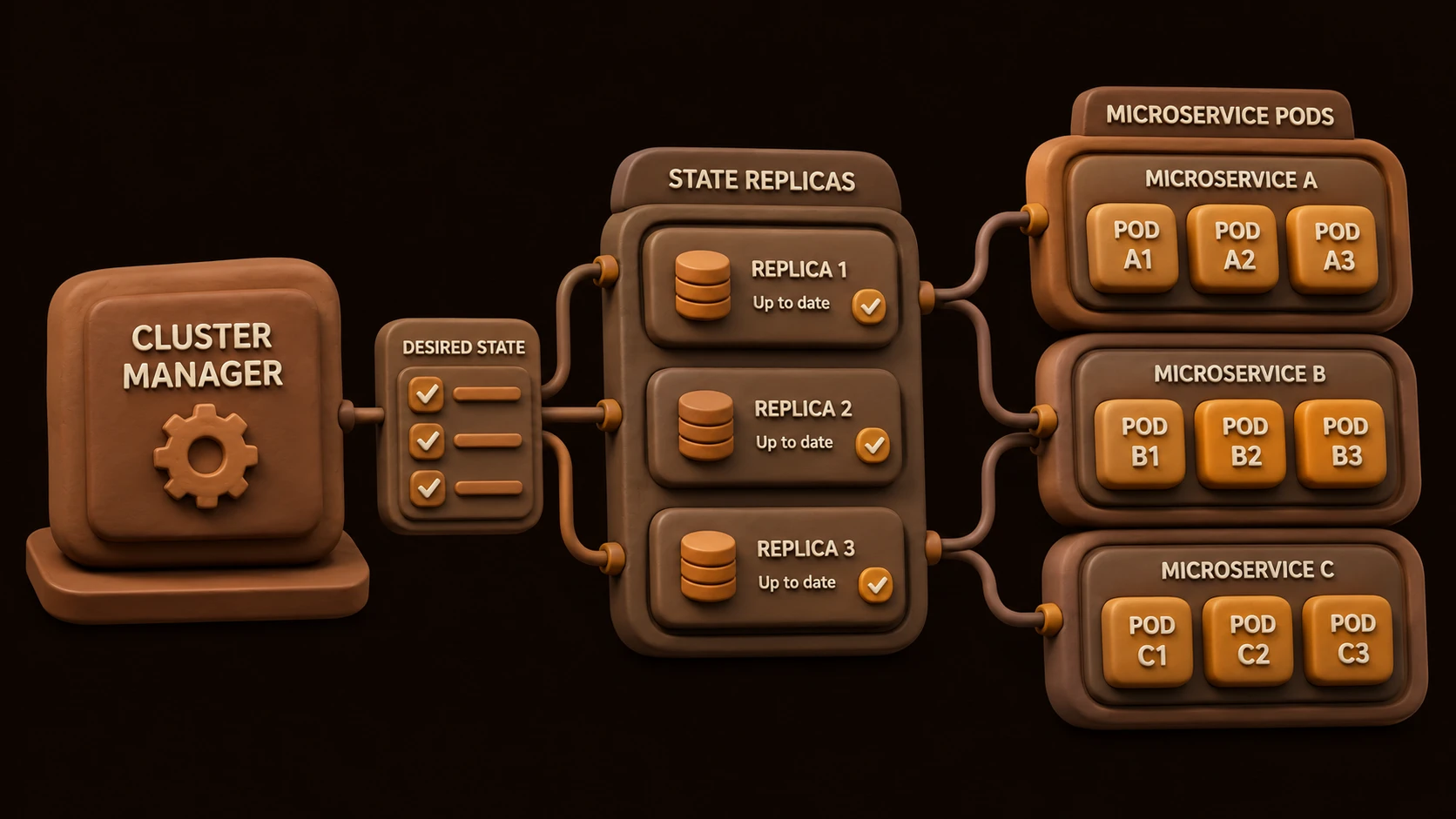
Manager nodes continuously monitor cluster state.
If a service instance becomes unavailable, the scheduler attempts to restore the desired number of running tasks.
This reconciliation model supports:
- ◆Service recovery
- ◆Cluster resilience
- ◆Automated task placement
- ◆Consistent application availability
Desired state management reduces manual operational intervention.
Enterprise Use Cases
| Scenario | Benefit |
|---|---|
| Microservices Platforms | Cluster-wide service routing |
| REST API Deployment | Simplified load balancing |
| SaaS Applications | Automatic service distribution |
| Internal Business Systems | High availability |
| Continuous Delivery Platforms | Simplified deployment |
| Cloud Infrastructure | Native container orchestration |
Organizations deploying distributed container workloads benefit from integrated routing and scheduling capabilities.
Performance Considerations
Development teams should evaluate:
- ◆Overlay network latency
- ◆Service startup time
- ◆Cluster size
- ◆Request throughput
- ◆Load balancing efficiency
- ◆Network bandwidth
Performance should be measured under representative production workloads.
Proper service sizing and cluster planning remain essential.
Security Considerations
Docker Swarm provides orchestration capabilities but secure deployment practices remain essential.
Organizations should continue implementing:
- ◆TLS-secured cluster communication
- ◆Role-based administrative access
- ◆Secure image repositories
- ◆Network segmentation
- ◆Least-privilege container execution
- ◆Continuous monitoring
Container orchestration complements, but does not replace, enterprise security architecture.
Scalability
Swarm Mode supports horizontal scaling through:
- ◆Dynamic service replication
- ◆Cluster-wide scheduling
- ◆Integrated load balancing
- ◆Overlay networking
- ◆Automatic service placement
Applications can scale by increasing service replicas without modifying client configuration.
Best Practices
Organizations evaluating Docker Swarm should:
- ◆Deploy multiple manager nodes for resilience.
- ◆Keep services stateless where practical.
- ◆Design applications for horizontal scaling.
- ◆Use overlay networks consistently.
- ◆Monitor cluster health continuously.
- ◆Automate deployments.
- ◆Validate rolling updates.
- ◆Document service dependencies.
Operational discipline remains critical as clusters expand.
Common Mistakes
Development teams should avoid:
- ◆Publishing unnecessary service ports.
- ◆Treating containers as persistent infrastructure.
- ◆Ignoring cluster monitoring.
- ◆Deploying stateful services without appropriate planning.
- ◆Assuming routing mesh replaces application-level resilience.
- ◆Performing manual service placement unnecessarily.
Successful container orchestration combines automated infrastructure with sound application architecture.
Technology Comparison
| Capability | Standalone Docker Engine | Docker Swarm Mode |
|---|---|---|
| Multi-Host Clustering | No | Yes |
| Native Scheduling | No | Yes |
| Service Discovery | Limited | Built in |
| Routing Mesh | No | Yes |
| Rolling Updates | Manual | Built in |
| Cluster Load Balancing | External configuration | Integrated ingress routing |
Docker Swarm Mode extends Docker Engine with native orchestration capabilities suitable for distributed production deployments.
Adoption Strategy
Organizations should adopt Swarm Mode incrementally.
A practical migration strategy includes:
- 1.Build a small Swarm cluster.
- 2.Deploy stateless services.
- 3.Configure overlay networking.
- 4.Publish services using ingress routing.
- 5.Validate service discovery.
- 6.Test node failures and service recovery.
- 7.Expand deployment after operational validation.
Pilot environments provide valuable operational experience before production rollout.
Limitations
As of December 2016, organizations should recognize several considerations.
Current observations include:
- ◆Swarm Mode remains a relatively new orchestration platform.
- ◆Operational best practices continue evolving.
- ◆Stateful workloads require careful architectural planning.
- ◆Large production environments should validate networking and operational characteristics before broad deployment.
Container orchestration should be introduced alongside appropriate monitoring, automation, and operational governance.
Looking Ahead
Docker Swarm Mode demonstrates Docker's commitment to making container orchestration a native capability of the Docker platform. By integrating service scheduling, overlay networking, service discovery, rolling updates, and ingress routing into Docker Engine, organizations gain a cohesive platform for managing distributed container workloads.
As of December 2016, enterprise architects should evaluate Swarm Mode for microservices, REST APIs, cloud-native applications, and SaaS platforms where automated scheduling and cluster-wide routing can simplify operations. Organizations that combine stateless service design, automated deployment pipelines, and disciplined infrastructure management will be well positioned to benefit from Docker's evolving orchestration capabilities.