Introduction
Responsive Web Design has rapidly evolved from an experimental concept into a practical requirement for enterprise web applications. Organizations are increasingly expected to deliver consistent user experiences across desktop computers, laptops, tablets, and smartphones without maintaining multiple versions of the same application.
While CSS remains the foundation of web presentation, growing stylesheet complexity has exposed several limitations in maintaining large-scale front-end projects. CSS preprocessors such as SASS and LESS have emerged to address these challenges by introducing variables, reusable code, modular architecture, and programmatic features while compiling into standard CSS understood by all browsers.
From the perspective of October 2012, these tools represent an important evolution in front-end engineering rather than a replacement for CSS itself.
Industry Background
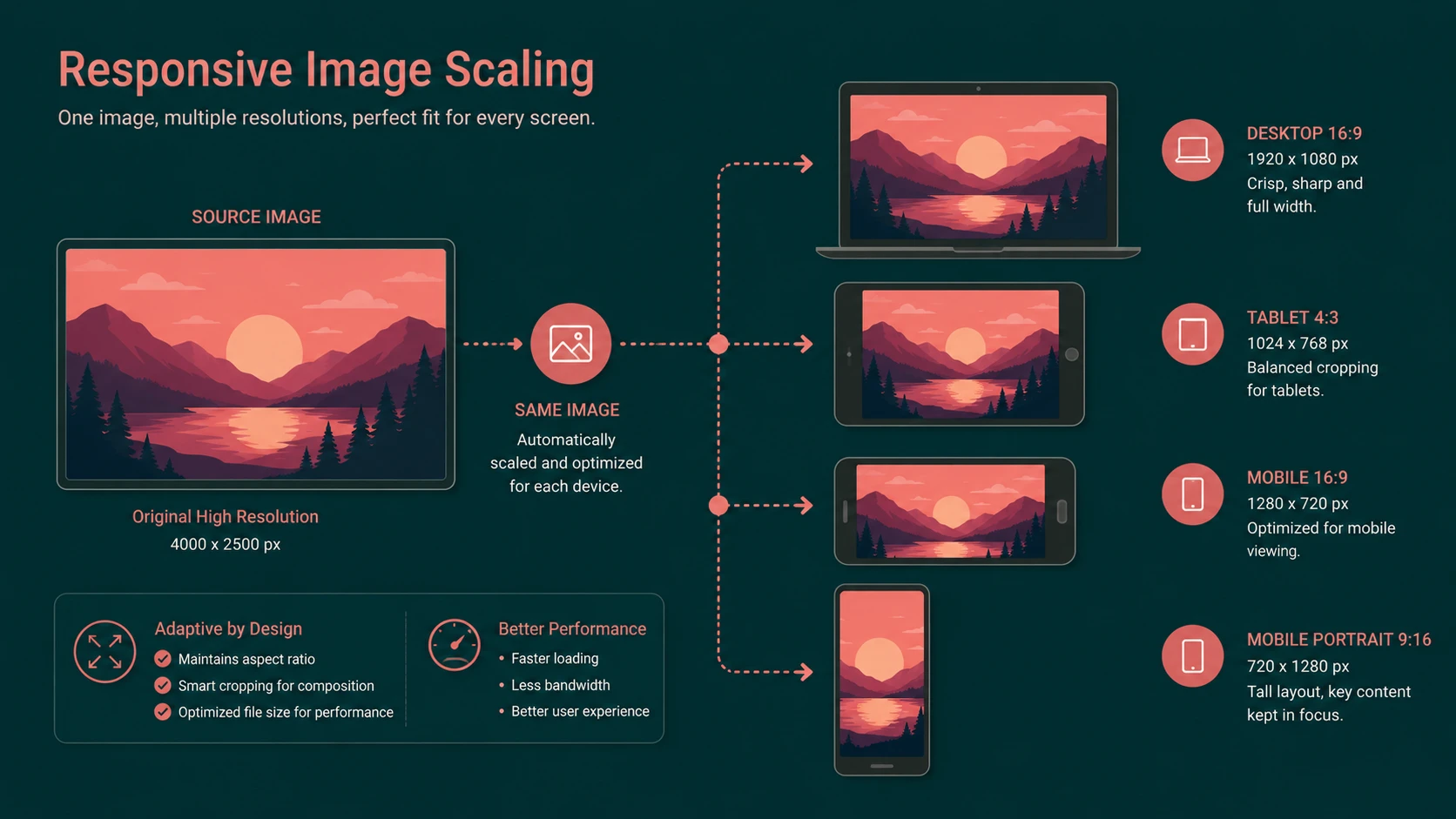
The rapid adoption of smartphones and tablets has significantly changed how websites are designed. Fixed-width layouts are giving way to fluid grids, flexible images, and media queries that adapt interfaces to different screen sizes.
Enterprise web applications increasingly require:
- ◆Multi-device compatibility.
- ◆Consistent branding.
- ◆Maintainable design systems.
- ◆Faster front-end development.
- ◆Reduced stylesheet duplication.
- ◆Easier long-term maintenance.
As responsive design projects grow, traditional CSS often becomes difficult to organize due to repeated values, duplicated selectors, and limited code reuse.
CSS preprocessors aim to solve these engineering challenges while preserving browser compatibility through compiled CSS output.
The Business Problem
Large enterprise websites frequently contain thousands of lines of CSS spread across numerous files.
Development teams commonly encounter:
- ◆Duplicate style definitions.
- ◆Inconsistent color usage.
- ◆Repeated spacing values.
- ◆Difficult stylesheet maintenance.
- ◆Complex responsive layouts.
- ◆Poor collaboration between designers and developers.
Without structured tooling, maintaining a consistent design language across large applications becomes increasingly difficult and expensive.
Understanding the Technology
CSS preprocessors introduce programming concepts into stylesheet development.
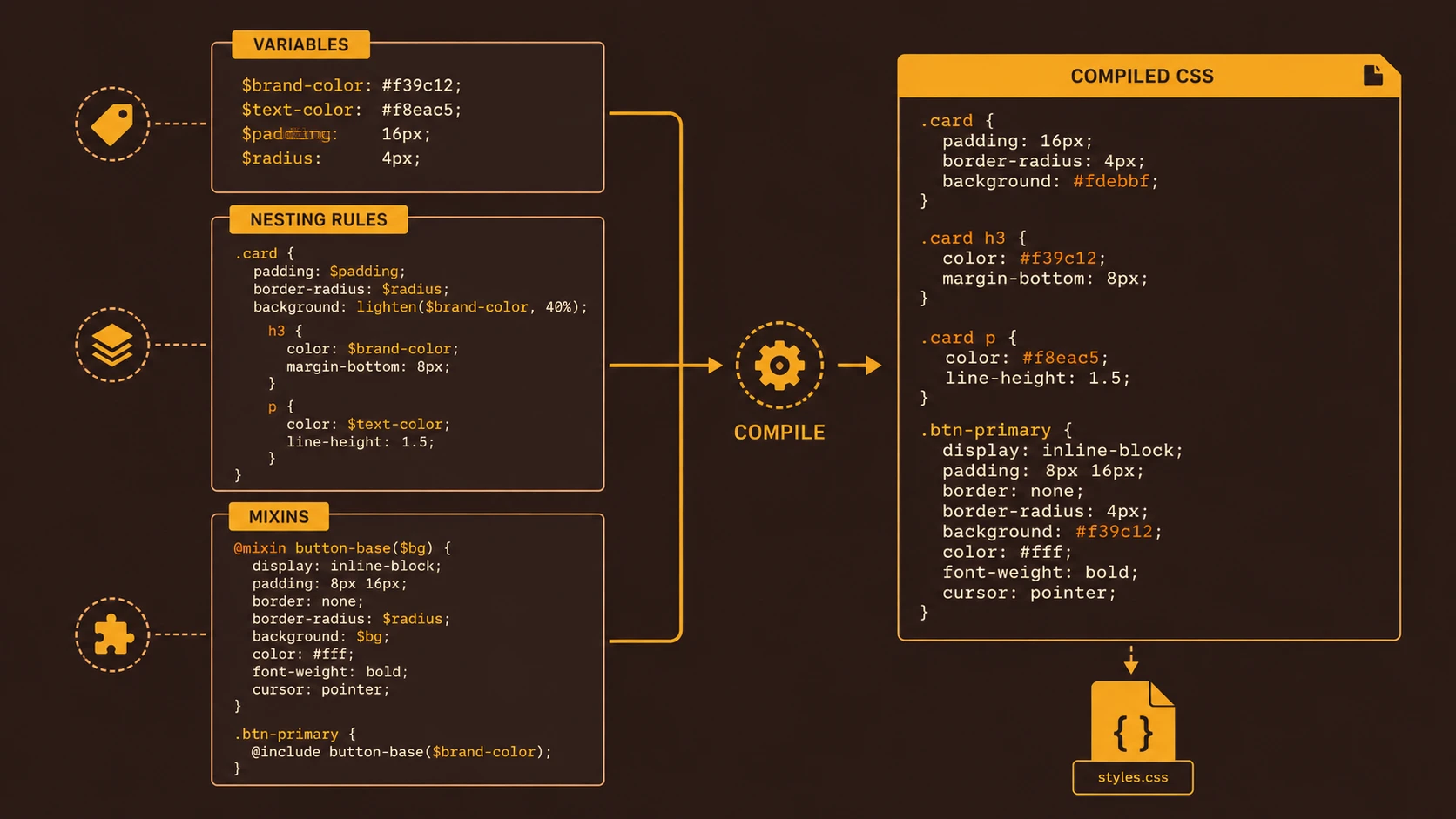
Instead of writing only plain CSS, developers can define reusable components that are compiled into standard CSS during the build process.
Typical language features include:
- ◆Variables.
- ◆Mixins.
- ◆Nested rules.
- ◆Mathematical operations.
- ◆Partial files.
- ◆Functions.
- ◆Imports.
The generated CSS remains compatible with existing browsers, requiring no browser modifications.
Core Architecture
The preprocessing workflow separates authoring from deployment.
| Component | Responsibility |
|---|---|
| Source Files | SASS or LESS stylesheets |
| Preprocessor Compiler | Converts source into CSS |
| Generated CSS | Browser-compatible output |
| Browser | Renders user interface |
| HTML Documents | Reference compiled stylesheets |
Developers edit source files while deployment environments distribute compiled CSS.
Key Features
Variables
Variables centralize commonly used values such as colors, fonts, and spacing, reducing duplication.
Mixins
Reusable style definitions eliminate repetitive CSS declarations and improve consistency.
Nested Selectors
Nested rules improve readability by reflecting HTML hierarchy more naturally.
Modular Organization
Large stylesheets can be divided into reusable partial files, making maintenance easier.
Mathematical Expressions
Simple calculations reduce manual adjustments when maintaining responsive layouts.
Imports
Projects can be organized into logical modules rather than large monolithic stylesheets.
How It Works
The preprocessing workflow follows a straightforward compilation process.
Developer
      |
SASS / LESS Source
      |
Preprocessor Compiler
      |
Generated CSS
      |
Web Server
      |
Browser
The browser remains unaware of the preprocessing stage and simply renders standard CSS.
Enterprise Use Cases
CSS preprocessors provide value across numerous enterprise scenarios.
Corporate Websites
Brand guidelines become easier to enforce using centralized variables and reusable components.
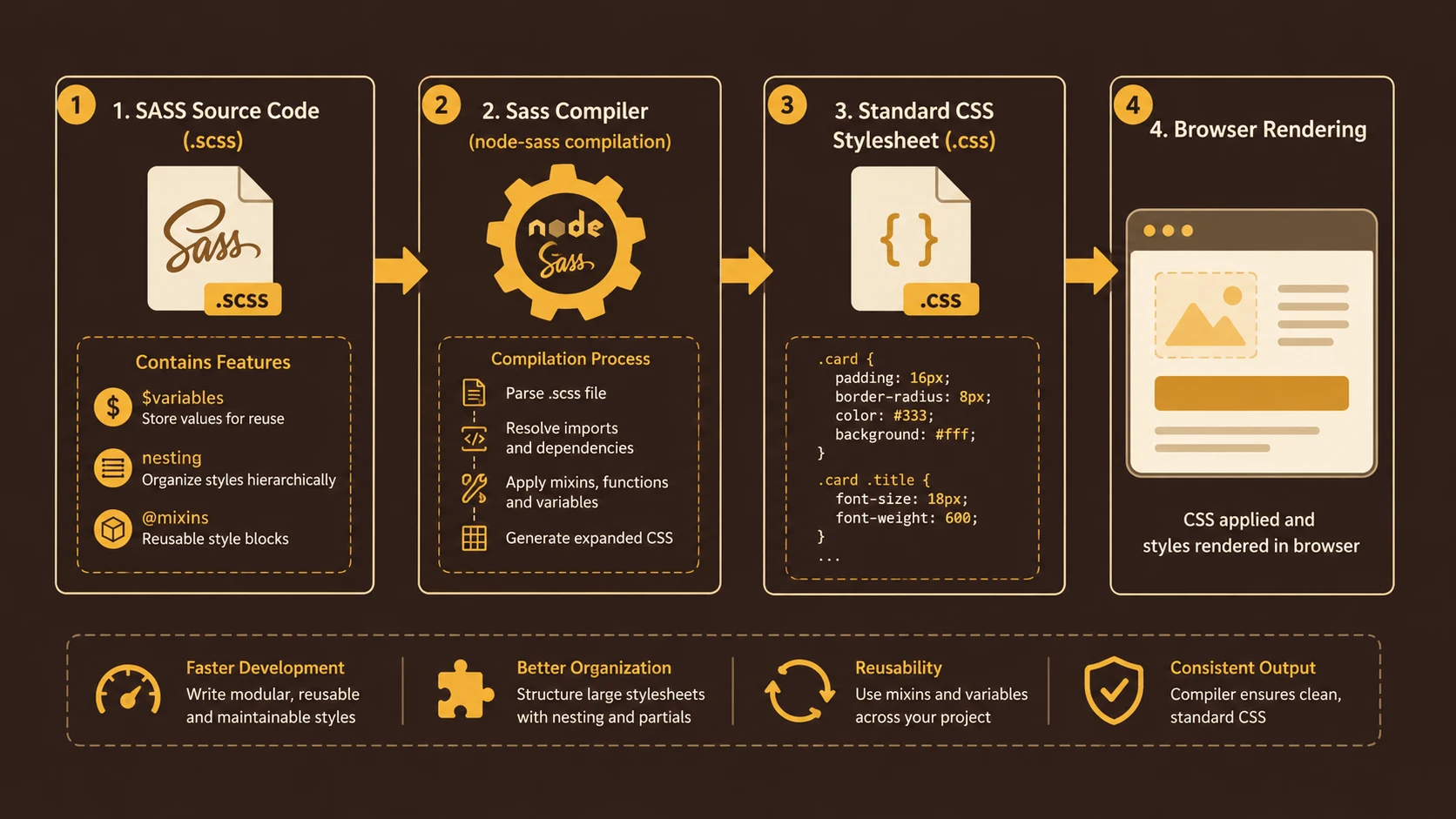
System architecture diagram and conceptual workflow layout for Responsive Design Tools.
Responsive Portals
Media queries and reusable layouts simplify multi-device development.
Large Web Applications
Modular stylesheets improve collaboration among multiple front-end developers.
Software-as-a-Service Platforms
Reusable themes reduce duplication across multiple products.
Design Standardization
Organizations can establish common styling conventions that simplify future development.
Performance Considerations
Preprocessing occurs during development rather than in the browser.
Performance considerations include:
- ◆Build time.
- ◆CSS output size.
- ◆Selector complexity.
- ◆Network transfer size.
- ◆Browser rendering efficiency.
Generated CSS should be reviewed to ensure that abstraction within source files does not produce unnecessarily large output.
Security Considerations
CSS preprocessors introduce minimal direct security concerns because browsers receive only compiled CSS.
Nevertheless, organizations should continue following established web security practices.
Recommended considerations include:
- ◆Secure deployment pipelines.
- ◆Controlled access to source repositories.
- ◆Validation of third-party libraries.
- ◆Consistent build automation.
Security responsibilities remain largely within application architecture rather than stylesheet generation.
Scalability
One of the primary advantages of preprocessors is improved scalability.
Benefits include:
- ◆Modular stylesheet architecture.
- ◆Reusable components.
- ◆Centralized configuration.
- ◆Easier maintenance.
- ◆Improved team collaboration.
These characteristics become increasingly valuable as projects expand across multiple applications and development teams.
Best Practices
Organizations adopting CSS preprocessors should:
- ◆Organize styles into logical modules.
- ◆Store common values as variables.
- ◆Limit selector nesting depth.
- ◆Build reusable mixins.
- ◆Maintain consistent naming conventions.
- ◆Review generated CSS regularly.
- ◆Integrate compilation into build processes.
Following disciplined project organization prevents stylesheet complexity from growing unnecessarily.
Common Mistakes
| Mistake | Business Impact |
|---|---|
| Excessive nesting | Difficult-to-maintain CSS |
| Overusing mixins | Larger generated stylesheets |
| Poor file organization | Reduced maintainability |
| Duplicating variables | Inconsistent branding |
| Ignoring compiled output | Unexpected browser behavior |
Proper governance ensures preprocessors improve maintainability rather than introducing unnecessary complexity.
Technology Comparison
| Feature | SASS | LESS | Traditional CSS |
|---|---|---|---|
| Variables | Yes | Yes | No |
| Mixins | Yes | Yes | No |
| Nested Rules | Yes | Yes | No |
| Mathematical Operations | Yes | Yes | Limited |
| Modular Imports | Yes | Yes | Basic CSS imports |
| Compilation Required | Yes | Yes | No |
Both SASS and LESS significantly extend CSS authoring capabilities while maintaining compatibility through compiled output.
Adoption Strategy
Organizations evaluating preprocessors should adopt them gradually.
Recommended approach:
- 1.Introduce preprocessing for new projects.
- 2.Define shared variables for branding.
- 3.Modularize existing stylesheets.
- 4.Integrate compilation into build automation.
- 5.Train front-end development teams.
- 6.Establish stylesheet coding standards.
Incremental adoption minimizes migration risk while improving long-term maintainability.
Limitations
Despite their advantages, preprocessors introduce several considerations.
- ◆Additional build steps are required.
- ◆Teams must learn new syntax and workflows.
- ◆Debugging generated CSS may require understanding source mappings and compiled output.
- ◆Existing projects may require restructuring.
- ◆Tooling ecosystems continue to evolve.
Organizations should balance productivity gains against the additional development workflow.
Looking Ahead
From the perspective of October 2012, CSS preprocessors are becoming an important part of modern front-end engineering. As responsive web design continues gaining momentum, tools such as SASS and LESS offer practical solutions for managing increasingly sophisticated stylesheet architectures while maintaining compatibility with existing browsers.
If responsive design continues expanding across enterprise applications, preprocessors are likely to become valuable components of professional front-end development workflows. Their long-term success will depend on ecosystem maturity, tooling support, integration with existing build systems, and their ability to simplify large-scale stylesheet maintenance without compromising deployment efficiency.