Why Agentic DevTools Are Changing Software Engineering
The software development lifecycle is entering a new era where AI is no longer just assisting developers—it is becoming an active participant in building software. Modern AI development platforms are evolving into autonomous engineering environments capable of generating new AI agents, testing them, optimizing their behavior, and deploying them with minimal human intervention.
This new generation of platforms is commonly referred to as Agentic DevTools. Instead of helping developers write code, these systems help organizations build entire ecosystems of intelligent agents that continuously improve over time.
Architecture Principle: The future of software engineering is not humans building every AI agent manually, but intelligent systems engineering other intelligent systems.
---
What Are Agentic DevTools?
Agentic DevTools are AI-native development platforms that automate the engineering lifecycle of AI agents.
Rather than acting as simple coding assistants, these platforms manage:
- ◆Agent creation
- ◆Capability composition
- ◆Prompt generation
- ◆Memory configuration
- ◆Tool integration
- ◆Evaluation
- ◆Testing
- ◆Deployment
- ◆Versioning
- ◆Continuous optimization
Every stage of the development lifecycle becomes partially or fully autonomous.
---
From AI Assistants to AI Engineers
Traditional AI coding assistants generate snippets of code based on developer instructions.
Agentic DevTools go much further by engineering complete AI solutions.
Instead of asking an assistant to write a function, a developer may simply define a business objective such as:
- ◆Build a customer support agent.
- ◆Create a research assistant.
- ◆Generate a document processing workflow.
- ◆Design a compliance monitoring agent.
- ◆Develop an automated QA system.
The platform determines the architecture, selects the required tools, configures memory, generates prompts, evaluates performance, and prepares the agent for deployment.
---
Enterprise Reference Architecture
Developer Request
        │
        ▼
Agent Designer
        │
Capability Composer
        │
Memory Builder
        │
Prompt Generator
        │
Tool Integration
        │
Evaluation Sandbox
        │
Automated Testing
        │
Optimization Engine
        │
Agent Registry
        │
Production Deployment
This architecture transforms AI development into a repeatable engineering workflow rather than a manual coding exercise.
---
Core Components
A mature Agentic DevTools platform includes:
- ◆Agent Template Library
- ◆Prompt Engineering Engine
- ◆Memory Configuration Service
- ◆Tool Registry
- ◆Plugin Marketplace
- ◆Evaluation Framework
- ◆Agent Registry
- ◆Version Management
- ◆Deployment Automation
- ◆Observability Platform
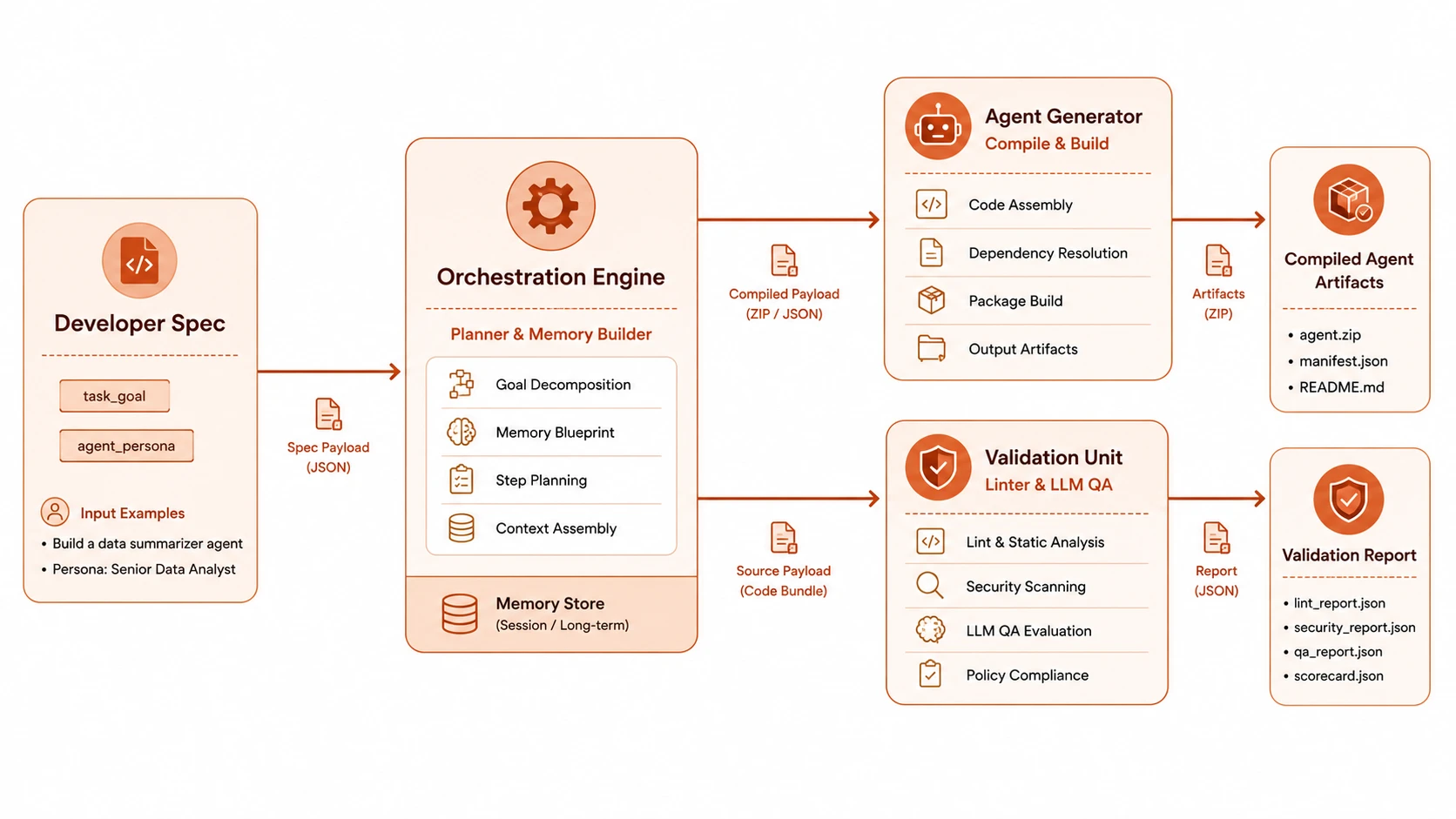
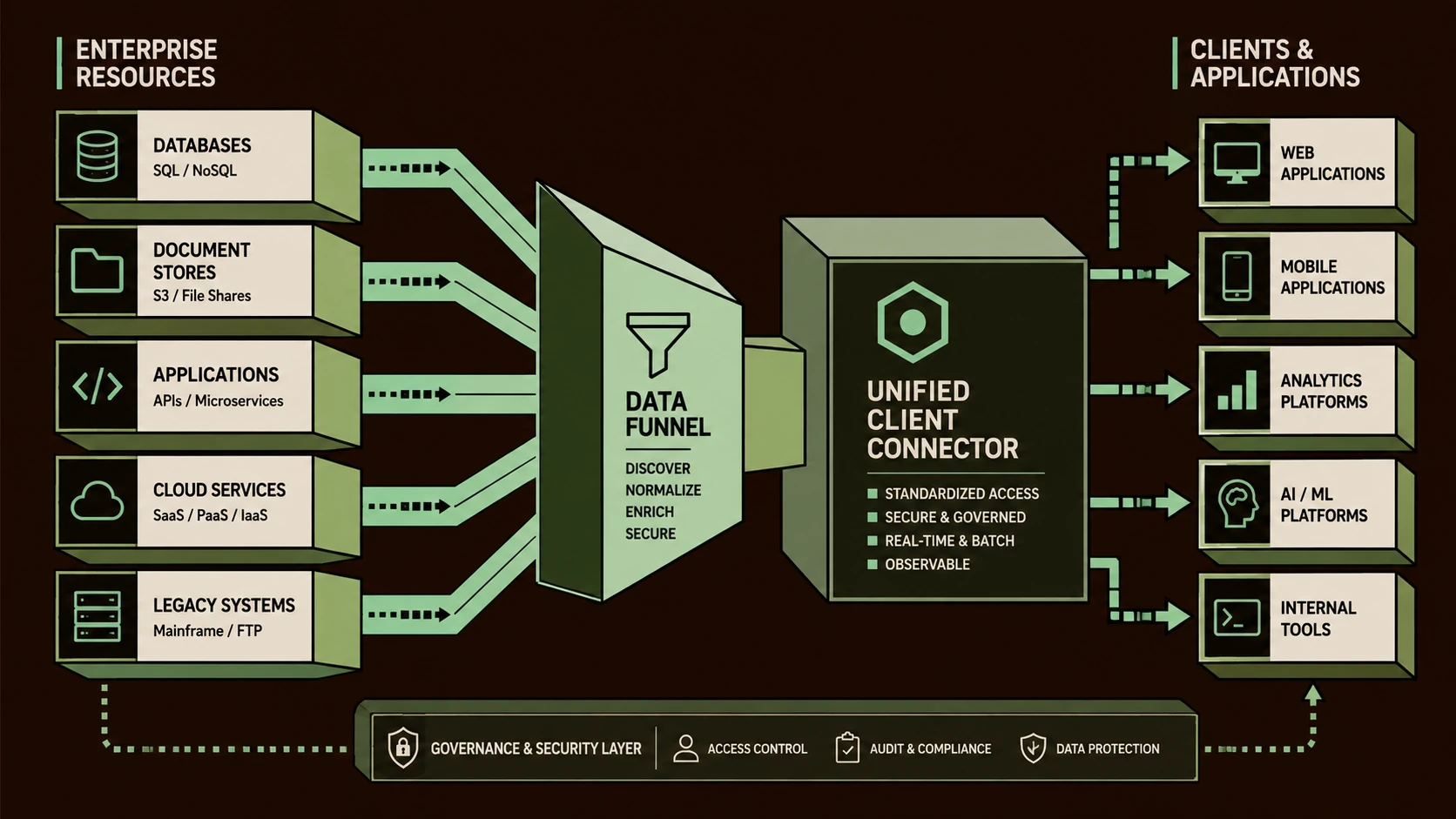
System architecture diagram and conceptual workflow layout for Agentic DevTools.
Each component contributes to building reliable and production-ready AI agents.
---
Autonomous Agent Generation
The platform can automatically generate specialized agents for different responsibilities.
Examples include:
- ◆Research Agent
- ◆Coding Agent
- ◆Testing Agent
- ◆Planning Agent
- ◆QA Agent
- ◆Documentation Agent
- ◆Security Agent
- ◆Workflow Agent
- ◆Data Processing Agent
- ◆Customer Support Agent
Every generated agent follows standardized engineering practices while remaining customizable for enterprise requirements.
---
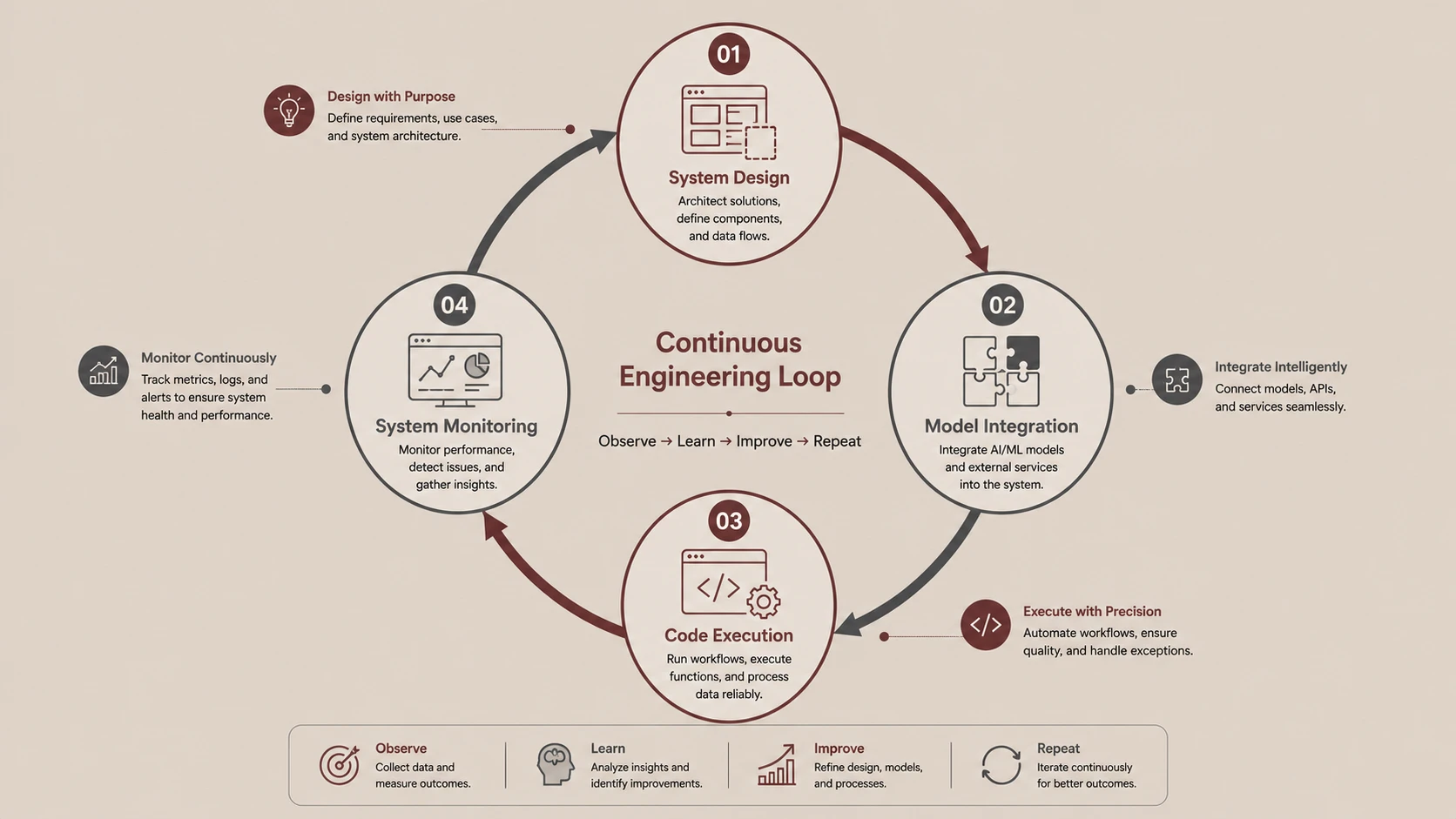
Continuous Evaluation and Optimization
Building an AI agent is only the first step.
Modern DevTools continuously monitor:
- ◆Response quality
- ◆Latency
- ◆Tool usage
- ◆Hallucination rate
- ◆Cost per request
- ◆Token consumption
- ◆User feedback
- ◆Task completion success
Based on these metrics, the platform can recommend or automatically apply improvements to prompts, memory configuration, tool selection, and reasoning strategies.
---
Enterprise Deployment
Agentic DevTools integrate seamlessly with enterprise engineering platforms.
Common integrations include:
- ◆GitHub
- ◆Kubernetes
- ◆Docker
- ◆CI/CD Pipelines
- ◆Vector Databases
- ◆API Gateways
- ◆Observability Platforms
- ◆Secret Management
- ◆Identity Providers
- ◆Cloud Infrastructure
This allows AI agents to move from development to production using the same engineering workflows as traditional software.
---
Best Practices
| Area | Best Practice |
|---|---|
| Design | Modular Agent Templates |
| Testing | Automated Evaluation Pipelines |
| Memory | Configurable Knowledge Layers |
| Deployment | CI/CD for AI Agents |
| Governance | Versioned Agent Registry |
| Security | Policy-Based Tool Access |
| Monitoring | End-to-End Observability |
| Optimization | Continuous Learning Loops |
---
The Future of Autonomous Software Engineering
Agentic DevTools represent a major shift in software engineering. Instead of developers manually constructing every AI capability, intelligent engineering platforms will increasingly design, test, optimize, and maintain entire fleets of AI agents.
Organizations that adopt Agentic DevTools today will dramatically reduce development time, improve software quality, and establish a scalable foundation for building next-generation AI-native products where bots continuously build, refine, and evolve other bots.