Why Open AI Agent Frameworks Matter
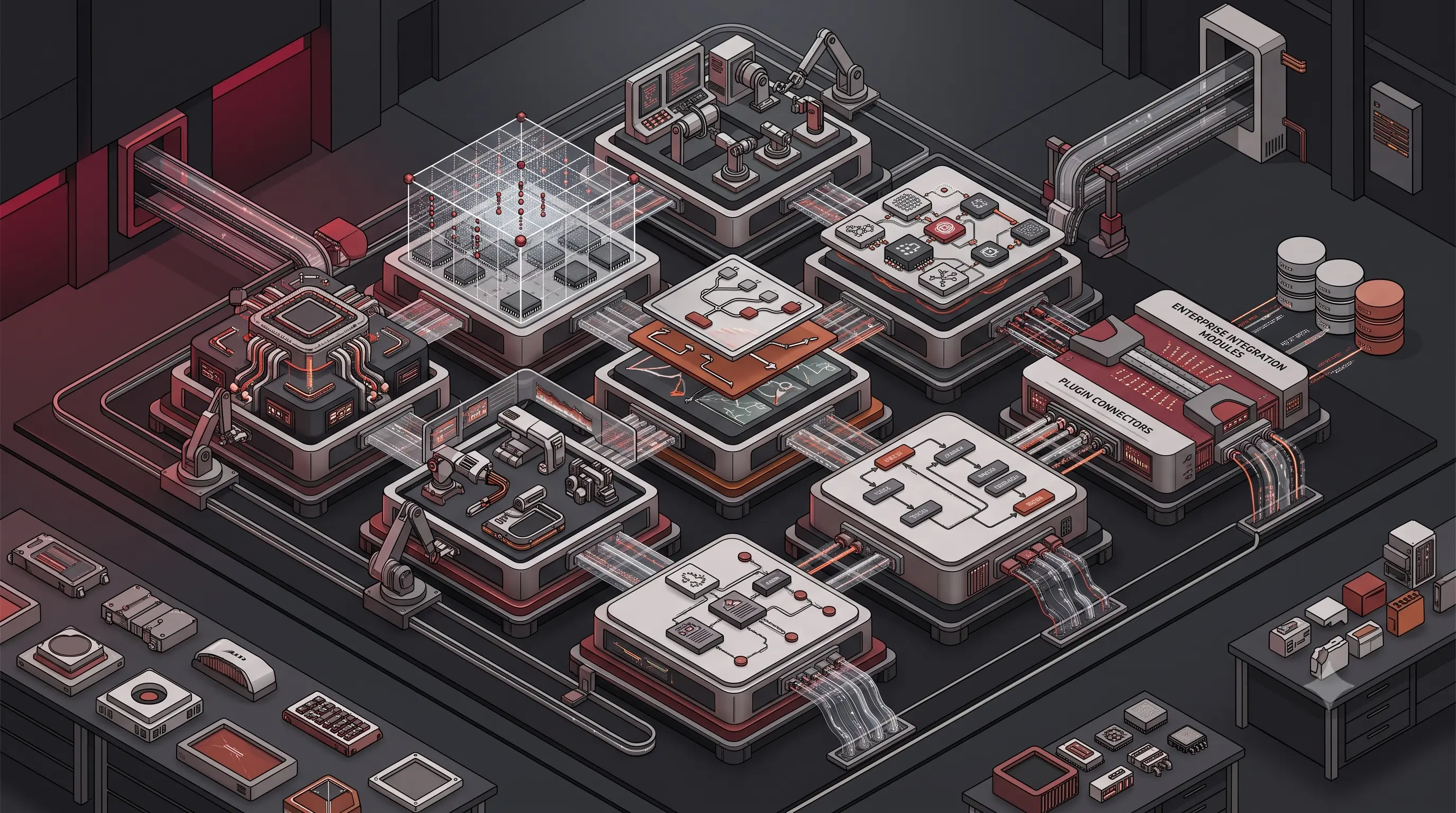
As enterprises increasingly adopt AI agents, many teams find themselves locked into proprietary ecosystems that limit customization, deployment flexibility, and infrastructure control. Open-source agent frameworks are changing that by giving organizations complete ownership of their AI stack.
OpenClaw is one of the emerging frameworks designed to help developers build transparent, extensible, and self-hosted AI agent platforms without relying entirely on closed commercial ecosystems.
Architecture Principle: AI agent platforms should be modular, observable, and fully controllable by the organization deploying them.
---
What Is OpenClaw?
OpenClaw is an open-source framework for building AI agent systems capable of reasoning, planning, tool execution, memory management, and multi-agent collaboration.
Core capabilities include:
- ◆Agent orchestration
- ◆Tool calling
- ◆Shared memory
- ◆Workflow execution
- ◆Multi-agent coordination
- ◆External API integration
- ◆Extensible plugin architecture
- ◆Self-hosted deployment
Its modular architecture allows teams to replace or extend individual components without redesigning the entire platform.
---
Reference Architecture
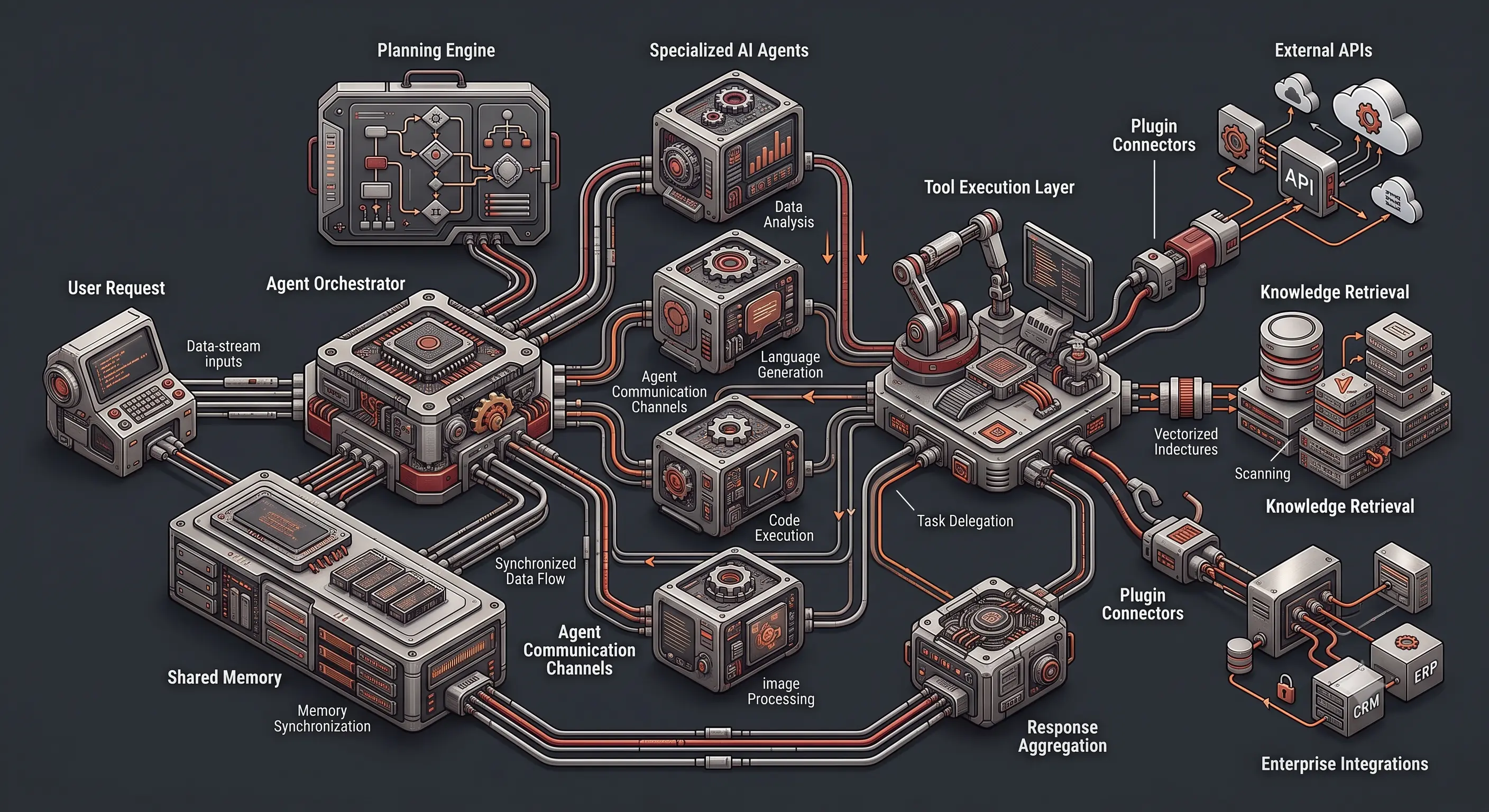
A production deployment typically follows this architecture:
User
   │
API Layer
   │
Agent Orchestrator
   │
Planning Engine
   │
──────────────────────────────
│ Research │ Coding │ Vision │
│ Agents   │ Agent  │ Agent  │
──────────────────────────────
   │
Shared Memory
   │
Tool Execution
   │
Enterprise Systems
---
Modular Agent Design
Unlike monolithic AI assistants, OpenClaw separates responsibilities across specialized agents.
Examples include:
- ◆Research Agent
- ◆Coding Agent
- ◆Vision Agent
- ◆Planning Agent
- ◆QA Agent
- ◆Memory Manager
- ◆Tool Runner
- ◆Workflow Coordinator
This modular approach improves maintainability and scalability.
---
Enterprise Deployment
Organizations can deploy OpenClaw across:
- ◆Kubernetes
- ◆Docker
- ◆Private Cloud
- ◆On-Premises Infrastructure
- ◆Edge Computing
- ◆Hybrid Cloud
Self-hosting ensures complete control over infrastructure, data, and security.
---
Extending the Platform
Developers can integrate:
- ◆Custom tools
- ◆Internal APIs
- ◆Vector databases
- ◆Knowledge repositories
- ◆Business workflows
- ◆Monitoring systems
- ◆Authentication providers
- ◆External AI models
This flexibility enables OpenClaw to fit diverse enterprise environments.
---
Best Practices
- ◆Separate orchestration from execution
- ◆Keep agents task-specific
- ◆Use shared memory responsibly
- ◆Monitor agent performance
- ◆Secure tool access
- ◆Version plugins independently
- ◆Validate outputs before execution
- ◆Maintain comprehensive observability
---
Looking Ahead
Open-source agent frameworks are reshaping enterprise AI by providing greater transparency, flexibility, and deployment freedom. Platforms like OpenClaw demonstrate how modular architectures, shared memory, and extensible tooling can help organizations build AI systems that evolve with their business instead of being constrained by proprietary platforms.