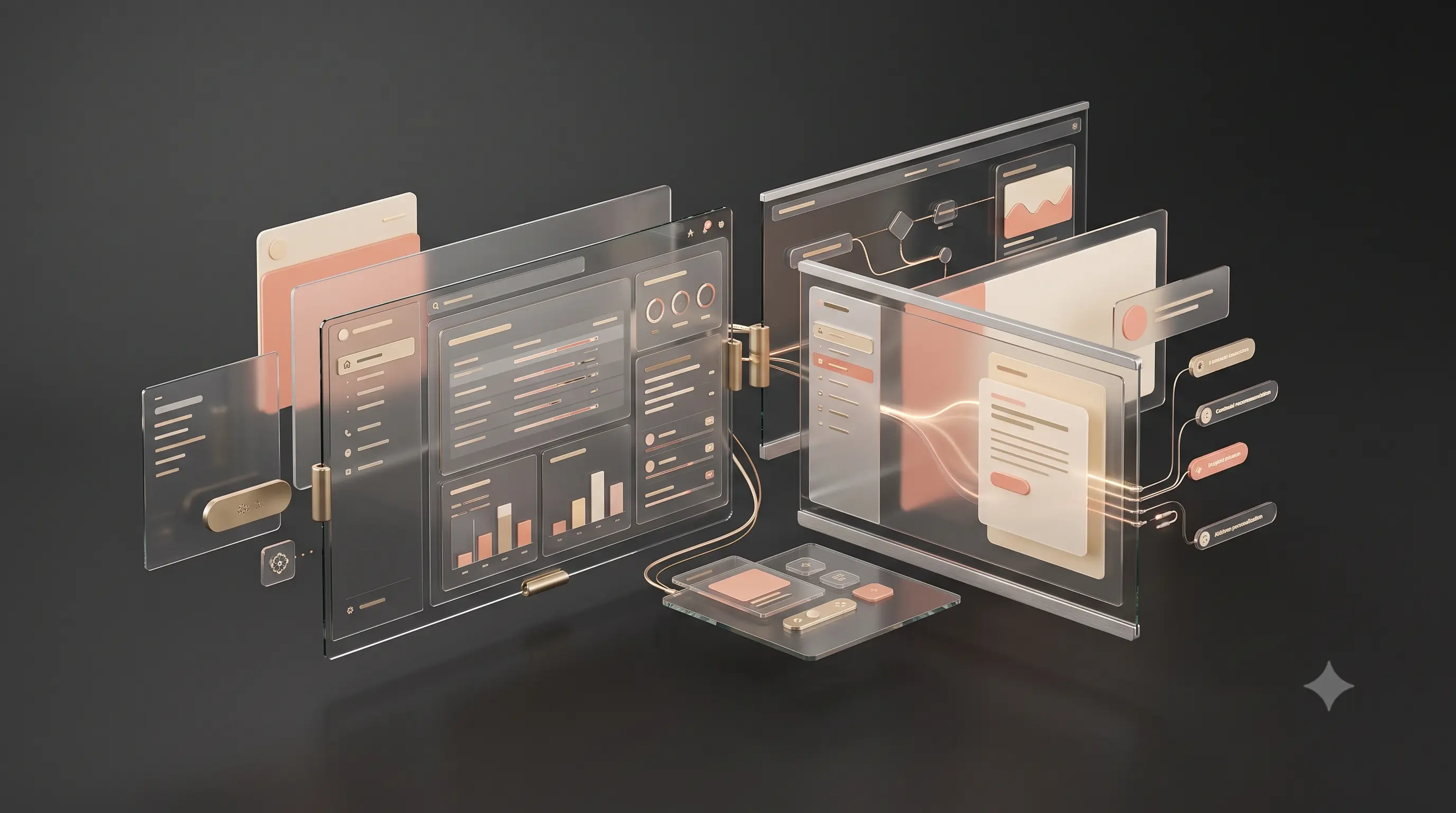
Why Static Interfaces Are Becoming Obsolete
For decades, software interfaces have been designed manually and updated only when designers or product teams release new versions. While this approach works for predictable workflows, it struggles to meet the expectations of modern users who demand personalized, context-aware, and continuously improving digital experiences.
Autonomous UX introduces a new paradigm where interfaces become intelligent systems capable of observing user behavior, understanding context, adapting layouts, and optimizing interactions automatically. Rather than waiting for the next product release, the interface evolves continuously based on real-world usage patterns.
Architecture Principle: User interfaces should learn from every interaction and continuously optimize themselves without disrupting the user experience.
---
What Is Autonomous UX?
Autonomous UX is an AI-powered design approach where software interfaces dynamically adapt to users, devices, environments, and business contexts.
Instead of serving the same experience to every user, the platform intelligently modifies navigation, layouts, recommendations, workflows, and visual hierarchy in real time.
Core capabilities include:
- ◆Behavioral Intelligence
- ◆Context Awareness
- ◆Adaptive Layout Engine
- ◆AI Personalization
- ◆Dynamic Navigation
- ◆Accessibility Optimization
- ◆Continuous UX Learning
- ◆Experience Analytics
The objective is to create interfaces that become smarter with every interaction.
---
Evolution of User Experience
Modern interface design has evolved significantly:
- 1.Static Web Interfaces
- 2.Responsive Design
- 3.Personalized Experiences
- 4.Context-Aware Applications
- 5.AI-Assisted UX
- 6.Autonomous UX
Each generation increases adaptability while reducing manual configuration.
---
Enterprise Reference Architecture
User Interactions
        │
Behavior Analytics
        │
Context Engine
        │
──────────────────────────────────
│ Personalization │ UX Learning │
│ Accessibility │ Recommendations │
──────────────────────────────────
        │
Adaptive Layout Engine
        │
Continuous Optimization
        │
Enterprise Applications
Rather than presenting a fixed interface, every layer contributes to delivering a personalized experience.
---
Context-Aware Intelligence
Autonomous interfaces continuously evaluate user context before deciding how the experience should evolve.
Common contextual signals include:
- ◆User role
- ◆Device type
- ◆Location
- ◆Time of day
- ◆Navigation history
- ◆Business workflow
- ◆Accessibility preferences
- ◆Current task
Combining these signals enables interfaces to surface the most relevant information at the right moment.
---
Adaptive Interface Components
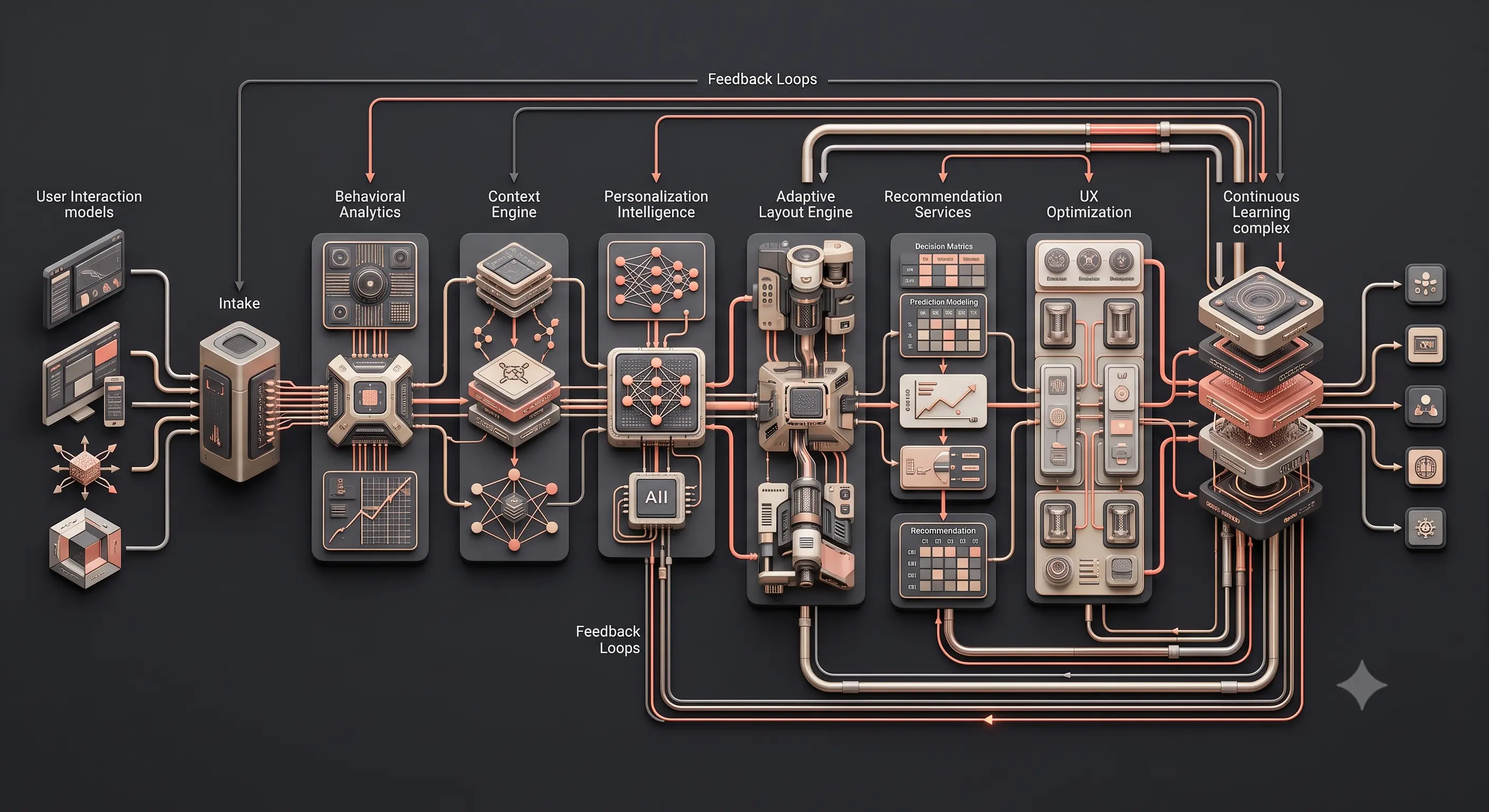
Instead of hard-coded layouts, modern UX platforms use adaptive components capable of reorganizing themselves automatically.
Examples include:
- ◆Personalized dashboards
- ◆Dynamic navigation menus
- ◆Smart search interfaces
- ◆Adaptive forms
- ◆Intelligent recommendations
- ◆Contextual shortcuts
- ◆Progressive disclosure panels
- ◆Accessibility-aware controls
These components evolve as user behavior changes over time.
---
AI-Driven Personalization
Personalization extends beyond recommendations.
AI continuously optimizes:
- ◆Content hierarchy
- ◆Navigation paths
- ◆Feature visibility
- ◆Workflow sequencing
- ◆Notification timing
- ◆Interface density
- ◆Visual emphasis
- ◆Collaboration experiences
The result is a workspace tailored to individual users while maintaining organizational consistency.
---
Continuous Learning Through Feedback
Every interaction becomes a learning opportunity.
The platform collects:
- ◆Click behavior
- ◆Task completion rates
- ◆Session duration
- ◆Search patterns
- ◆User corrections
- ◆Feature adoption
- ◆Accessibility interactions
- ◆Satisfaction signals
Machine learning models transform this feedback into interface improvements without requiring complete redesigns.
---
Enterprise Use Cases
Autonomous UX delivers value across multiple industries.
Examples include:
- ◆Enterprise SaaS platforms
- ◆Healthcare portals
- ◆Banking applications
- ◆Manufacturing dashboards
- ◆Retail commerce
- ◆CRM platforms
- ◆HR systems
- ◆AI copilots
Each application benefits from interfaces that adapt to user expertise, goals, and working context.
---
Best Practices
| Area | Best Practice |
|---|---|
| Personalization | Context-Aware Adaptation |
| Navigation | Dynamic Information Architecture |
| Accessibility | AI-Assisted Inclusive Design |
| Optimization | Continuous UX Learning |
| Analytics | Behavioral Intelligence |
| Performance | Real-Time Adaptation |
| Governance | Privacy-First Personalization |
| AI | Human-Centered Automation |
---
The Future of Intelligent Interfaces
User interfaces are evolving from static visual layouts into intelligent digital environments that understand context, anticipate needs, and continuously improve. Autonomous UX combines AI, behavioral analytics, contextual awareness, and adaptive design to create experiences that become more intuitive with every interaction.
Organizations adopting Autonomous UX will deliver faster workflows, higher engagement, improved accessibility, and deeply personalized digital experiences—transforming software from a passive tool into an active partner that evolves alongside its users.