Why Enterprises Need Intelligent Document Processing
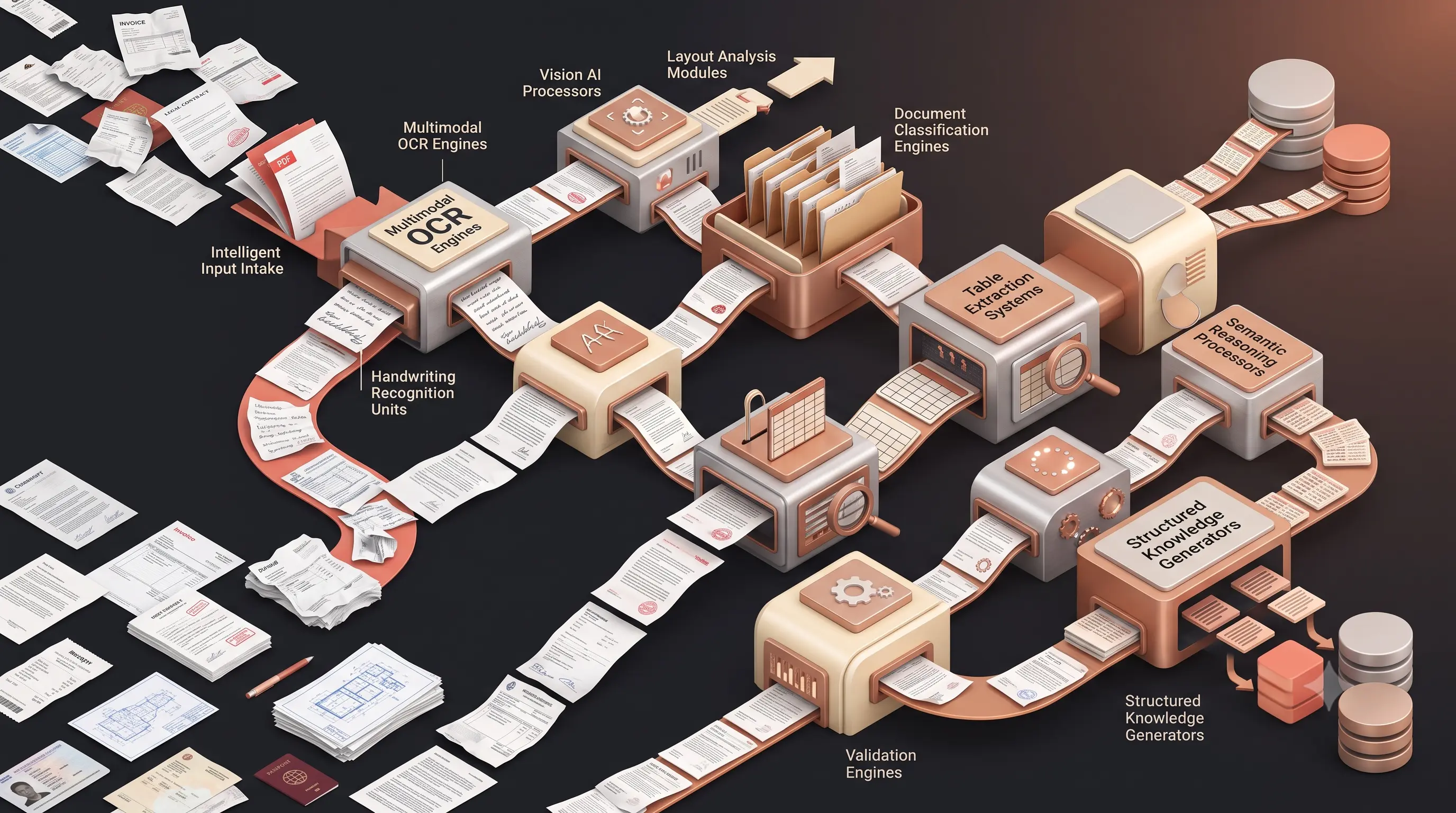
Organizations process thousands of documents every day, including invoices, contracts, purchase orders, medical records, emails, reports, and compliance documents. Traditional OCR systems can extract text, but they often struggle to understand document context, relationships, and business intent.
PaperClip AI addresses this challenge by combining multimodal AI models with specialized agent chains that can read, interpret, validate, and automate document-centric workflows.
Architecture Principle: Enterprise document automation should understand documents like a human while processing them at machine scale.
---
What Is PaperClip AI?
PaperClip AI is a multimodal document intelligence platform that orchestrates specialized AI agents to process structured and unstructured documents.
Instead of relying on a single OCR engine, it combines multiple AI capabilities including:
- ◆Optical Character Recognition (OCR)
- ◆Visual document understanding
- ◆Document classification
- ◆Entity extraction
- ◆Table recognition
- ◆Semantic reasoning
- ◆Validation workflows
- ◆Enterprise automation
Each agent performs a dedicated task before passing enriched information to the next stage.
---
Multimodal Agent Chain
A typical PaperClip AI workflow consists of multiple collaborative agents.
Document Upload
        │
        ▼
OCR Agent
        │
Vision Understanding
        │
Document Classification
        │
Entity Extraction
        │
Reasoning Agent
        │
Validation Agent
        │
Workflow Automation
        │
Enterprise Systems
Breaking the workflow into specialized agents improves both accuracy and scalability.
---
Processing Multiple Document Types
PaperClip AI can process diverse enterprise content, including:
- ◆PDF files
- ◆Contracts
- ◆Invoices
- ◆Purchase Orders
- ◆Medical Records
- ◆Bank Statements
- ◆Identity Documents
- ◆Scanned Images
- ◆Email Attachments
- ◆Forms
The multimodal pipeline adapts its processing strategy based on document type.
---
Intelligent Information Extraction
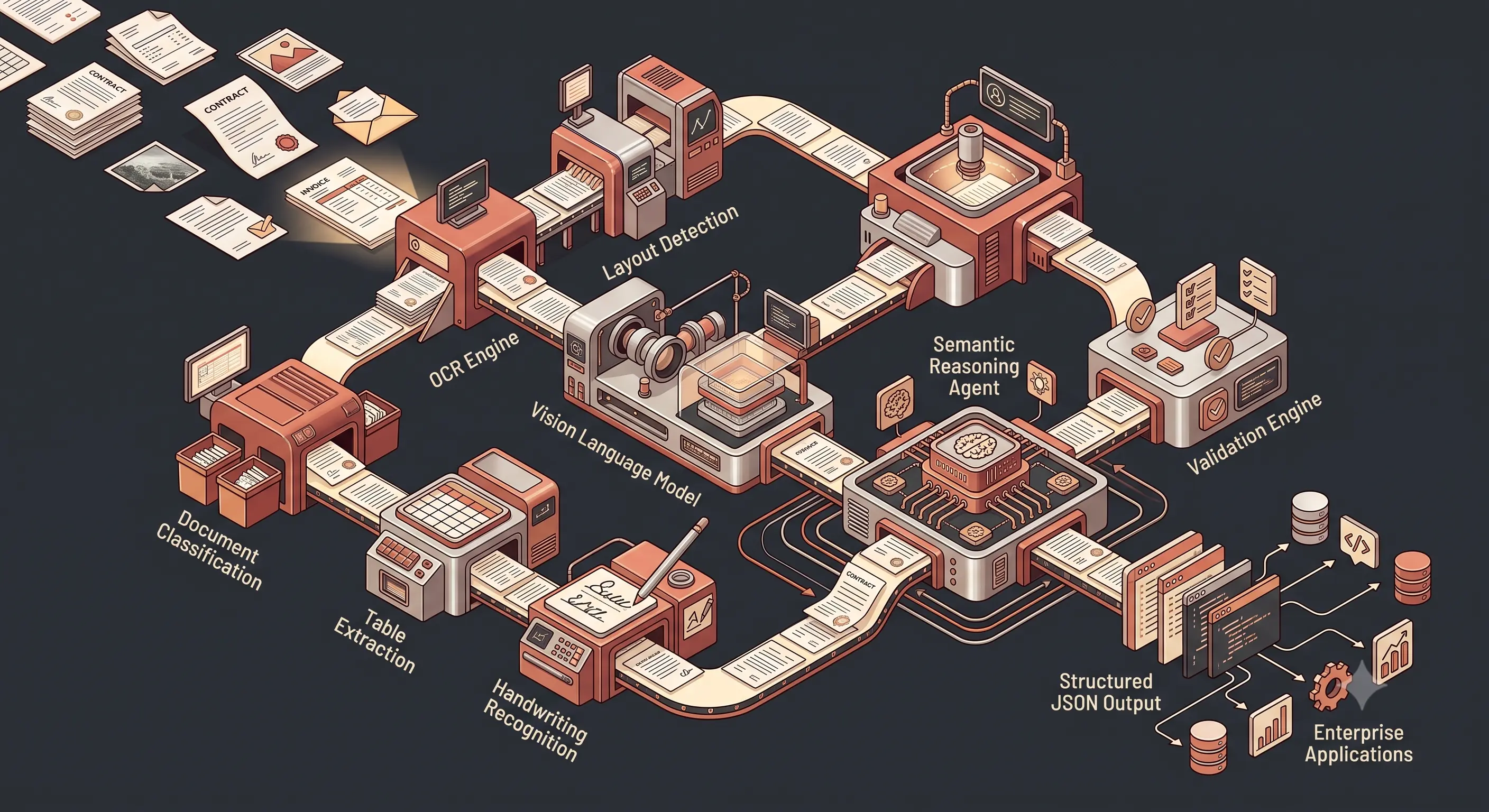
Beyond extracting text, PaperClip AI understands document meaning.
Common extraction tasks include:
- ◆Customer information
- ◆Invoice totals
- ◆Contract clauses
- ◆Dates and deadlines
- ◆Payment details
- ◆Product information
- ◆Regulatory identifiers
- ◆Structured tables
This structured output enables seamless downstream automation.
---
Enterprise Workflow Integration
Extracted information can be routed directly into business systems.
Common integrations include:
- ◆ERP platforms
- ◆CRM systems
- ◆Document Management Systems
- ◆HR software
- ◆Healthcare platforms
- ◆Financial applications
- ◆Compliance workflows
- ◆Knowledge repositories
Automated integration reduces manual data entry and processing delays.
---
Security and Governance
Enterprise document processing often involves sensitive information.
Recommended safeguards include:
- ◆Encrypted document storage
- ◆Role-based access control
- ◆Audit logging
- ◆Data masking
- ◆Secure API gateways
- ◆Compliance monitoring
- ◆Human approval workflows
- ◆Enterprise policy enforcement
These controls protect confidential business data throughout the document lifecycle.
---
Best Practices
| Area | Best Practice |
|---|---|
| OCR | High-Accuracy Vision Models |
| Classification | Multimodal AI |
| Extraction | Specialized AI Agents |
| Validation | Human-in-the-Loop |
| Integration | API-First Architecture |
| Security | Zero Trust Access |
| Storage | Encrypted Knowledge Base |
| Monitoring | End-to-End Observability |
---
The Future of Document Intelligence
Multimodal agent chains are transforming enterprise document processing from simple text extraction into intelligent business automation. By combining OCR, vision models, reasoning agents, and workflow orchestration, platforms like PaperClip AI can understand documents, extract meaningful information, validate results, and automate complex enterprise processes with greater speed and accuracy.
As organizations continue their digital transformation journey, multimodal document intelligence will become a foundational capability for modern AI-powered enterprises.