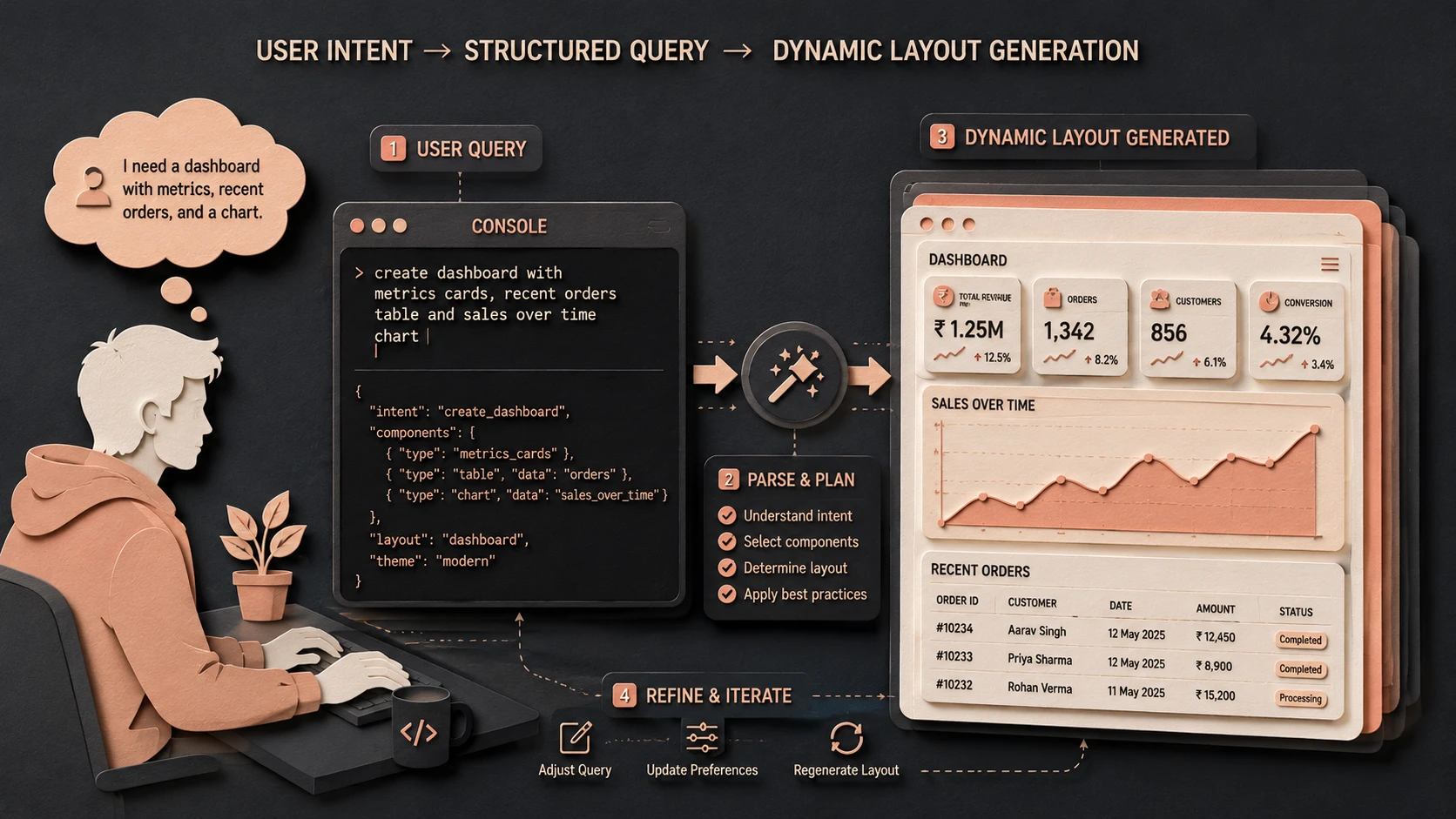
Introduction
For decades, enterprise software has been built around graphical user interfaces (GUIs). Users interacted with applications by clicking buttons, navigating menus, completing forms, searching through dashboards, and manually executing workflows. While graphical interfaces dramatically improved usability over command-line systems, they also introduced friction as applications grew increasingly complex.
Modern enterprise platforms often contain hundreds of screens, thousands of configuration options, and deeply nested navigation structures. As organizations continue digitizing every business process, employees spend more time learning software rather than completing business tasks.
The rapid advancement of Large Language Models (LLMs) during 2023 has introduced a fundamentally different interaction model. Instead of teaching users how software works, applications increasingly attempt to understand what users want to accomplish.
This shift has given rise to Intent-Driven User Interfaces, where natural language, conversational AI, voice interaction, and multimodal inputs become primary methods for interacting with enterprise applications. Rather than replacing graphical interfaces entirely, these intelligent interfaces augment traditional workflows with conversational experiences that translate user intent into application actions.
From the perspective of January 2024, Intent-Driven UIs represent one of the most significant evolutions in human-computer interaction since the widespread adoption of web applications.
Industry Background
Organizations continue embedding Generative AI into nearly every category of enterprise software.
Modern business platforms increasingly include:
- ◆AI copilots.
- ◆Enterprise search assistants.
- ◆Intelligent dashboards.
- ◆Customer support agents.
- ◆Knowledge assistants.
- ◆Workflow automation.
- ◆Conversational business applications.
Enterprise priorities increasingly focus on:
- ◆Employee productivity.
- ◆Reduced software complexity.
- ◆Faster onboarding.
- ◆Natural interaction.
- ◆AI-assisted automation.
- ◆Personalized experiences.
Applications are evolving from feature-centric systems toward outcome-centric experiences.
The Business Problem
Traditional enterprise interfaces frequently create operational challenges.
Organizations commonly experience:
- ◆Complex navigation.
- ◆Long learning curves.
- ◆Information overload.
- ◆Fragmented workflows.
- ◆Manual task execution.
- ◆Low feature discoverability.
- ◆Reduced employee productivity.
As software capabilities expand, users often struggle to locate the functionality they need.
Intent-Driven UIs seek to simplify interaction by allowing users to describe goals rather than navigate application structures.
Understanding the Technology
Intent-Driven UIs combine conversational AI, semantic understanding, contextual reasoning, and enterprise workflows to translate user intent into software actions.
Instead of relying exclusively on menus and forms, applications interpret requests expressed through natural language, voice, images, or structured context.
Core architectural capabilities include:
- ◆Natural language understanding.
- ◆Intent classification.
- ◆Context management.
- ◆AI copilots.
- ◆Workflow orchestration.
- ◆Knowledge retrieval.
- ◆Multimodal interaction.
These technologies work together to reduce friction between user objectives and application execution.
Core Architecture
A simplified Intent-Driven UI architecture appears below.
| Component | Responsibility |
|---|---|
| User | Expresses business intent |
| Conversational Interface | Receives natural language or voice input |
| Intent Recognition Engine | Determines user objectives |
| Context Manager | Maintains session and business context |
| AI Copilot | Generates recommendations and actions |
| Enterprise APIs | Execute business operations |
| Business Applications | Process transactions and workflows |
The conversational layer interprets user intent before coordinating enterprise services to complete the requested task.
Key Features
Intent Recognition
The defining capability of Intent-Driven UIs is understanding user objectives rather than processing fixed interface commands.
Instead of clicking through multiple screens, users can issue requests such as:
- ◆Create a customer report.
- ◆Schedule a meeting with the sales team.
- ◆Show overdue invoices.
- ◆Generate quarterly analytics.
The system interprets the intent and determines the appropriate workflow.
Conversational Interfaces
Natural language becomes an additional interaction layer alongside traditional graphical interfaces.
Users can:
- ◆Ask questions.
- ◆Request actions.
- ◆Search enterprise knowledge.
- ◆Automate repetitive work.
- ◆Receive explanations.
Conversation reduces the need to memorize application navigation.
Context Awareness
Modern AI systems increasingly maintain contextual understanding throughout a user session.
Context may include:
- ◆User identity.
- ◆Department.
- ◆Permissions.
- ◆Previous requests.
- ◆Active projects.
- ◆Business data.
Maintaining context enables more relevant responses while reducing repetitive user input.
AI Copilots
Enterprise copilots increasingly function as intelligent assistants embedded within business applications.
Typical responsibilities include:
- ◆Summarizing information.
- ◆Drafting content.
- ◆Explaining reports.
- ◆Recommending actions.
- ◆Automating workflows.
- ◆Retrieving enterprise knowledge.
Rather than replacing applications, copilots simplify access to existing functionality.
Multimodal Interaction
Intent-driven systems increasingly support multiple forms of input.
Users may combine:
- ◆Natural language.
- ◆Voice commands.
- ◆Images.
- ◆Documents.
- ◆Structured forms.
- ◆Traditional graphical controls.
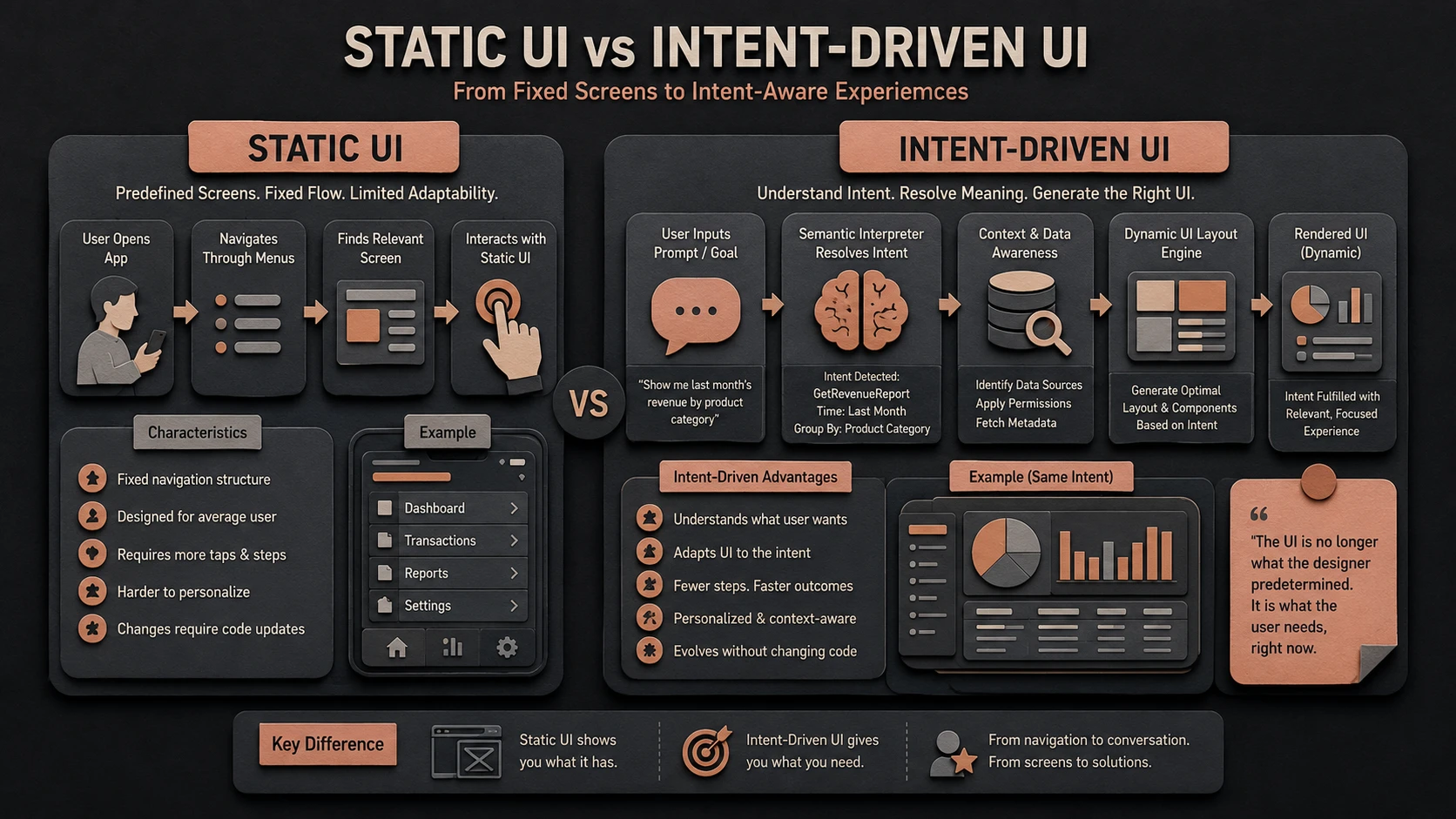
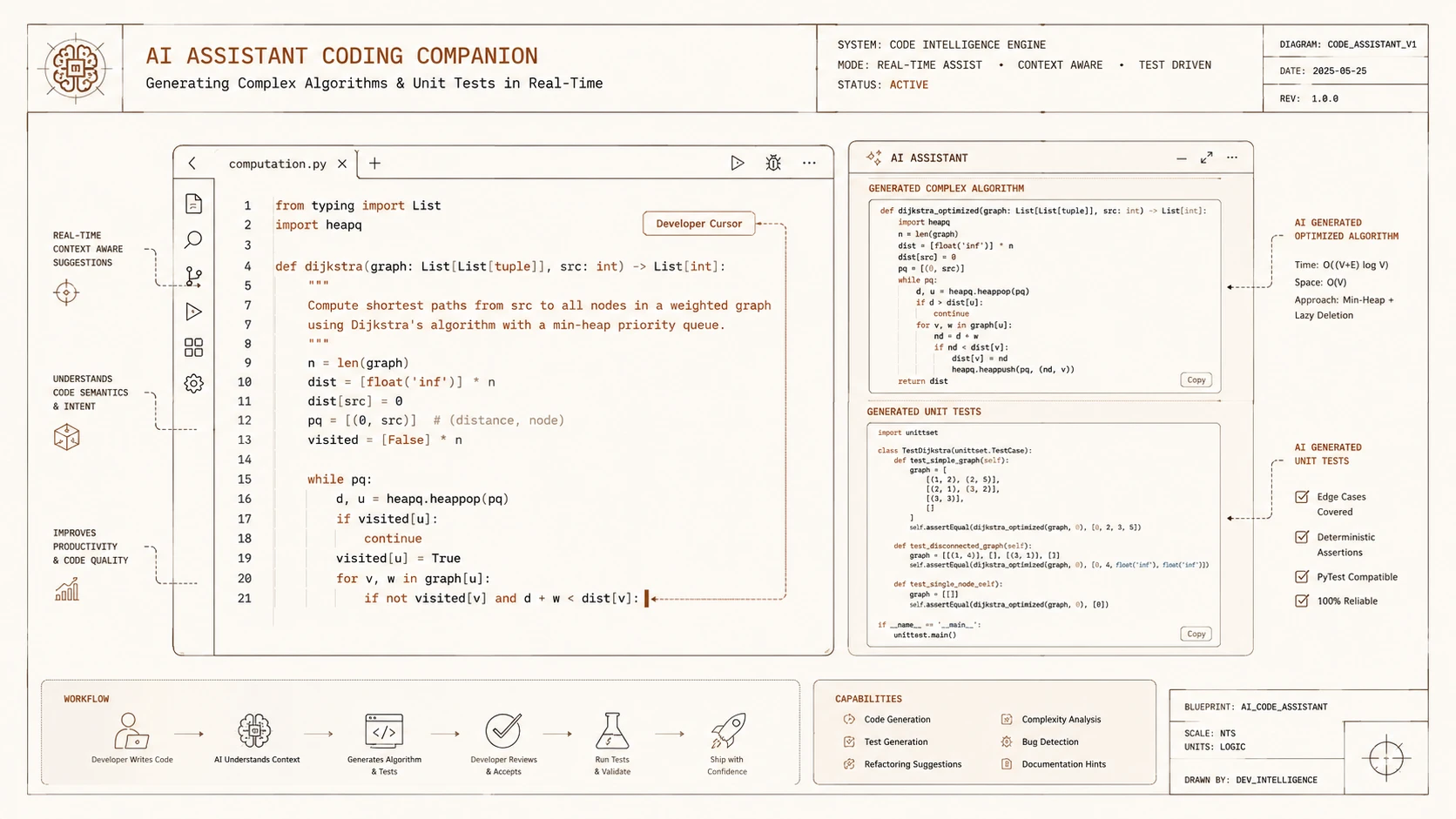
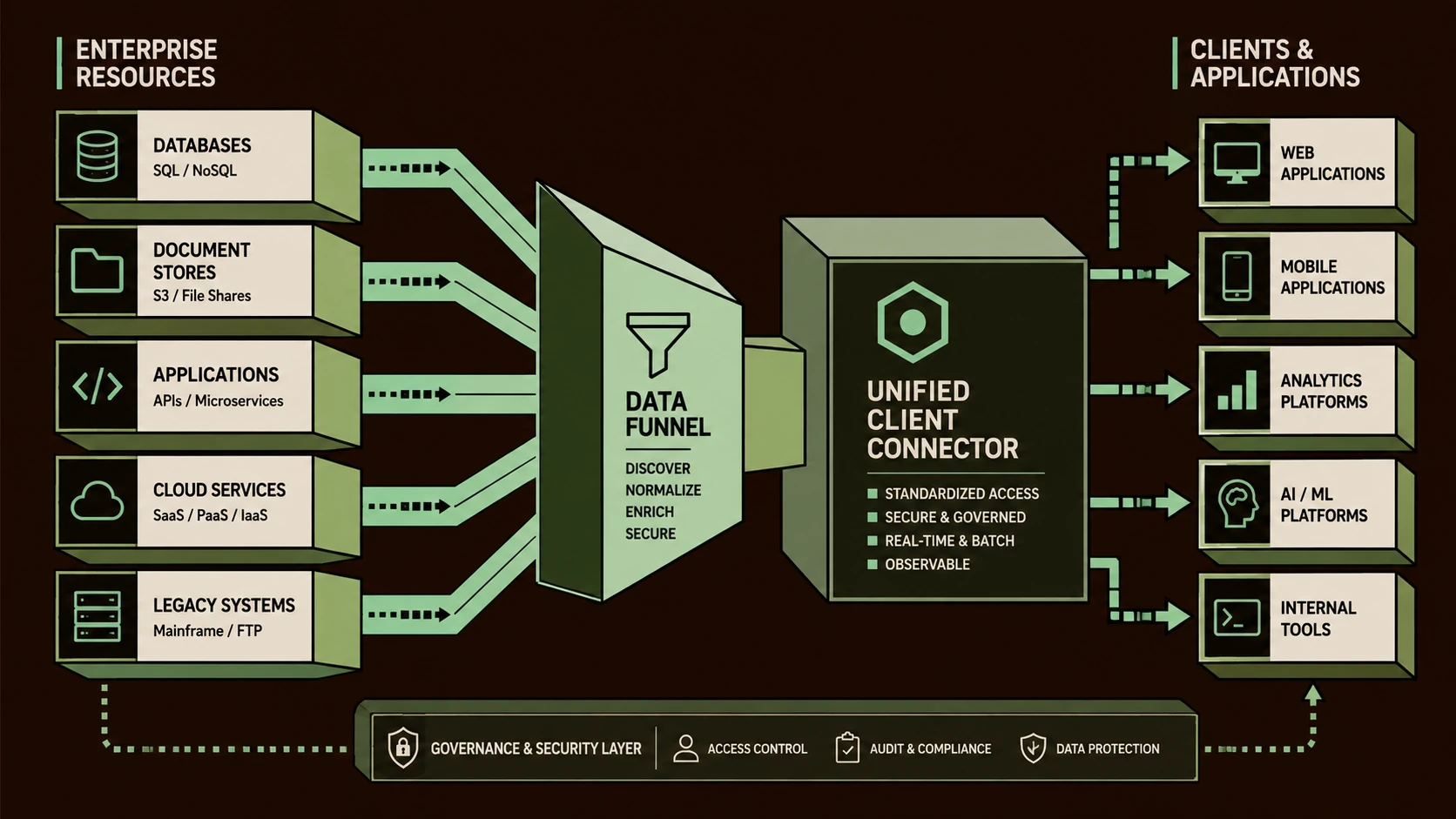
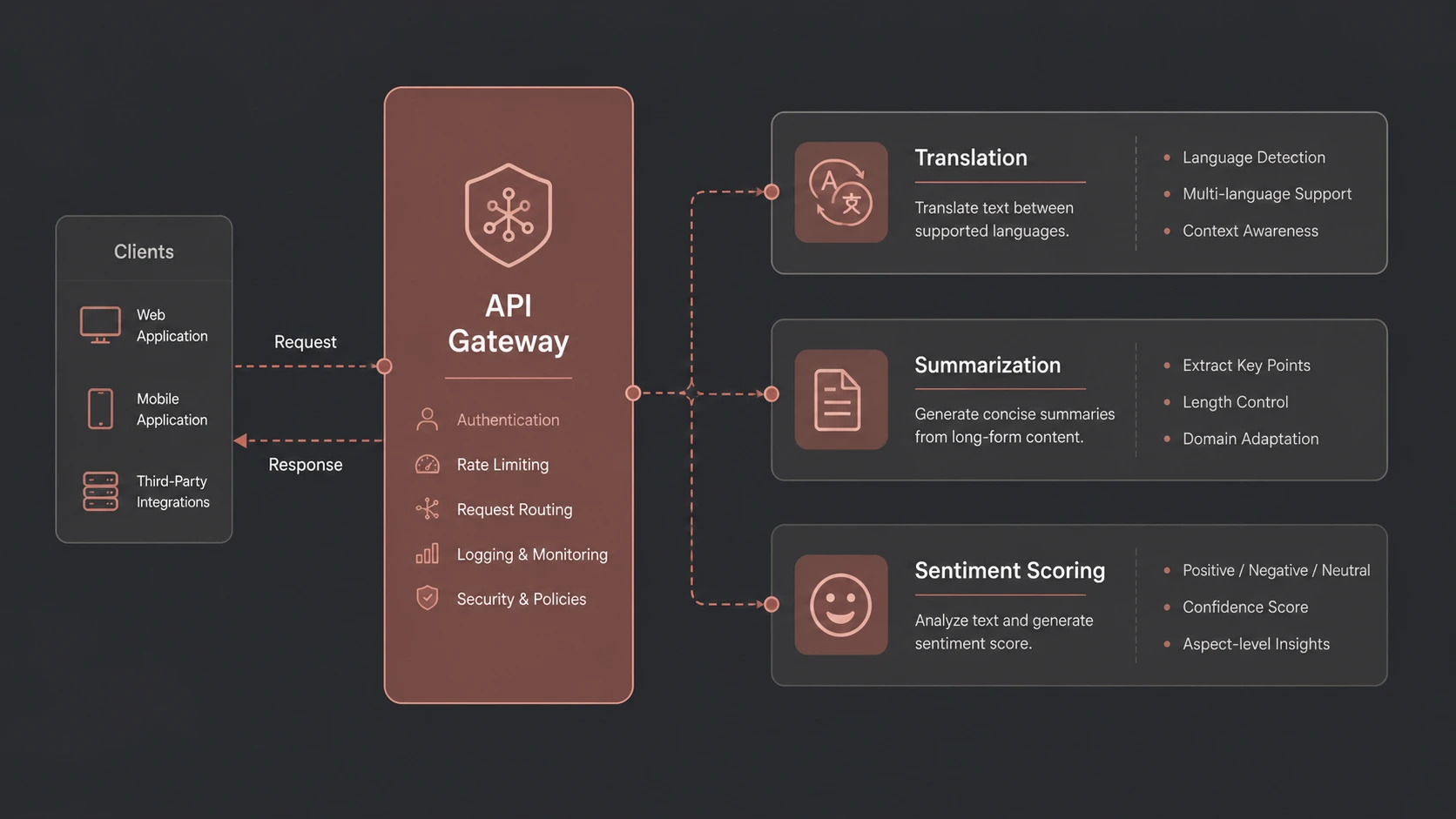
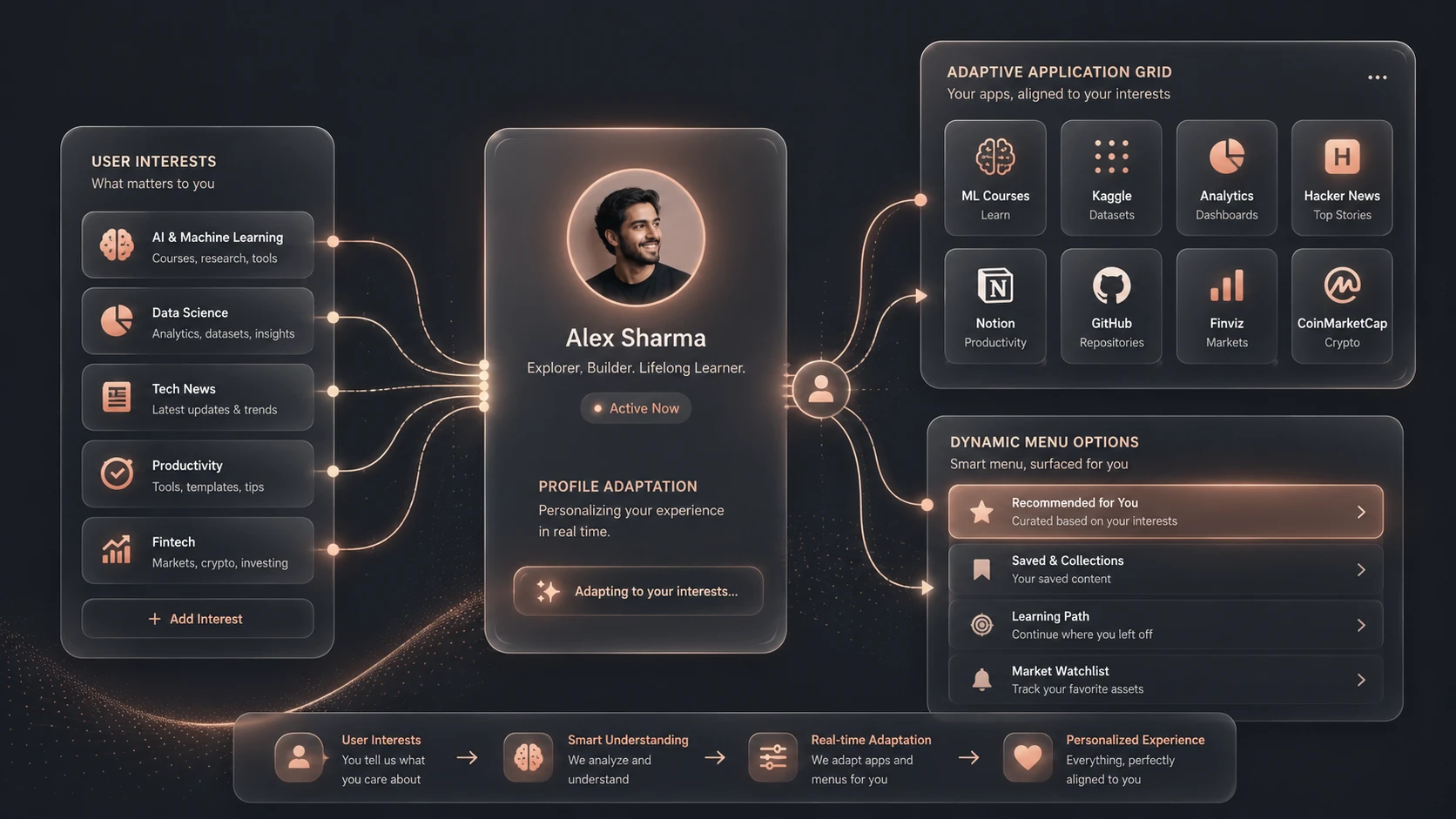
System architecture diagram and conceptual workflow layout for The Rise of Intent-Driven UIs.
This flexibility improves accessibility and supports diverse business scenarios.
Adaptive User Experiences
Unlike static interfaces, intent-driven applications increasingly personalize interactions according to:
- ◆User roles.
- ◆Behavioral patterns.
- ◆Organizational context.
- ◆Frequently performed tasks.
Adaptive interfaces reduce cognitive load while improving productivity.
How It Works
A simplified interaction flow appears below.
User Request
       |
Natural Language Interface
       |
Intent Recognition
       |
Context Retrieval
       |
AI Copilot
       |
Enterprise APIs
       |
Business Workflow
       |
Response and Action
The system interprets user intent, gathers relevant context, invokes enterprise services, and presents the results through a conversational interface.
Enterprise Use Cases
Enterprise Knowledge Management
Employees retrieve policies, documentation, and operational procedures using conversational search instead of manually browsing repositories.
CRM Platforms
Sales teams request customer summaries, pipeline updates, and meeting preparation through AI copilots.
Business Intelligence
Executives generate reports and dashboards using natural language queries instead of manually configuring analytics tools.
IT Service Management
Employees resolve common support requests through conversational interfaces that automate ticket creation and knowledge retrieval.
Human Resources
HR assistants help employees locate policies, benefits information, leave balances, and onboarding documentation through natural conversations.
Performance Considerations
Organizations implementing Intent-Driven UIs should evaluate:
- ◆Response latency.
- ◆Intent classification accuracy.
- ◆Context retrieval performance.
- ◆Knowledge search quality.
- ◆Workflow execution speed.
- ◆User satisfaction.
Performance should be measured by successful task completion rather than interface responsiveness alone.
Security Considerations
Conversational enterprise systems require robust governance.
Organizations should implement:
- ◆Strong authentication.
- ◆Role-Based Access Control.
- ◆Prompt validation.
- ◆Secure API authorization.
- ◆Data privacy controls.
- ◆Audit logging.
- ◆AI governance policies.
Intent-driven interfaces must respect the same authorization boundaries as traditional applications.
Scalability
Intent-Driven UIs improve enterprise scalability through:
- ◆Reduced training requirements.
- ◆Faster software adoption.
- ◆Personalized experiences.
- ◆AI-assisted automation.
- ◆Improved knowledge accessibility.
- ◆Consistent user interactions.
These characteristics enable organizations to support growing digital ecosystems while improving employee productivity.
Best Practices
Organizations adopting Intent-Driven UIs should:
- ◆Treat conversational interfaces as complementary to graphical interfaces rather than immediate replacements.
- ◆Build AI assistants around well-defined business domains.
- ◆Maintain transparent user feedback when AI performs actions.
- ◆Integrate enterprise identity and authorization systems.
- ◆Continuously monitor response quality.
- ◆Establish governance for AI-generated recommendations.
- ◆Design fallback workflows for situations where intent cannot be confidently determined.
Successful implementations prioritize user trust, transparency, and measurable productivity improvements.
Common Mistakes
| Mistake | Business Impact |
|---|---|
| Replacing every graphical workflow with conversation | Reduced usability for structured tasks |
| Allowing AI to execute critical operations without confirmation | Operational and security risks |
| Ignoring user context | Less relevant responses |
| Treating conversational interfaces as isolated features | Fragmented user experience |
| Failing to integrate enterprise permissions | Unauthorized information exposure |
| Measuring success solely by chatbot usage | Incomplete evaluation of business value |
Organizations should balance conversational flexibility with traditional interface strengths to create effective enterprise experiences.
Technology Comparison
| Characteristic | Traditional GUI | Intent-Driven UI |
|---|---|---|
| Primary Interaction | Menus, forms, and buttons | Natural language and conversation |
| Workflow Discovery | User navigation | AI-guided assistance |
| Personalization | Limited | Context-aware interactions |
| Knowledge Access | Manual search | Conversational retrieval |
| Automation | User initiated | AI-assisted workflow execution |
| Learning Curve | Feature oriented | Goal oriented |
Intent-Driven UIs complement existing graphical interfaces by making enterprise software more accessible and task-focused.
Adoption Strategy
Organizations should modernize user experiences incrementally.
- 1.Identify repetitive business workflows suitable for conversational interaction.
- 2.Introduce AI copilots within existing enterprise applications.
- 3.Integrate enterprise search and knowledge management.
- 4.Connect conversational interfaces to governed business APIs.
- 5.Measure productivity improvements and user adoption.
- 6.Expand intent-driven capabilities while maintaining traditional interfaces for structured workflows.
This phased approach enables organizations to adopt conversational experiences without disrupting established business processes.
Limitations
As of January 2024, organizations should recognize several considerations.
- ◆Intent recognition accuracy depends on the quality of underlying language models, enterprise knowledge, and contextual information.
- ◆Many structured business processes continue to benefit from traditional graphical interfaces.
- ◆AI-generated recommendations require human oversight for sensitive business operations.
- ◆Enterprise governance, security, and compliance remain essential when integrating conversational AI.
- ◆Long-term success depends on combining conversational experiences with well-designed workflows, reliable APIs, and strong platform engineering.
These considerations should guide enterprise adoption of intent-driven interaction models.
Looking Ahead
From the perspective of January 2024, Intent-Driven User Interfaces represent the next major evolution of enterprise software interaction. Rather than asking users to learn increasingly complex applications, organizations are designing systems that interpret user goals, retrieve relevant context, and orchestrate business workflows through natural conversation.
The future of enterprise UX is unlikely to eliminate graphical interfaces entirely. Instead, successful platforms will blend conversational AI, traditional visual interfaces, multimodal interaction, and intelligent automation into unified experiences that prioritize outcomes over navigation. Organizations investing in Intent-Driven UIs, AI copilots, semantic understanding, and enterprise workflow orchestration will be well positioned to deliver software that is more intuitive, productive, and adaptable to the rapidly evolving expectations of modern users.