Why Software Architecture Must Evolve
Enterprise software is entering a new era. Traditional applications were designed around user interfaces, databases, and business logic. Today's AI-powered platforms must coordinate autonomous agents capable of planning, reasoning, retrieving knowledge, executing tools, and collaborating with other systems.
This shift demands new architectural thinking. Simply embedding an LLM into an existing application is rarely sufficient. Organizations must rethink system boundaries, communication models, observability, governance, and scalability to support intelligent, autonomous workloads.
Architecture Principle: AI agents should become first-class architectural components rather than isolated features bolted onto existing applications.
---
From Monoliths to Agentic Systems
Software architecture has evolved through several major phases:
- 1.Monolithic Applications
- 2.Service-Oriented Architecture (SOA)
- 3.Microservices
- 4.Event-Driven Systems
- 5.Cloud-Native Platforms
- 6.Agentic AI Ecosystems
Each generation increased modularity, scalability, and autonomy. Agentic systems extend this evolution by enabling software components to make decisions, coordinate tasks, and adapt dynamically.
---
Core Building Blocks of Agentic Architecture
Modern agentic platforms typically consist of:
- ◆AI Agent Runtime
- ◆Orchestration Engine
- ◆Shared Memory Layer
- ◆Planning Services
- ◆Tool Execution Framework
- ◆Knowledge Retrieval (RAG)
- ◆Policy & Governance Engine
- ◆Observability Platform
- ◆Event Bus
- ◆Enterprise Integrations
These components work together to create a resilient and intelligent execution environment.
---
Architectural Patterns That Work
Several patterns have emerged as effective for enterprise AI systems:
1. Orchestrator Pattern
A central coordinator manages task decomposition, agent selection, and workflow execution while maintaining overall system state.
2. Event-Driven Collaboration
Agents communicate through events rather than direct synchronous calls, improving scalability and fault tolerance.
3. Shared Context Pattern
A centralized memory layer stores conversation history, retrieved knowledge, embeddings, and workflow state to keep all agents synchronized.
4. Tool Abstraction Layer
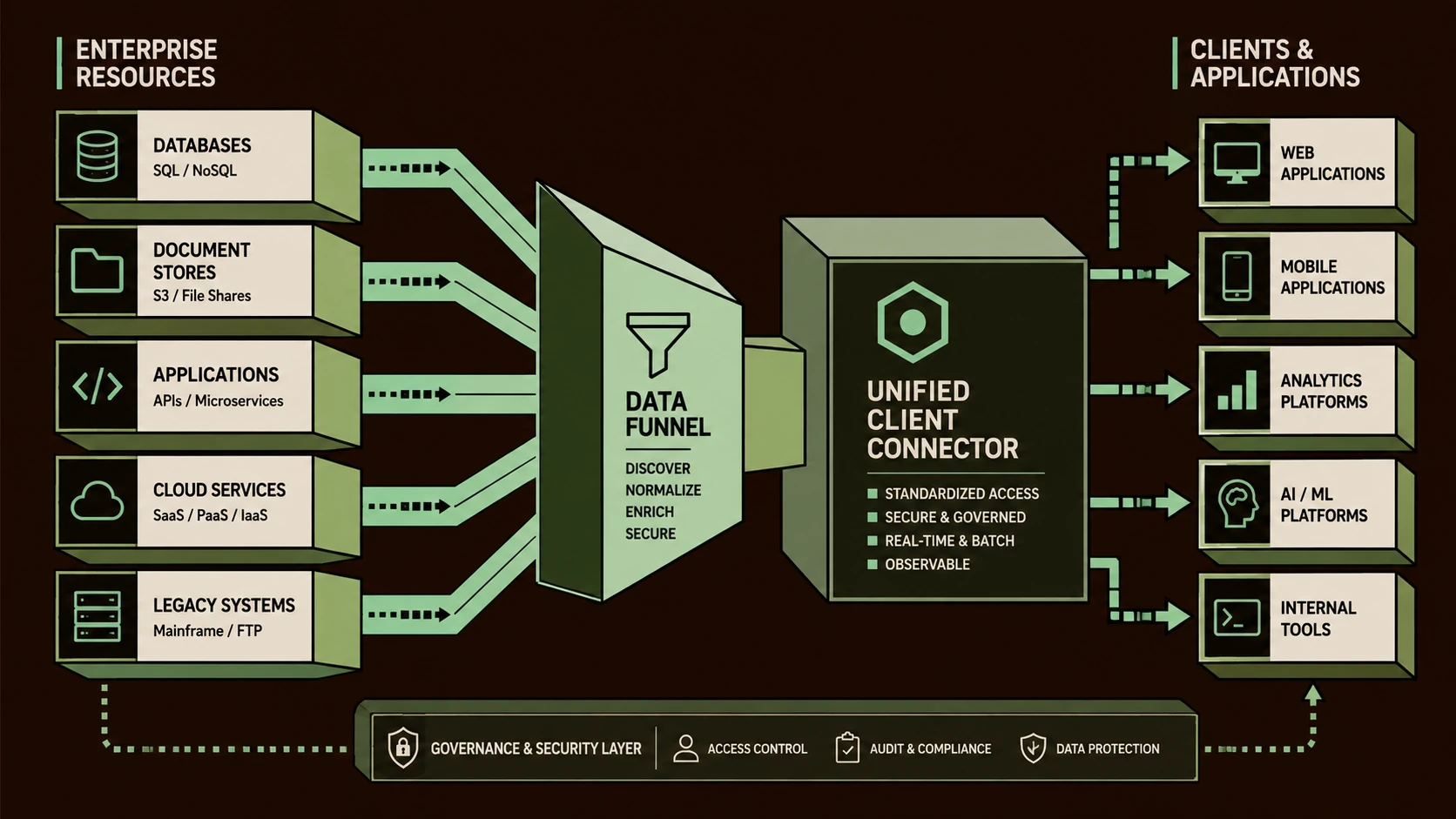
Business systems are exposed through standardized tools or APIs, allowing agents to interact with enterprise services without coupling to implementation details.
5. Policy-Driven Execution
Governance rules determine which agents can access data, execute tools, or invoke external models.
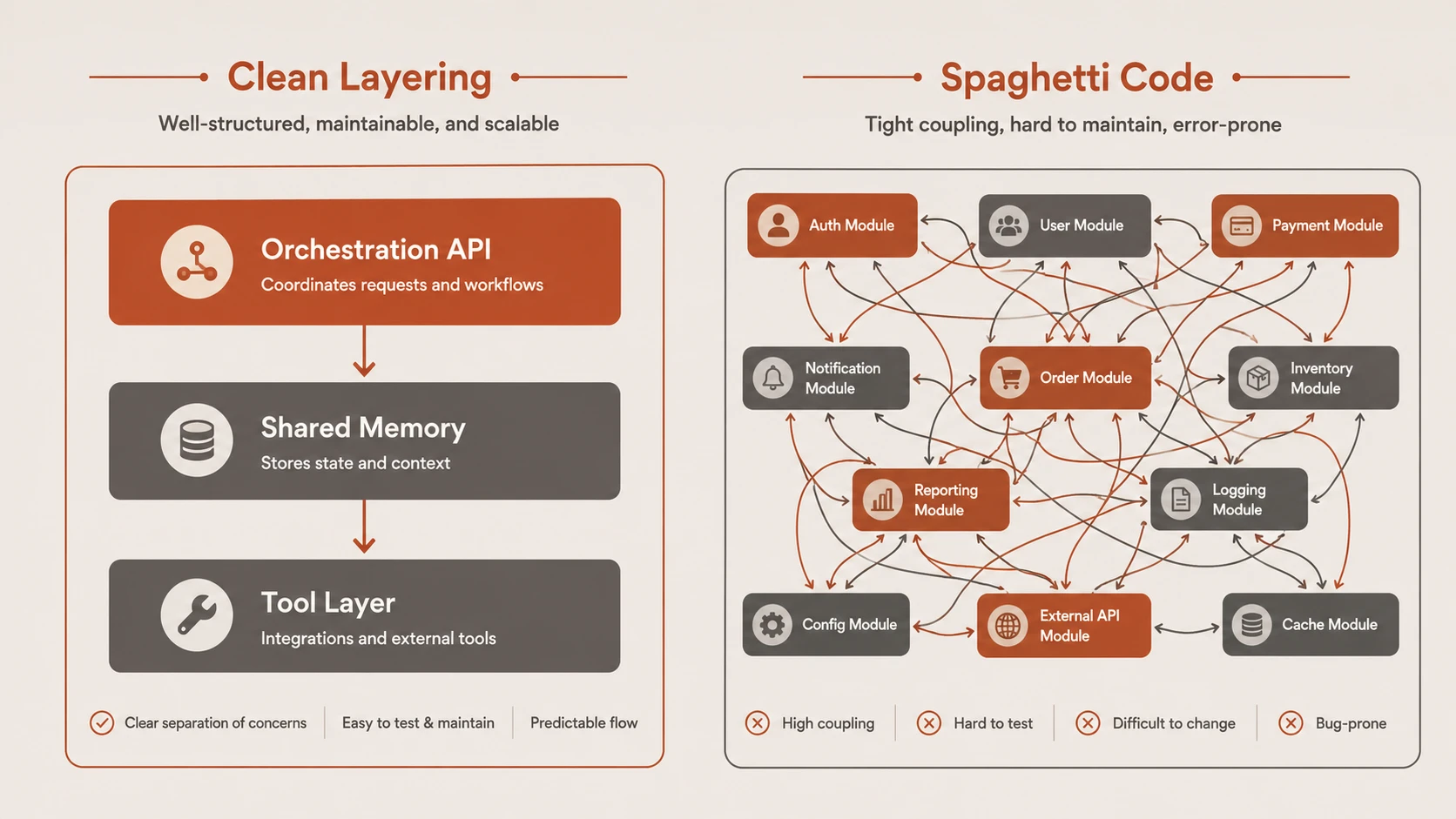
System architecture diagram and conceptual workflow layout for Software Architecture in the Age of Agents.
---
Common Anti-Patterns
Many enterprise AI projects fail because of poor architectural decisions.
Avoid these anti-patterns:
- ◆Monolithic AI services handling every responsibility
- ◆Hardcoded prompt logic scattered across applications
- ◆No shared memory between collaborating agents
- ◆Excessive synchronous API dependencies
- ◆Vendor lock-in to a single LLM provider
- ◆Lack of observability and tracing
- ◆Missing governance or policy enforcement
- ◆Tight coupling between AI logic and business logic
These issues reduce scalability, increase maintenance costs, and limit future evolution.
---
Enterprise Reference Architecture
Users
   │
API Gateway
   │
Agent Orchestrator
   │
────────────────────────────────────
│ Planner │ Memory │ Policy Engine │
────────────────────────────────────
   │
────────────────────────────────────
│ Research │ Coding │ Vision │ QA │
│ Agents   │ Agent  │ Agent  │Agent│
────────────────────────────────────
   │
Tool Execution Layer
   │
Enterprise Systems
This layered approach separates orchestration, reasoning, execution, and integration responsibilities.
---
Observability and Governance
Autonomous systems require continuous monitoring.
Important capabilities include:
- ◆Distributed tracing
- ◆Agent execution logs
- ◆Workflow visualization
- ◆Token usage analytics
- ◆Cost monitoring
- ◆Security auditing
- ◆Policy validation
- ◆Human approval checkpoints
Without observability, debugging multi-agent systems quickly becomes impractical.
---
Future States of Software Architecture
Over the next decade, enterprise software is expected to evolve toward:
- ◆Autonomous workflow execution
- ◆Self-healing distributed systems
- ◆Dynamic agent marketplaces
- ◆Context-aware enterprise platforms
- ◆Multi-LLM orchestration
- ◆Persistent organizational memory
- ◆AI-native operating models
- ◆Adaptive software ecosystems
Applications will increasingly act as intelligent collaborators rather than passive tools.
---
Best Practices
| Area | Best Practice |
|---|---|
| System Design | Modular Agent Architecture |
| Communication | Event-Driven Messaging |
| Memory | Shared Context Layer |
| Governance | Policy Engine |
| Integrations | Tool Abstraction Layer |
| Reliability | Distributed Orchestration |
| Observability | OpenTelemetry + Tracing |
| Security | Zero Trust Architecture |
---
Conclusion
The rise of Agentic AI represents the next major evolution in enterprise software architecture. Success will depend on designing systems that prioritize modularity, orchestration, observability, governance, and resilience from the outset.
Organizations that embrace proven architectural patterns while avoiding common anti-patterns will be better positioned to build intelligent platforms capable of adapting to changing business requirements and rapidly evolving AI technologies.