The Next Evolution of the Internet
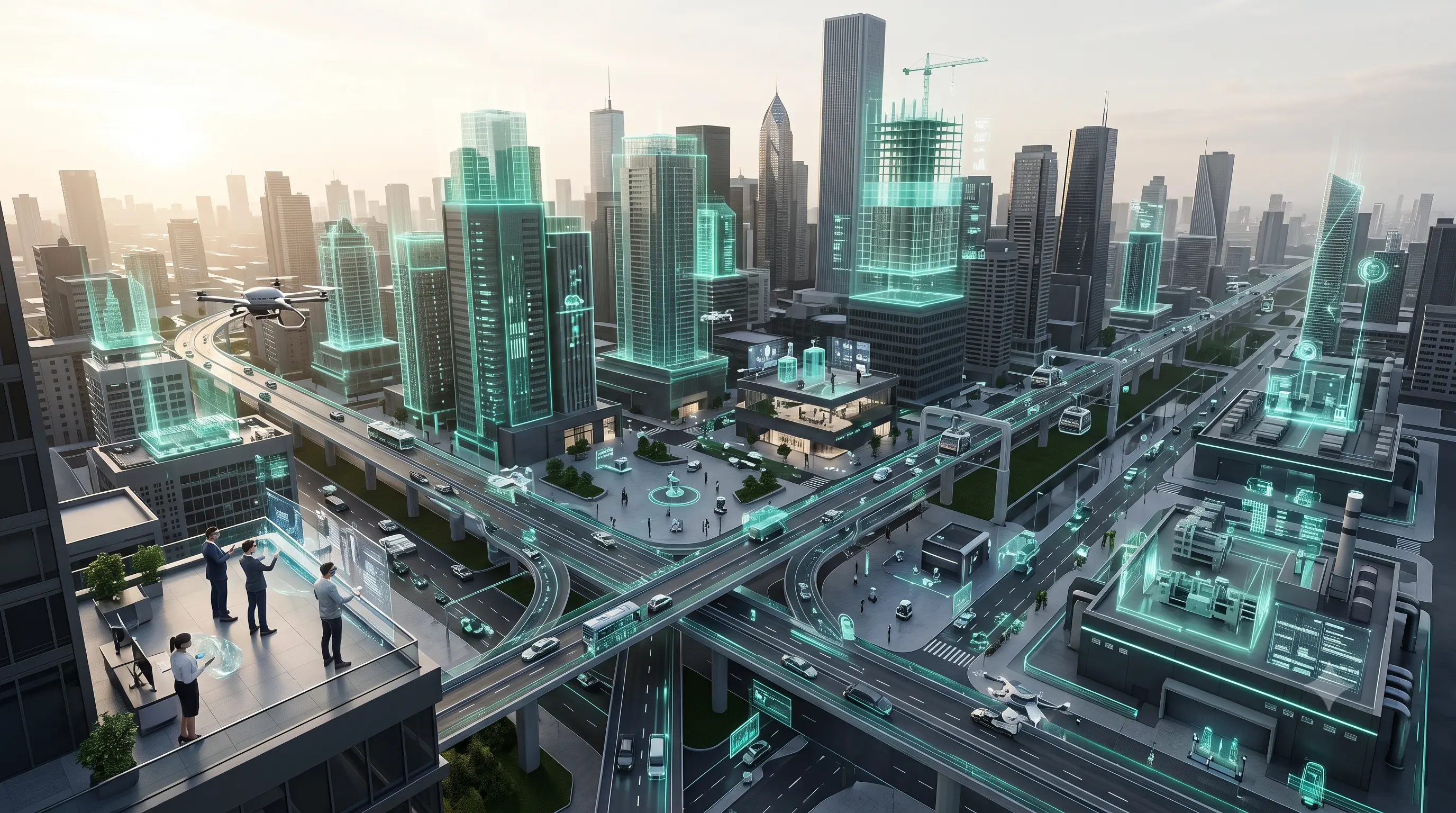
The internet has evolved through several transformative phases. Web 1.0 connected information, Web 2.0 connected people, and Web 3.0 introduced decentralized ownership. The next frontier is the Spatial Web, where digital information becomes embedded into physical environments and users interact with intelligent virtual experiences that exist alongside the real world.
Rather than viewing content on flat screens, people will engage with persistent digital environments through augmented reality, virtual reality, mixed reality, AI agents, and digital twins.
Architecture Principle: Future enterprise software won't simply display information—it will exist within the spaces where people work, collaborate, and make decisions.
---
What Is the Spatial Web?
The Spatial Web is an interconnected digital ecosystem that merges physical locations with intelligent virtual experiences.
Unlike today's web, which revolves around pages and applications, the Spatial Web revolves around places, objects, and interactions.
Core technologies include:
- ◆Spatial Computing
- ◆Mixed Reality (MR)
- ◆Augmented Reality (AR)
- ◆Virtual Reality (VR)
- ◆AI Agents
- ◆Digital Twins
- ◆IoT Sensors
- ◆Edge Computing
- ◆Cloud Infrastructure
- ◆3D Mapping
Together, these technologies create persistent environments that understand context, location, and human interaction.
---
The Enterprise Metaverse Stack
A production-ready enterprise metaverse typically consists of several interconnected layers:
Users & XR Devices
        │
Spatial Interfaces
        │
AI Agents & Avatars
        │
Digital Twin Platform
        │
Spatial Computing Engine
        │
IoT & Edge Devices
        │
Cloud Infrastructure
        │
Enterprise Applications
Each layer contributes to delivering immersive, real-time business experiences.
---
Digital Twins: The Foundation
Digital twins are virtual representations of physical assets that continuously synchronize with real-world data.
Organizations use digital twins to monitor:
- ◆Manufacturing plants
- ◆Smart buildings
- ◆Hospitals
- ◆Energy grids
- ◆Warehouses
- ◆Logistics fleets
- ◆Retail environments
- ◆Construction projects
By combining sensor data with AI analytics, digital twins provide accurate operational insights and predictive decision-making.
---
AI Agents in Spatial Environments
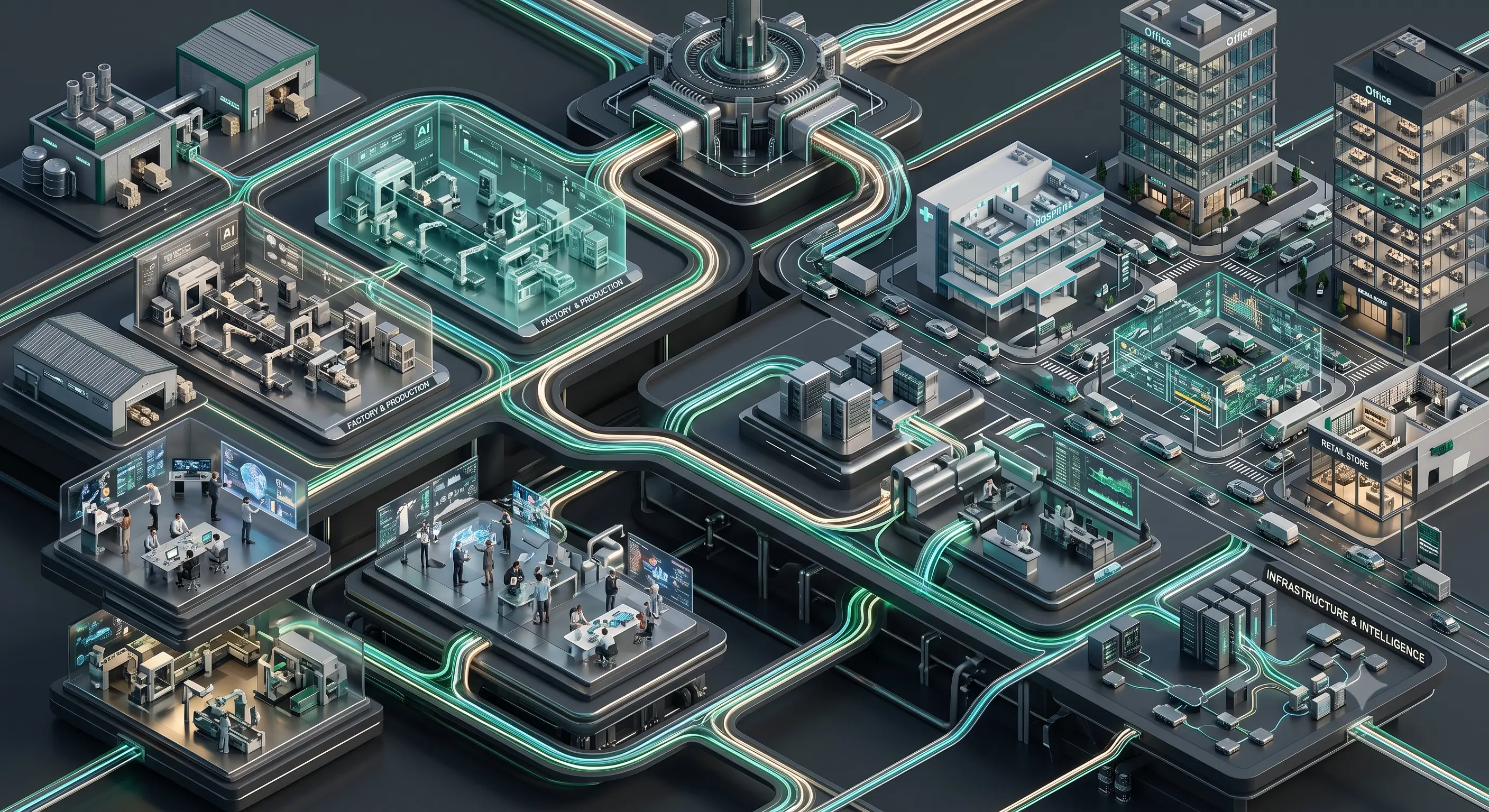
AI agents transform immersive experiences from static visualizations into intelligent, interactive systems.
Within a spatial environment, agents can:
- ◆Guide employees through complex workflows
- ◆Monitor equipment health
- ◆Assist remote maintenance
- ◆Coordinate warehouse operations
- ◆Provide contextual recommendations
- ◆Automate inspections
- ◆Translate multilingual conversations
- ◆Respond to voice commands
Instead of navigating menus, users interact naturally with intelligent assistants embedded directly into their surroundings.
---
Spatial Computing Architecture
Building enterprise spatial applications requires multiple technologies working together.
Typical components include:
- ◆Spatial Mapping Engine
- ◆3D Rendering Pipeline
- ◆AI Vision Models
- ◆Object Recognition
- ◆Digital Twin Services
- ◆Edge Computing
- ◆Cloud Synchronization
- ◆Identity Management
- ◆Collaboration Services
- ◆Real-Time Analytics
These systems continuously exchange data to maintain synchronized physical and virtual environments.
---
Enterprise Use Cases
The Spatial Web is already transforming several industries.
Examples include:
- ◆Factory floor monitoring
- ◆Remote equipment maintenance
- ◆Medical training simulations
- ◆Virtual product design
- ◆Retail visualization
- ◆Warehouse optimization
- ◆Smart city management
- ◆Collaborative engineering reviews
Each use case combines real-world operations with digital intelligence to improve efficiency and decision-making.
---
Challenges to Enterprise Adoption
Despite its potential, organizations face several challenges.
Common considerations include:
- ◆High infrastructure costs
- ◆XR device compatibility
- ◆Low-latency networking
- ◆Data privacy
- ◆Security
- ◆Interoperability
- ◆Content creation
- ◆User adoption
Addressing these challenges requires careful architectural planning and governance.
---
Best Practices
| Area | Best Practice |
|---|---|
| Rendering | Real-Time 3D Engine |
| Intelligence | AI Agent Integration |
| Physical Layer | Digital Twins |
| Connectivity | Edge + Cloud |
| Identity | Zero Trust Security |
| Collaboration | Persistent Spatial Workspaces |
| Data | IoT Sensor Integration |
| Performance | Low-Latency Streaming |
---
The Future of the Spatial Web
The Spatial Web represents a shift from application-centric software to environment-centric computing. As AI, digital twins, edge computing, and immersive technologies mature, enterprise experiences will increasingly span physical and virtual spaces without clear boundaries.
Organizations that invest in spatial computing today will be positioned to build intelligent workplaces, connected factories, collaborative engineering environments, and next-generation customer experiences that redefine how people interact with technology.