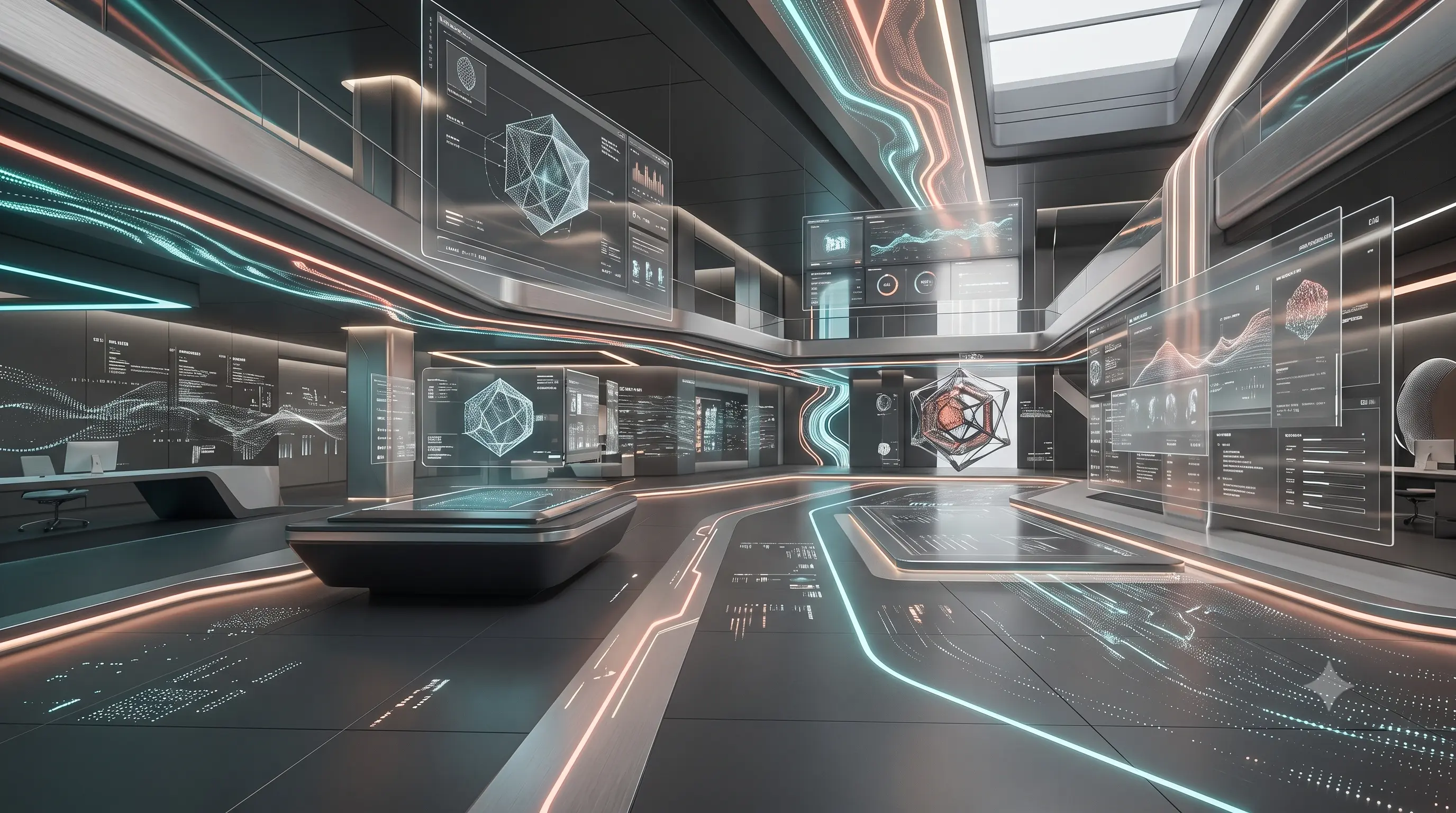
Why Computing Is Moving Beyond Screens
For decades, digital experiences have been confined to phones, laptops, tablets, and desktop monitors. While these interfaces transformed how people interact with technology, they also created a separation between digital information and the physical world.
The convergence of Extended Reality (XR), modern Web technologies, Artificial Intelligence, and Spatial Computing is eliminating that boundary. Information is no longer limited to flat displays—it can exist naturally within physical environments, responding to context, movement, voice, gestures, and intelligent automation.
Architecture Principle: The future interface is not a screen—it's the environment itself.
---
What Is XR + Web + AI?
XR + Web + AI represents the convergence of immersive technologies, cloud-native web platforms, and intelligent software capable of understanding users and their surroundings.
Rather than treating immersive experiences as standalone applications, enterprises build platforms where AI, cloud services, spatial computing, and web technologies work together.
Core technologies include:
- ◆WebXR
- ◆Spatial Computing
- ◆AI Agents
- ◆Computer Vision
- ◆Digital Twins
- ◆Cloud Rendering
- ◆Edge Computing
- ◆Context Intelligence
Together, these technologies create persistent digital environments that extend naturally into the physical world.
---
Evolution of Human–Computer Interaction
Enterprise computing has evolved through several generations:
- 1.Desktop Applications
- 2.Mobile Computing
- 3.Cloud Applications
- 4.AI-Powered Interfaces
- 5.Spatial Computing
- 6.XR + Web + AI Experiences
Instead of opening applications, users increasingly interact with intelligent digital environments.
---
Enterprise Reference Architecture
Enterprise Applications
          │
Web Platform
          │
WebXR Runtime
          │
Spatial Computing Engine
          │
AI Agents
          │
Context Intelligence
          │
Cloud Rendering
          │
Edge Computing
          │
Immersive Experiences
Each layer contributes to creating responsive, intelligent, and persistent immersive environments.
---
AI as the Intelligence Layer
XR experiences become significantly more valuable when enhanced by AI.
Modern AI systems provide:
- ◆Natural language interaction
- ◆Gesture understanding
- ◆Object recognition
- ◆Scene understanding
- ◆Recommendation engines
- ◆Intelligent navigation
- ◆Real-time translation
- ◆Context-aware assistance
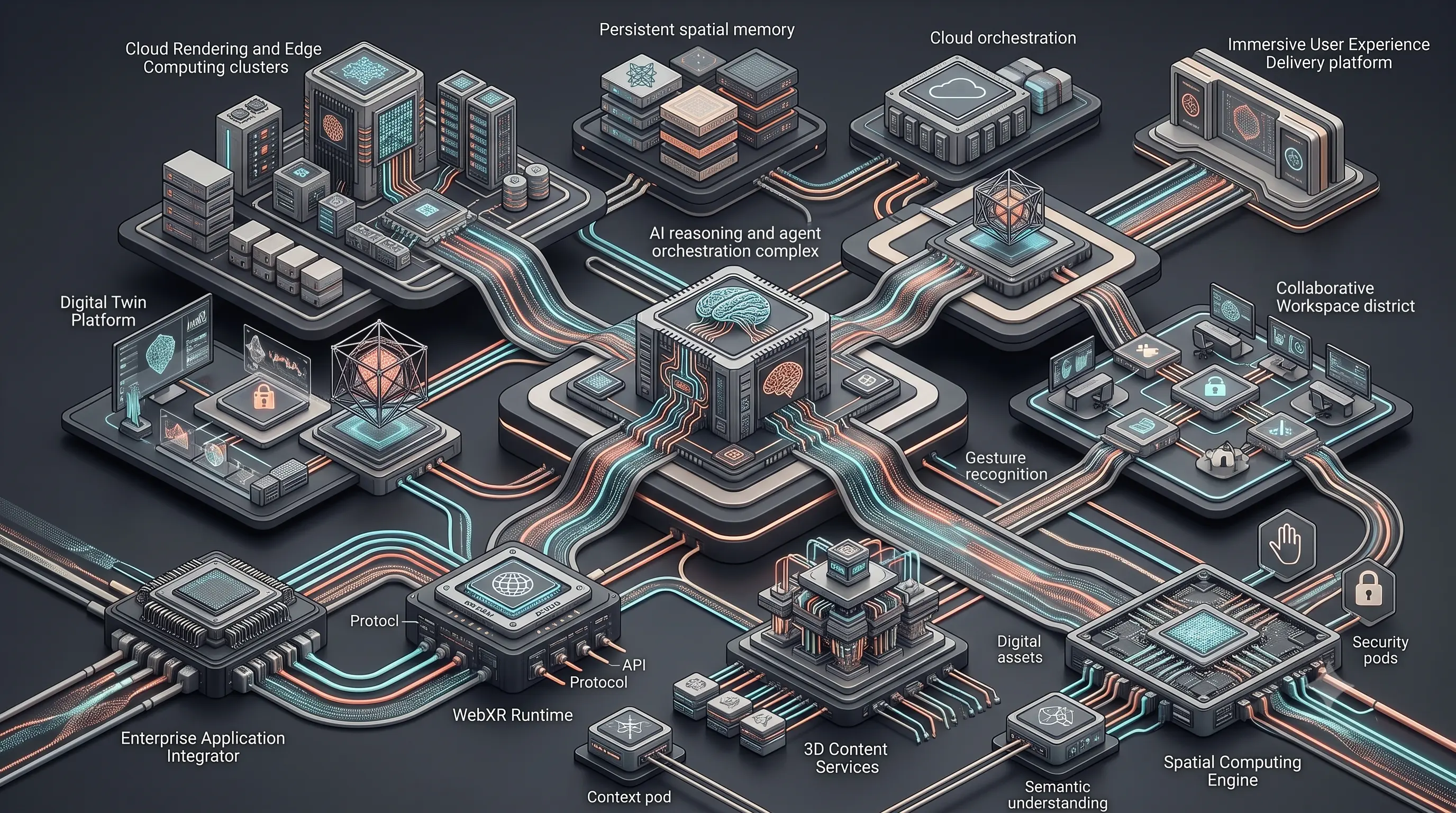
AI transforms immersive environments from visual demonstrations into intelligent digital workspaces.
---
The Role of Web Technologies
Modern Web technologies eliminate the need for platform-specific immersive applications.
Capabilities include:
- ◆Browser-based XR experiences
- ◆Cross-platform deployment
- ◆Progressive Web Applications
- ◆Real-time synchronization
- ◆Cloud-hosted content
- ◆Secure authentication
- ◆API integration
- ◆Collaborative sessions
Organizations can deploy immersive experiences using familiar web development workflows.
---
Enterprise Use Cases
The convergence of XR, Web, and AI is transforming multiple industries.
Examples include:
- ◆Remote equipment maintenance
- ◆Medical simulation and training
- ◆Digital manufacturing
- ◆Collaborative product design
- ◆Retail visualization
- ◆Smart campuses
- ◆Architecture reviews
- ◆Enterprise onboarding
Each use case blends immersive visualization with AI-driven decision support.
---
Technical Challenges
Building enterprise-grade immersive platforms requires solving several challenges:
- ◆Low-latency rendering
- ◆Spatial synchronization
- ◆Device interoperability
- ◆Edge processing
- ◆Privacy protection
- ◆Persistent identity
- ◆3D asset optimization
- ◆AI inference at scale
Addressing these challenges requires cloud-native architecture, distributed computing, and intelligent orchestration.
---
Best Practices
| Area | Best Practice |
|---|---|
| Rendering | Cloud + Edge Rendering |
| Intelligence | AI Agent Integration |
| Platform | WebXR-First Development |
| Context | Spatial Intelligence |
| Collaboration | Persistent Shared Spaces |
| Performance | Adaptive Streaming |
| Security | Zero Trust Identity |
| Deployment | Cloud-Native Architecture |
---
The Future of Immersive Enterprise Computing
The next generation of enterprise software will not live inside browser windows or mobile applications. Instead, digital experiences will become spatial, intelligent, and continuously aware of their environment. AI agents will guide users through immersive workflows, cloud platforms will stream complex digital environments in real time, and Web technologies will make these experiences universally accessible.
Organizations that embrace the convergence of XR, Web, and AI today will build immersive digital workplaces where collaboration, learning, design, maintenance, and customer engagement move naturally beyond the boundaries of traditional screens.