Introduction
Over the past decade, software engineering has continuously shifted toward greater automation and developer autonomy. DevOps introduced closer collaboration between development and operations teams, Infrastructure as Code standardized cloud provisioning, Kubernetes simplified container orchestration, and GitOps improved deployment consistency.
Despite these advancements, many enterprise engineering organizations continued facing significant operational complexity. Developers often spent considerable time requesting infrastructure, configuring Kubernetes clusters, managing secrets, integrating observability tools, understanding deployment pipelines, and navigating cloud governance processes. While cloud-native technologies increased flexibility, they also introduced cognitive overhead that reduced engineering productivity.
To address these challenges, organizations increasingly embraced Platform Engineering. Rather than expecting every product team to become infrastructure experts, specialized platform teams began building Internal Developer Platforms (IDPs) that abstract operational complexity behind standardized, self-service interfaces.
Internal Developer Platforms provide reusable capabilities such as application templates, deployment pipelines, security controls, infrastructure provisioning, service catalogs, observability integrations, and governance policies. Developers consume these services much like cloud products, allowing them to focus on delivering business value instead of managing infrastructure.
From the perspective of January 2025, Platform Engineering has become one of the defining operating models for modern enterprise software organizations.
Industry Background
Modern enterprise software increasingly relies on:
- ◆Kubernetes.
- ◆Cloud-native infrastructure.
- ◆Microservices.
- ◆Service meshes.
- ◆GitOps workflows.
- ◆AI-assisted development.
- ◆Multi-cloud deployments.
Technology leaders increasingly prioritize:
- ◆Developer Experience (DevEx).
- ◆Engineering productivity.
- ◆Platform standardization.
- ◆Self-service infrastructure.
- ◆Operational consistency.
- ◆Governance automation.
Platform Engineering has emerged as the organizational response to growing cloud complexity.
The Business Problem
As engineering organizations scale, operational complexity often grows faster than software delivery.
Organizations commonly experience:
- ◆Manual infrastructure requests.
- ◆Inconsistent deployment pipelines.
- ◆Duplicate engineering effort.
- ◆Cloud governance challenges.
- ◆Slow developer onboarding.
- ◆Configuration drift.
- ◆Operational bottlenecks.
Highly skilled software engineers frequently spend valuable time solving infrastructure problems that could be standardized.
Internal Developer Platforms address these challenges by providing reusable engineering capabilities through self-service workflows.
Understanding the Technology
An Internal Developer Platform is an integrated engineering platform that enables developers to provision infrastructure, deploy applications, consume platform services, and manage operational resources without directly interacting with underlying infrastructure.
Rather than replacing Kubernetes, cloud providers, or CI/CD systems, the platform orchestrates these technologies behind consistent interfaces.
Core platform capabilities include:
- ◆Self-service infrastructure.
- ◆Service catalogs.
- ◆Deployment automation.
- ◆Identity integration.
- ◆Observability.
- ◆Secret management.
- ◆Policy enforcement.
- ◆Golden Paths.
The platform becomes the primary developer interface for infrastructure consumption.
Core Architecture
A simplified Internal Developer Platform architecture appears below.
| Component | Responsibility |
|---|---|
| Developers | Consume platform capabilities |
| Developer Portal | Self-service engineering interface |
| Service Catalog | Standardized application templates |
| CI/CD Platform | Build and deployment automation |
| Infrastructure Automation | Provision cloud resources |
| Kubernetes Platform | Container orchestration |
| Observability Stack | Monitoring, logging, tracing |
| Governance Layer | Security and compliance |
Developers interact primarily with the platform while infrastructure complexity remains abstracted behind standardized services.
Key Features
Self-Service Infrastructure
The defining capability of an Internal Developer Platform is self-service.
Developers can provision resources such as:
- ◆Application environments.
- ◆Databases.
- ◆Message queues.
- ◆Storage.
- ◆Kubernetes namespaces.
- ◆Secrets.
- ◆API gateways.
Requests are fulfilled automatically according to predefined organizational policies.
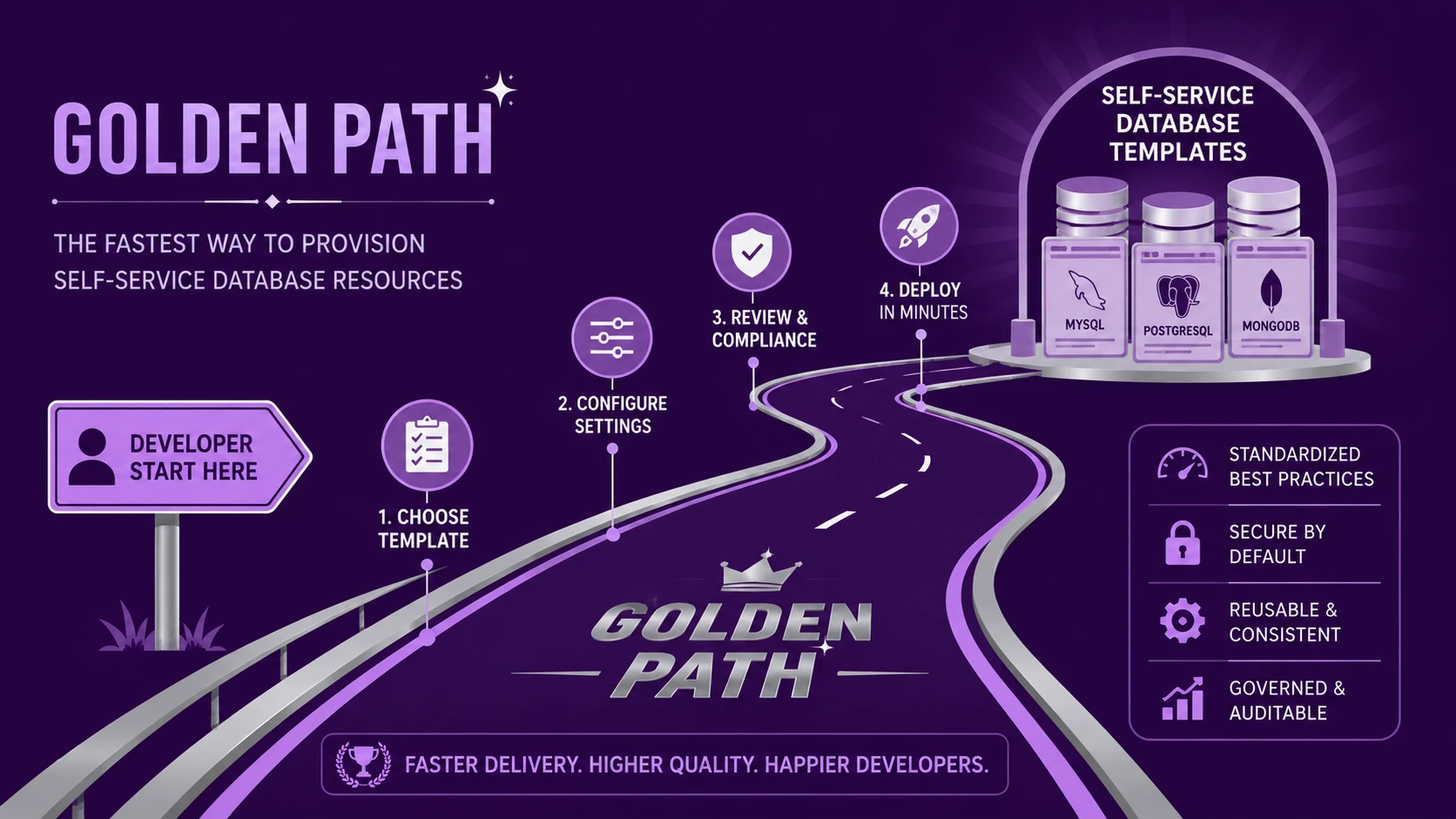
Golden Paths
Platform Engineering encourages standardized implementation patterns known as Golden Paths.
Golden Paths provide opinionated templates covering:
- ◆Application structure.
- ◆Deployment pipelines.
- ◆Security configurations.
- ◆Monitoring.
- ◆Infrastructure.
- ◆Documentation.
Rather than limiting innovation, Golden Paths reduce repetitive engineering decisions while improving consistency.
Developer Portals
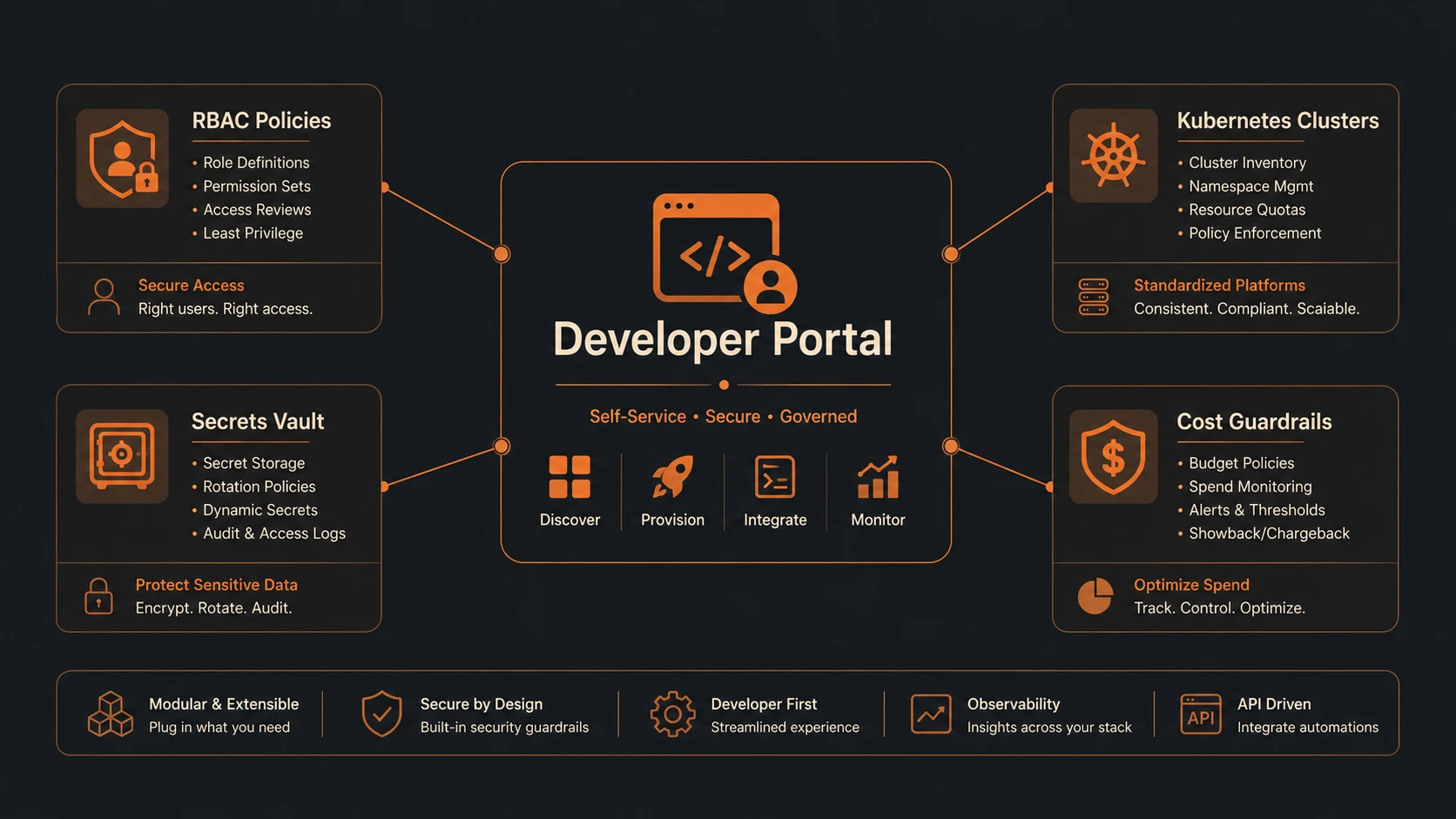
Modern Internal Developer Platforms typically expose capabilities through centralized portals.
Developers can:
- ◆Create new services.
- ◆Browse service catalogs.
- ◆Deploy applications.
- ◆Monitor environments.
- ◆Request infrastructure.
- ◆View documentation.
The portal becomes the engineering organization's primary operational workspace.
Platform APIs
Internal platforms expose reusable APIs for automation.
These APIs enable:
- ◆Infrastructure provisioning.
- ◆Deployment automation.
- ◆Secret management.
- ◆Configuration updates.
- ◆Service lifecycle management.
API-driven platforms support both graphical interfaces and automated workflows.
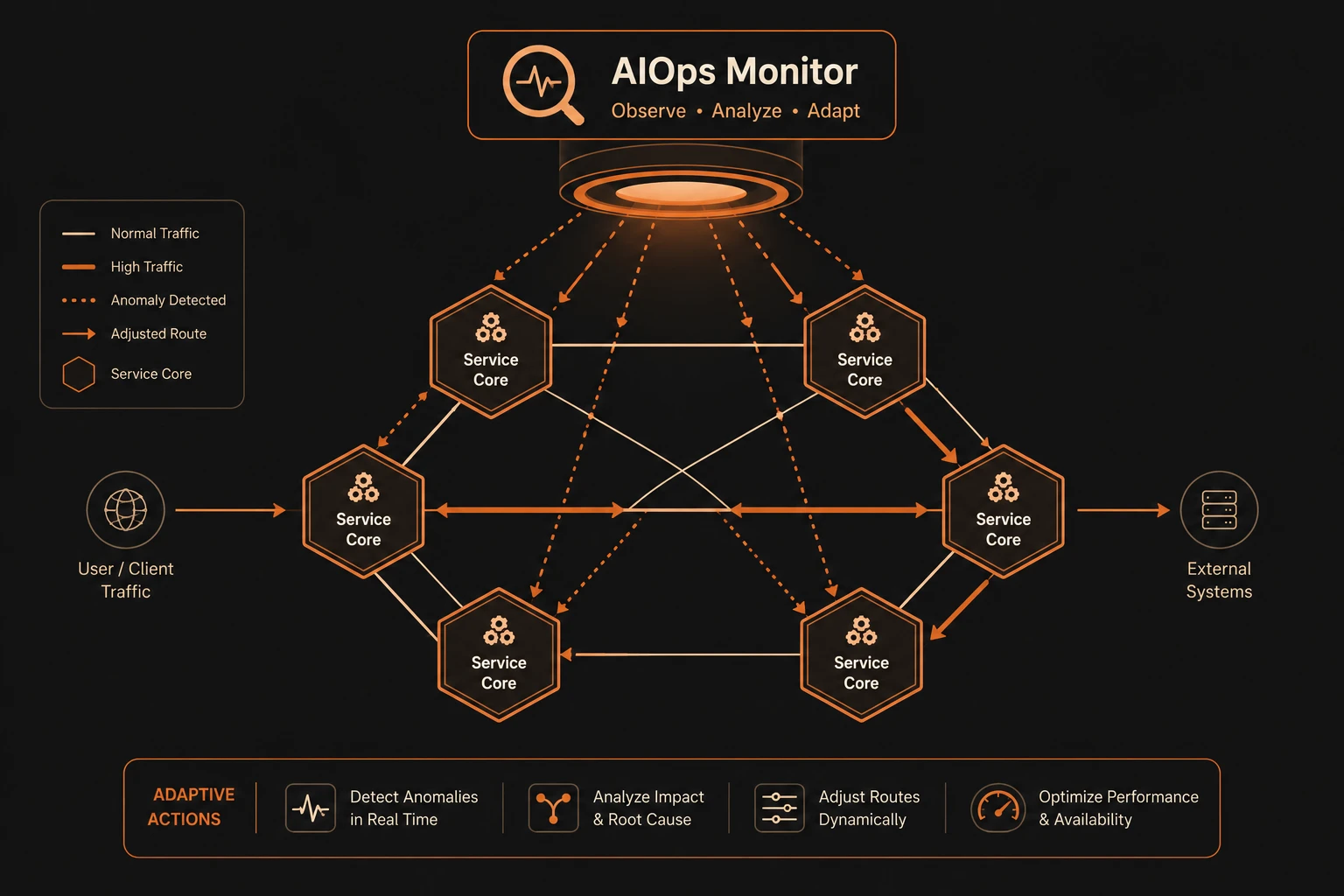
Built-In Observability
Operational visibility becomes a default platform capability.
Modern platforms integrate:
- ◆Logging.
- ◆Metrics.
- ◆Distributed tracing.
- ◆Alerting.
- ◆Dashboards.
- ◆Service health.
Application teams receive production insights without assembling separate monitoring stacks.
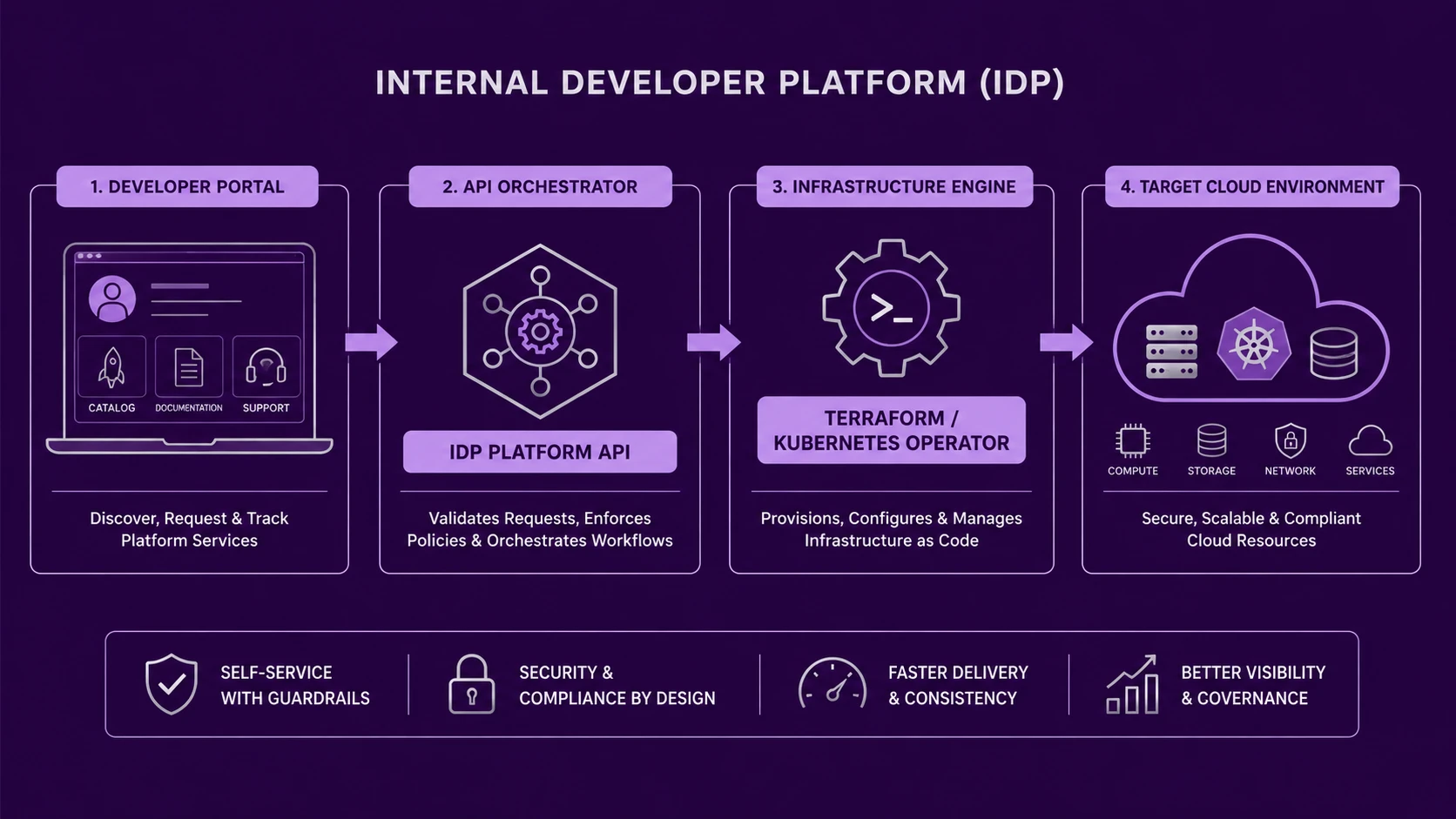
System architecture diagram and conceptual workflow layout for Internal Developer Platforms.
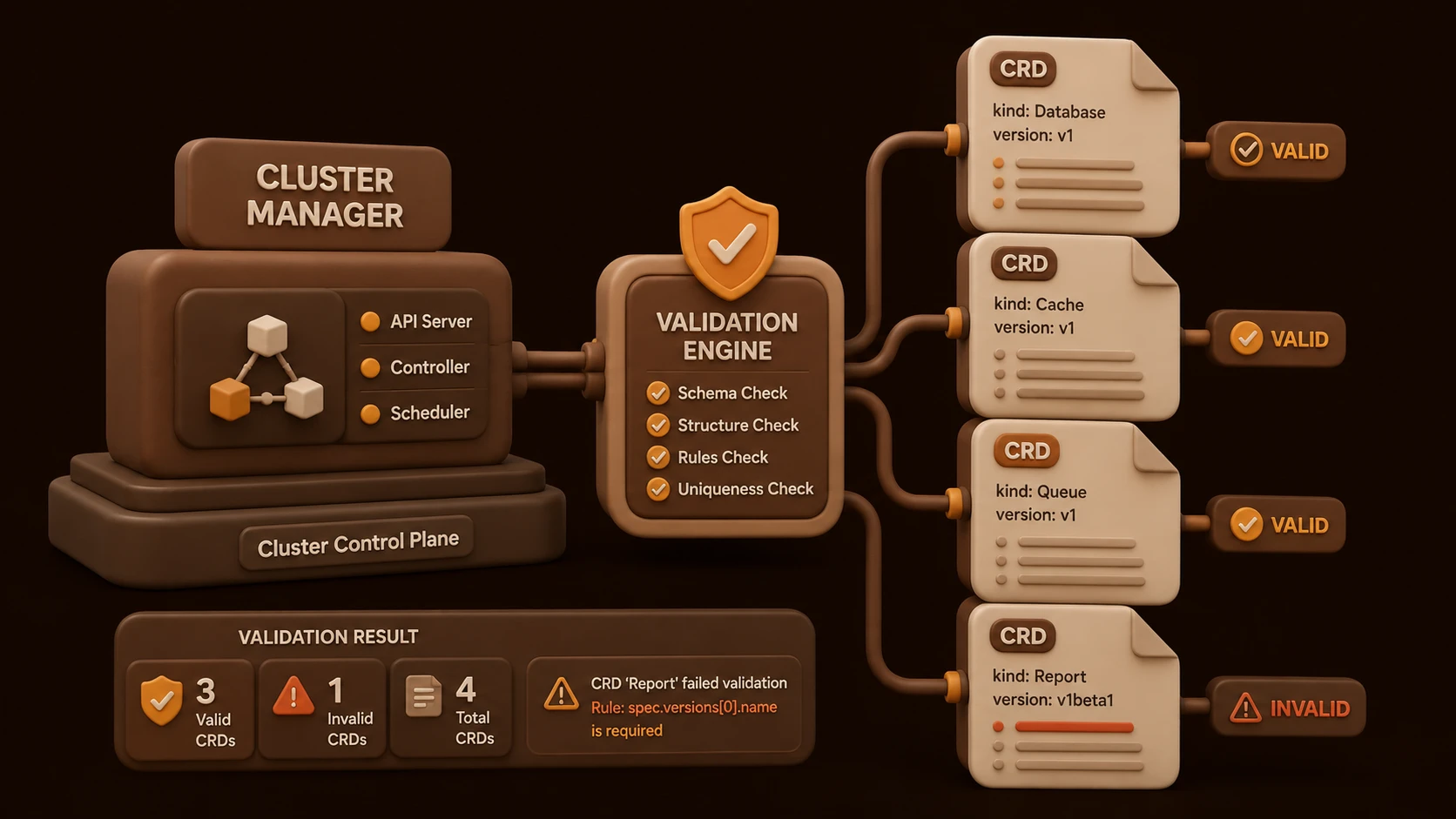
Policy as Code
Enterprise governance increasingly becomes automated.
Organizations enforce:
- ◆Security policies.
- ◆Infrastructure standards.
- ◆Compliance rules.
- ◆Resource quotas.
- ◆Identity controls.
Governance operates continuously through platform automation rather than manual approval processes.
How It Works
A simplified workflow appears below.
Developer Request
        |
Developer Portal
        |
Service Catalog
        |
Platform APIs
        |
Infrastructure Automation
        |
Cloud Resources
        |
CI/CD Pipeline
        |
Production Deployment
        |
Observability Platform
The platform automates infrastructure provisioning, deployment, governance, and operational monitoring while developers focus on application delivery.
Enterprise Use Cases
Enterprise SaaS Organizations
Product teams rapidly provision standardized environments while maintaining consistent security and operational practices.
Financial Services
Platform teams automate regulated infrastructure provisioning, ensuring compliance requirements are consistently applied.
AI Engineering Platforms
Machine learning teams provision GPU environments, model serving infrastructure, vector databases, and AI pipelines through standardized platform services.
Healthcare Systems
Development teams deploy secure cloud-native services while inheriting organizational governance, monitoring, and compliance controls.
Multi-Cloud Enterprises
Internal platforms abstract provider-specific infrastructure, enabling developers to consume standardized services regardless of the underlying cloud environment.
Performance Considerations
Organizations implementing Internal Developer Platforms should evaluate:
- ◆Provisioning time.
- ◆Deployment frequency.
- ◆Platform availability.
- ◆Automation reliability.
- ◆Infrastructure utilization.
- ◆Developer onboarding speed.
Platform success should be measured through developer productivity and operational efficiency rather than infrastructure metrics alone.
Security Considerations
Internal Developer Platforms should integrate enterprise security by default.
Organizations should implement:
- ◆Single Sign-On.
- ◆Role-Based Access Control.
- ◆Secret management.
- ◆Infrastructure policy validation.
- ◆Continuous compliance.
- ◆Audit logging.
- ◆Supply chain security.
Security becomes an embedded platform capability rather than a separate engineering responsibility.
Scalability
Platform Engineering improves organizational scalability through:
- ◆Standardized infrastructure.
- ◆Reusable engineering capabilities.
- ◆Automated provisioning.
- ◆Consistent governance.
- ◆Improved Developer Experience.
- ◆Reduced cognitive load.
These capabilities allow organizations to scale engineering teams without proportionally increasing operational complexity.
Best Practices
Organizations adopting Platform Engineering should:
- ◆Design platforms around developer needs rather than infrastructure technologies.
- ◆Continuously measure Developer Experience.
- ◆Build opinionated Golden Paths while allowing flexibility where appropriate.
- ◆Automate governance and security.
- ◆Integrate observability into every platform service.
- ◆Maintain comprehensive platform documentation.
- ◆Treat the platform as a product with dedicated ownership and continuous improvement.
Successful platforms prioritize usability, consistency, and developer productivity.
Common Mistakes
| Mistake | Business Impact |
|---|---|
| Building platforms around infrastructure instead of developer workflows | Low adoption |
| Forcing excessive standardization | Reduced engineering flexibility |
| Ignoring Developer Experience metrics | Poor platform usability |
| Creating multiple overlapping platforms | Increased operational complexity |
| Treating the platform as a one-time project | Declining long-term value |
| Neglecting documentation and onboarding | Slower engineering productivity |
Organizations should continuously evolve Internal Developer Platforms based on developer feedback and changing business requirements.
Technology Comparison
| Characteristic | Traditional DevOps Model | Internal Developer Platform |
|---|---|---|
| Infrastructure Access | Manual or ticket-driven | Self-service automation |
| Developer Experience | Tool-centric | Product-centric |
| Standardization | Team dependent | Platform managed |
| Governance | Manual reviews | Automated Policy as Code |
| Deployment | Pipeline specific | Standardized platform workflows |
| Engineering Focus | Infrastructure management | Product development |
Internal Developer Platforms extend DevOps principles by providing reusable platform capabilities that simplify software delivery while preserving operational governance.
Adoption Strategy
Organizations should modernize incrementally.
- 1.Identify common engineering workflows suitable for standardization.
- 2.Establish a dedicated Platform Engineering team.
- 3.Build a developer portal and service catalog.
- 4.Introduce Golden Paths for common application patterns.
- 5.Integrate security, observability, and governance into platform services.
- 6.Continuously improve the platform using developer feedback and engineering metrics.
This phased approach enables organizations to improve Developer Experience while maintaining operational consistency and governance.
Limitations
As of January 2025, organizations should recognize several considerations.
- ◆Internal Developer Platforms require ongoing investment and dedicated product ownership to remain valuable.
- ◆Platform Engineering complements rather than replaces DevOps, Site Reliability Engineering, or cloud operations.
- ◆Over-standardization may reduce flexibility for specialized engineering teams if customization options are not considered.
- ◆Platform success depends heavily on developer adoption, documentation quality, automation maturity, and organizational culture.
- ◆Long-term effectiveness requires continuous measurement of Developer Experience, operational performance, and evolving business needs.
These considerations should guide enterprise Platform Engineering initiatives.
Looking Ahead
From the perspective of January 2025, Internal Developer Platforms have become a foundational capability for modern enterprise software organizations. As cloud-native architectures, AI-powered development, Kubernetes, and multi-cloud environments continue increasing operational complexity, Platform Engineering provides a sustainable approach for simplifying software delivery through self-service infrastructure, standardized workflows, automated governance, and developer-centric experiences.
Rather than asking every engineering team to master increasingly complex infrastructure, successful organizations are investing in internal platforms that function as products, empowering developers to build, deploy, monitor, and operate software with greater speed, consistency, and confidence. Organizations that continue strengthening Platform Engineering practices, Developer Experience, automation, and platform governance will be well positioned to accelerate innovation while maintaining the operational excellence required for enterprise-scale software delivery.