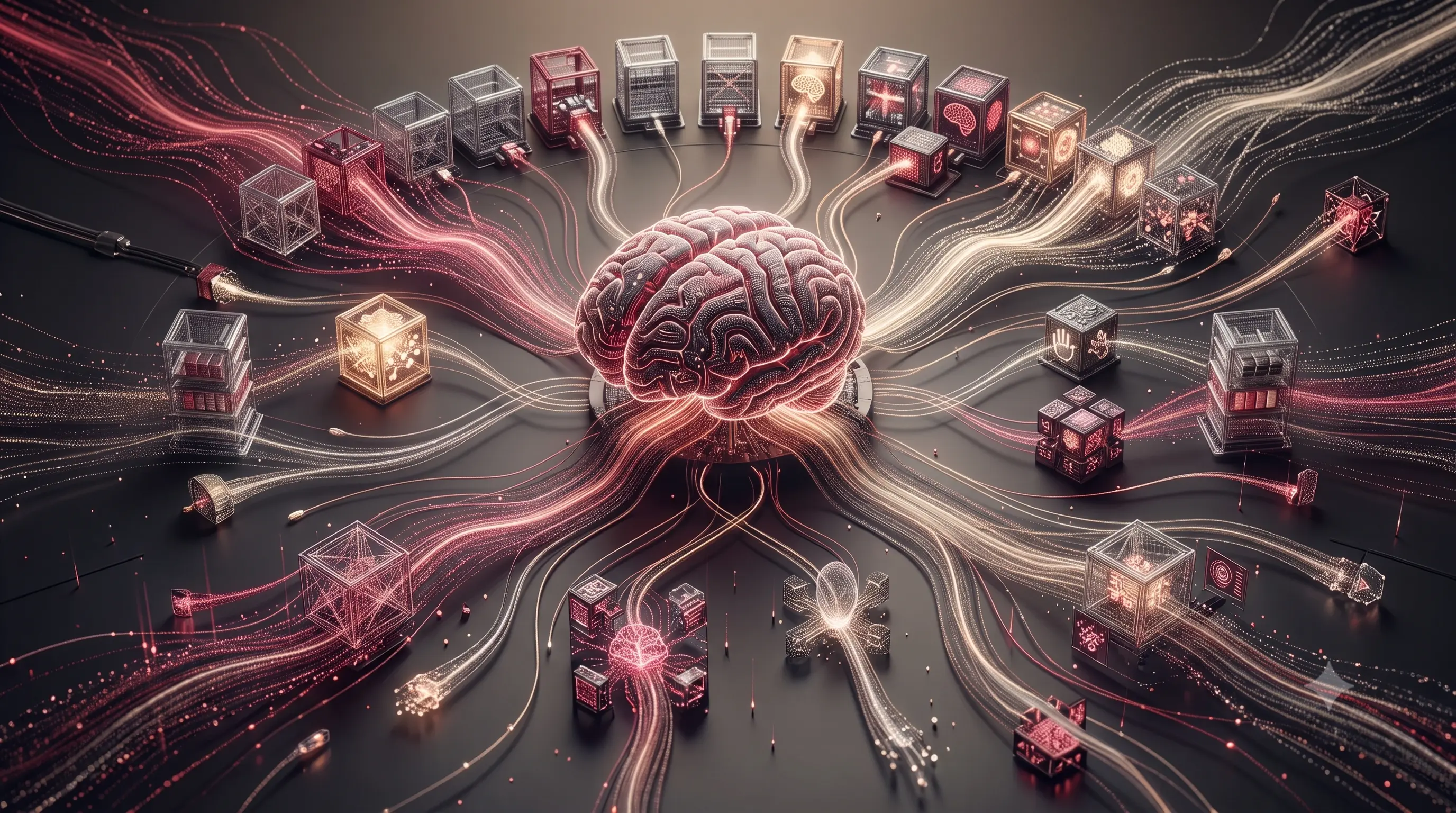
Why Serverless Is Entering a New Era
Serverless computing simplified cloud development by eliminating infrastructure management, while containers introduced portability and runtime consistency. Traditionally, these technologies evolved independently—serverless focused on functions and event execution, while containers powered long-running microservices.
Today, cloud-native platforms are merging both models. Serverless Containers and Function Meshes allow applications to execute containerized workloads only when required, automatically scale to zero, respond to events, and collaborate through intelligent routing without developers managing servers or Kubernetes clusters directly.
Architecture Principle: Compute should exist only when work exists, and every execution unit should be discoverable, composable, and event-driven.
---
What Are Serverless Containers?
Serverless Containers combine the flexibility of containers with the operational simplicity of serverless computing.
Unlike traditional container platforms that require continuously running infrastructure, serverless containers:
- ◆Start on demand
- ◆Scale automatically
- ◆Scale to zero
- ◆Respond to events
- ◆Support any programming language
- ◆Execute stateless workloads
- ◆Integrate with managed cloud services
- ◆Eliminate infrastructure management
Developers package applications as containers while the platform handles scheduling, networking, scaling, and lifecycle management.
---
Understanding Function Meshes
A Function Mesh extends serverless computing beyond isolated functions by enabling autonomous communication between distributed execution units.
Instead of building monolithic APIs, applications become collections of lightweight functions connected through events, messaging, and service discovery.
Typical capabilities include:
- ◆Event Routing
- ◆Function Discovery
- ◆Dynamic Invocation
- ◆Workflow Chaining
- ◆Distributed Messaging
- ◆Policy Enforcement
- ◆Service Versioning
- ◆Traffic Management
This creates a flexible execution fabric capable of adapting to changing workloads in real time.
---
Evolution of Cloud Compute
Cloud application architectures have progressed through multiple generations:
- 1.Virtual Machines
- 2.Containers
- 3.Kubernetes
- 4.Serverless Functions
- 5.Serverless Containers
- 6.Function Mesh Platforms
Each generation reduces operational overhead while increasing scalability and deployment flexibility.
---
Enterprise Reference Architecture
Client Applications
        │
API Gateway
        │
Event Bus
        │
Function Router
        │
────────────────────────────────────────
│ Serverless Containers │ Function Mesh │
────────────────────────────────────────
        │
Workflow Orchestrator
        │
Managed Cloud Services
        │
Observability Platform
Every request is routed dynamically to ephemeral compute resources that exist only for the duration of execution.
---
Intelligent Event-Driven Execution
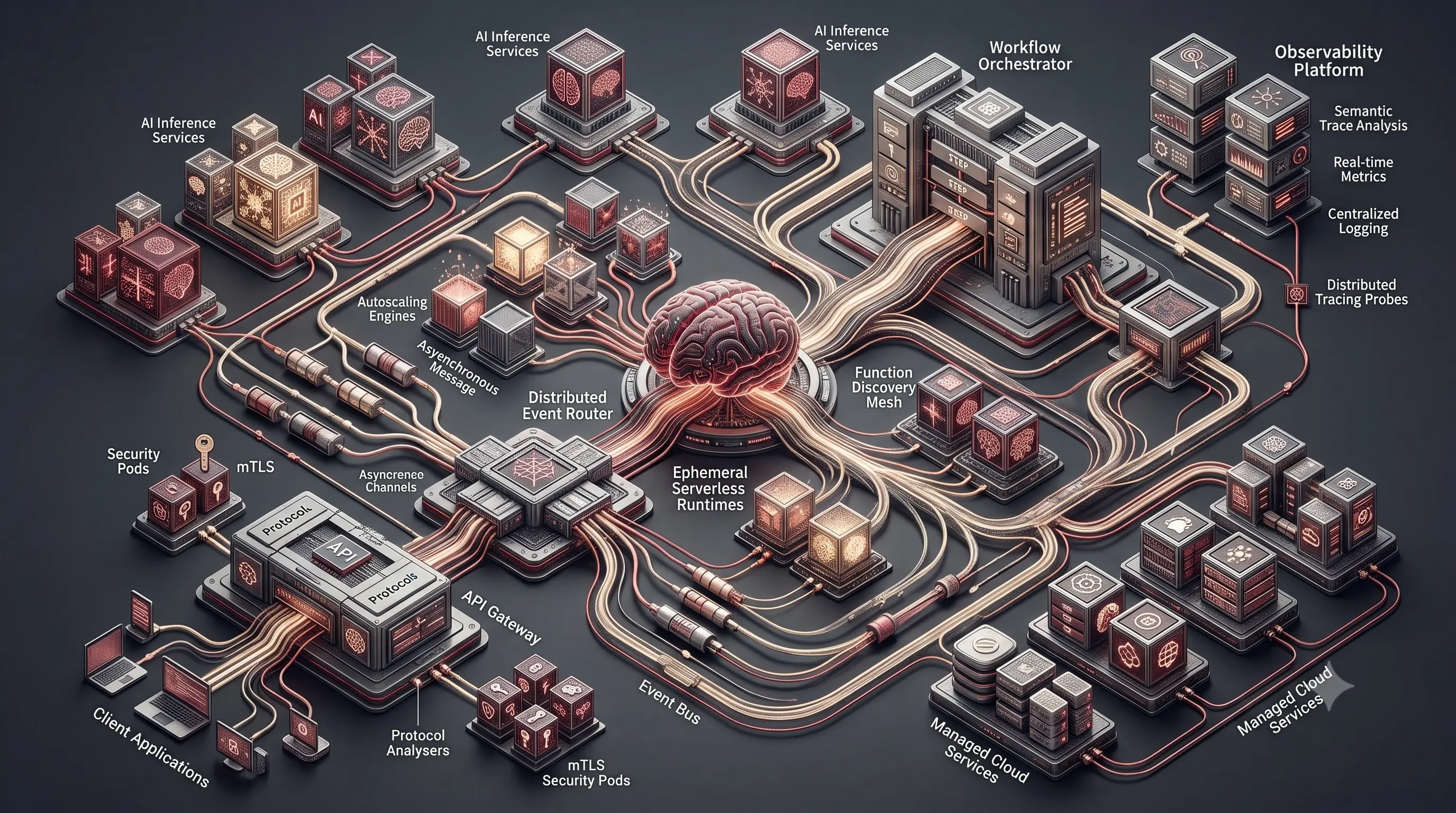
Modern Function Mesh platforms continuously react to events rather than relying on permanently running services.
Typical event sources include:
- ◆HTTP requests
- ◆Message queues
- ◆Database changes
- ◆Object storage events
- ◆IoT telemetry
- ◆AI inference requests
- ◆Scheduled jobs
- ◆Business workflows
This event-first architecture minimizes idle infrastructure while maximizing responsiveness.
---
AI-Native Serverless Platforms
AI workloads increasingly benefit from serverless containers.
Typical AI use cases include:
- ◆Model inference
- ◆Document processing
- ◆Image analysis
- ◆Data enrichment
- ◆Agent execution
- ◆Embedding generation
- ◆RAG pipelines
- ◆Batch AI processing
Serverless execution enables organizations to scale AI capabilities based on actual demand while optimizing infrastructure costs.
---
Autoscaling and Cost Optimization
One of the biggest advantages of serverless containers is intelligent resource utilization.
The platform automatically manages:
- ◆Scale-to-zero execution
- ◆Burst traffic handling
- ◆Concurrency limits
- ◆Cold start optimization
- ◆Container reuse
- ◆Resource allocation
- ◆Regional execution
- ◆Cost-aware scheduling
Organizations pay primarily for execution time instead of continuously running infrastructure.
---
Observability and Governance
As serverless applications become more distributed, visibility becomes essential.
Modern platforms provide:
- ◆Distributed tracing
- ◆Function-level metrics
- ◆Event lineage
- ◆Structured logging
- ◆Runtime telemetry
- ◆Policy enforcement
- ◆Security validation
- ◆Cost analytics
These capabilities help engineering teams operate large-scale serverless systems with confidence.
---
Best Practices
| Area | Best Practice |
|---|---|
| Runtime | Serverless Containers |
| Communication | Event-Driven Architecture |
| Orchestration | Function Mesh |
| Scaling | Scale-to-Zero |
| AI | Serverless Inference |
| Observability | Distributed Tracing |
| Security | Policy-Based Execution |
| Platform | Cloud-Native Automation |
---
The Future of Cloud-Native Execution
Cloud computing is moving toward execution models where infrastructure becomes almost invisible. Serverless Containers and Function Meshes combine the flexibility of containers, the elasticity of serverless platforms, and the intelligence of event-driven orchestration to create a new cloud primitive for modern applications.
Organizations adopting this architecture will build highly scalable, AI-ready platforms that automatically adapt to workload demand, reduce operational complexity, and accelerate software delivery while optimizing performance and cloud costs.