Architecture
Viewing all posts categorized under Architecture.


Rethinking Legacy Systems with Modernization Patterns
Enterprise organizations continue to depend on decades-old mission-critical systems that remain essential to business operations. As cloud computing, APIs, containers, and modern development practices mature, modernization has become less about complete replacement and more about controlled evolution. This article explores modernization patterns, architectural strategies, migration approaches, and governance considerations from the perspective of January 2023.

What Is .NET MAUI? Microsoft's Cross-Platform App Framework Explained
.NET MAUI is Microsoft's evolution of Xamarin.Forms — a single C# codebase for iOS, Android, macOS, and Windows apps. This guide covers the architecture, project structure, rendering model, Blazor Hybrid support, and when MAUI is the right choice for your enterprise mobile strategy.

Cloud FinOps & Cost Intelligent Engineering
As cloud adoption accelerates across enterprises, controlling infrastructure costs has become a strategic engineering challenge rather than solely a financial responsibility. Cloud FinOps combines engineering, finance, and operations to optimize cloud spending while maintaining innovation velocity. This article examines the state of Cloud FinOps and cost-intelligent engineering from the perspective of April 2022.

The Zero-Trust Security Wave
As organizations embrace cloud computing, remote work, SaaS applications, and distributed infrastructure, traditional perimeter-based security models are proving insufficient. Zero Trust Architecture has emerged as a strategic cybersecurity model that assumes no implicit trust, continuously verifies every user and device, and minimizes attack surfaces. This article examines the Zero Trust movement from the perspective of February 2022, exploring its principles, architecture, enterprise adoption, implementation challenges, and future direction.

Distributed Architectures in the Post-Pandemic Era
The COVID-19 pandemic fundamentally changed enterprise software architecture. Organizations accelerated cloud adoption, remote work, digital services, and globally distributed applications. This article examines how distributed architectures have evolved in early 2022, the technologies enabling them, and the architectural principles enterprise teams should adopt for resilient, scalable systems.

Blazor Server vs Blazor WebAssembly: Which Should You Choose for Enterprise?
Blazor comes in two fundamentally different hosting models — Server and WebAssembly. Each has distinct architecture, performance, and scalability trade-offs. This guide breaks down the real enterprise decision with production-tested insights from deploying both models at scale.

Kubernetes 1.20: Deprecating Dockershim and Transitioning to CRI-Compliant Runtimes
Kubernetes 1.20 announces the deprecation of Dockershim, signaling a major architectural shift toward standardized Container Runtime Interface (CRI) implementations such as containerd and CRI-O. Combined with numerous API stabilizations and platform improvements, this release prepares enterprises for a more modular, maintainable, and runtime-agnostic Kubernetes ecosystem. This article examines Kubernetes 1.20 from the perspective of December 2020.

TypeScript 4.1: Template Literal Types, Key Remapping, and Strict Compiler Checking
TypeScript 4.1 introduces some of the most significant type system enhancements since the language's inception, including Template Literal Types, Key Remapping in Mapped Types, Recursive Conditional Types, and improved compiler checking. This release enables developers to model increasingly sophisticated APIs while maintaining compile-time safety. This article examines these capabilities from the perspective of December 2020 and their impact on enterprise software architecture.

Tailwind CSS 2.0: Dark Mode Class Bindings, Extended Color Palettes, and NPM Installations
Tailwind CSS 2.0 expands the utility-first CSS framework with production-ready Dark Mode support, a dramatically larger default color palette, extended typography utilities, and an improved installation experience through npm. These enhancements make Tailwind CSS an increasingly compelling choice for enterprise design systems, responsive applications, and scalable front-end architectures. This article examines Tailwind CSS 2.0 from the perspective of November 2020.

.NET 5.0 Release: Unifying .NET Core, Mono, and C# 9.0 Record Types
.NET 5 marks Microsoft's most significant platform release since .NET Core, establishing a unified development platform that brings together .NET Core, Mono, and the broader .NET ecosystem. Combined with C# 9.0 features such as Record Types, top-level programs, and performance improvements, .NET 5 strengthens Microsoft's vision for modern cloud-native, desktop, web, and mobile application development. This article examines .NET 5 from the perspective of November 2020.

Java 15: Sealed Classes, Hidden Classes, and Garbage Collector Updates
Java 15 continues the OpenJDK six-month release cadence by introducing preview support for Sealed Classes, Hidden Classes for framework developers, continued garbage collector improvements, Text Blocks becoming a standard feature, and numerous JVM enhancements. This article examines Java 15 from the perspective of September 2020, evaluating its architecture, enterprise implications, performance characteristics, and modernization strategy.

Vue.js 3.0 Release: Composition API, Teleport, and TypeScript Re-architecture
Vue.js 3.0 marks the most significant evolution of the Vue framework since its initial release. Built around a rewritten TypeScript-powered core, the release introduces the Composition API, Teleport, Fragments, improved reactivity, and numerous runtime optimizations designed to improve scalability, maintainability, and enterprise application development. This article examines Vue.js 3.0 from the perspective of September 2020.

Node.js 14.0: WebAssembly System Interface (WASI) and ESM Modules Stabilization
Node.js 14 introduces experimental support for the WebAssembly System Interface (WASI), continues the maturation of ECMAScript Modules (ESM), and delivers numerous runtime and developer experience improvements. These enhancements strengthen Node.js as a platform for cloud-native applications, modern JavaScript development, and cross-language interoperability. This article examines Node.js 14 from the perspective of August 2020.
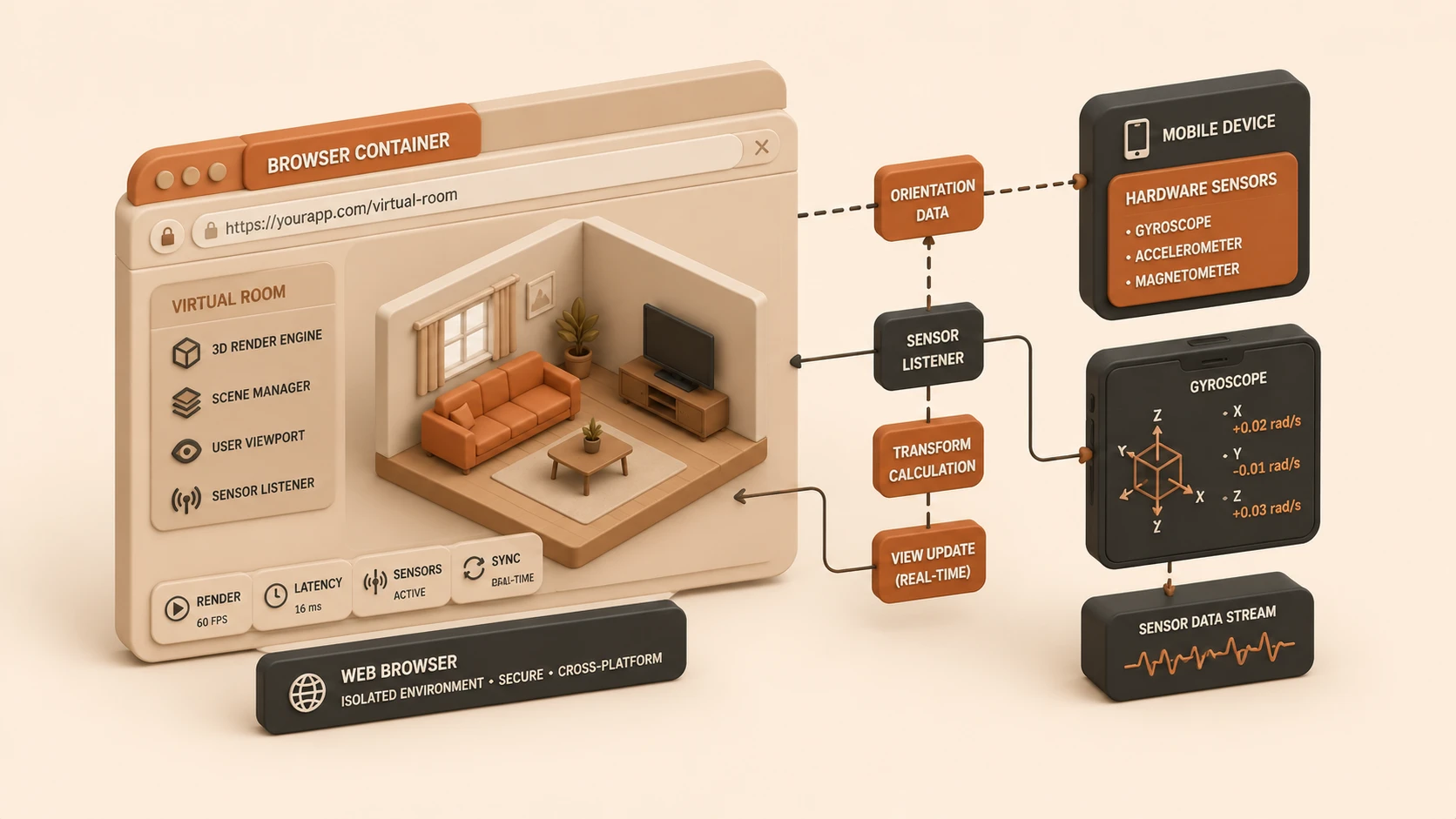
Spatial Web and the Metaverse Stack: Interfacing WebXR with Device Sensors
As WebXR matures across modern browsers, developers are beginning to explore immersive web experiences that combine virtual reality, augmented reality, and real-world device sensors. This article examines the emerging Spatial Web architecture as of July 2020, explaining WebXR fundamentals, device sensor integration, enterprise opportunities, performance considerations, and practical adoption strategies without assuming future industry outcomes.

ES11 / ECMAScript 2020: Optional Chaining, Nullish Coalescing, and BigInt Native Primitives
ECMAScript 2020 (ES11) introduces several of the most practical JavaScript language improvements in recent years, including Optional Chaining, Nullish Coalescing, BigInt, Promise.allSettled(), dynamic import(), and globalThis. This article examines these capabilities from the perspective of June 2020, focusing on enterprise architecture, application maintainability, runtime behavior, and production adoption.