Why Green Cloud 2.0 Matters
As enterprises accelerate digital transformation, cloud infrastructure has become one of the largest consumers of electricity worldwide. Massive hyperscale data centres, AI model training, continuous workloads, and global cloud services require enormous amounts of computational power, increasing both operational costs and carbon emissions.
Green Cloud 2.0 represents the next evolution of sustainable cloud computing. Instead of focusing solely on energy-efficient hardware, modern cloud platforms optimize where, when, and how workloads execute based on real-time carbon intensity, renewable energy availability, and intelligent resource utilization.
Architecture Principle: Every computing decision should optimize not only for performance and cost but also for environmental impact.
---
What Is Green Cloud 2.0?
Green Cloud 2.0 is a cloud architecture that combines sustainability principles with intelligent infrastructure management to reduce carbon emissions while maintaining enterprise-grade performance and availability.
Rather than treating sustainability as a reporting exercise, the platform continuously optimizes workload placement, infrastructure utilization, cooling efficiency, and energy consumption.
Core capabilities include:
- ◆Carbon-Aware Scheduling
- ◆Renewable Energy Optimization
- ◆AI Resource Management
- ◆Intelligent Auto Scaling
- ◆Sustainable Kubernetes
- ◆Energy Monitoring
- ◆Carbon Analytics
- ◆ESG Reporting
Together, these capabilities create environmentally responsible cloud platforms without compromising business objectives.
---
Evolution of Sustainable Computing
Enterprise cloud sustainability has progressed through several stages:
- 1.Energy-Efficient Hardware
- 2.Virtualization
- 3.Cloud Consolidation
- 4.Cloud-Native Optimization
- 5.Green Software Engineering
- 6.Green Cloud 2.0
The latest generation introduces real-time intelligence that dynamically adapts workloads according to environmental conditions.
---
Enterprise Reference Architecture
Enterprise Applications
          │
Carbon Intelligence Engine
          │
Policy & Sustainability Rules
          │
───────────────────────────────────────
│ Workload Scheduler │ AI Optimizer │
│ Kubernetes │ Multi-Cloud │ Storage │
───────────────────────────────────────
          │
Renewable Energy Services
          │
Carbon Monitoring
          │
ESG Reporting Platform
Every workload is evaluated using both operational and sustainability metrics before execution.
---
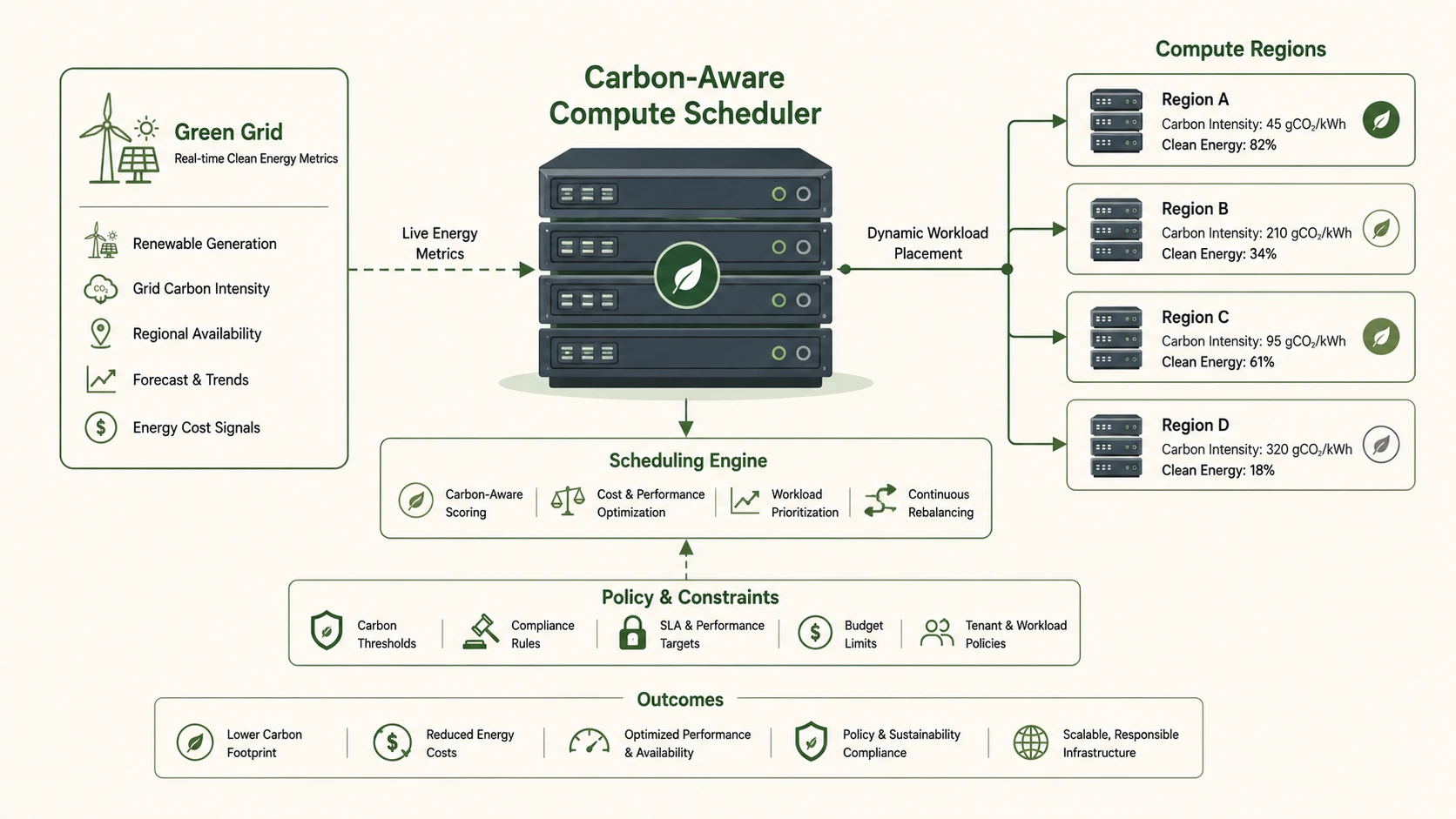
Carbon-Aware Workload Scheduling
Instead of deploying workloads to the nearest or least expensive region, Green Cloud platforms evaluate:
- ◆Regional carbon intensity
- ◆Renewable energy availability
- ◆Grid stability
- ◆Cooling efficiency
- ◆Workload priority
- ◆Latency requirements
- ◆Energy pricing
- ◆Compliance constraints
Non-critical workloads can automatically shift to regions powered by cleaner energy, significantly reducing emissions.
---
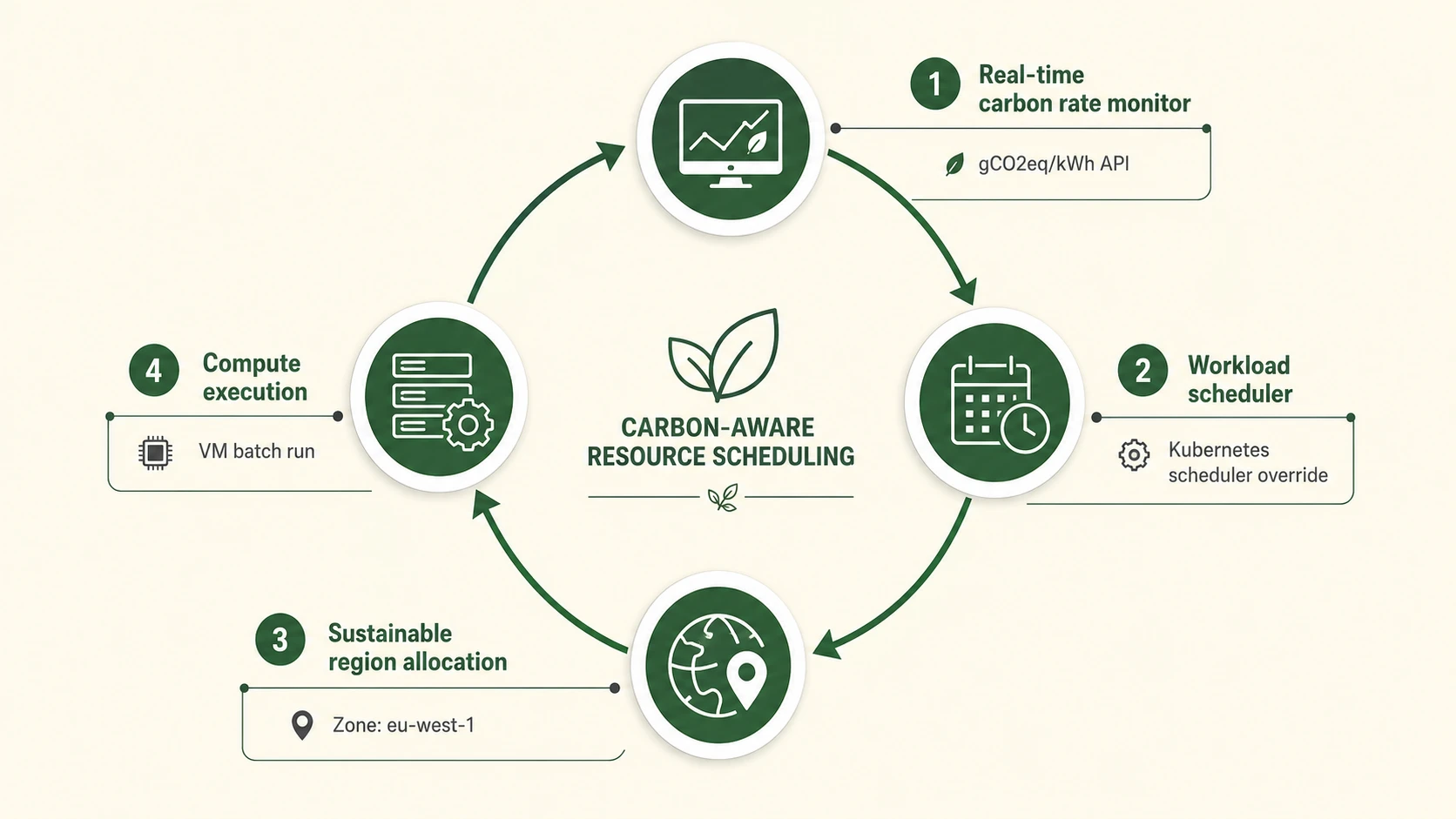
System architecture diagram and conceptual workflow layout for Green Cloud 2.0.
AI-Driven Resource Optimization
Artificial intelligence continuously improves infrastructure efficiency by analyzing:
- ◆CPU utilization
- ◆GPU consumption
- ◆Memory allocation
- ◆Storage activity
- ◆Network traffic
- ◆Cluster health
- ◆Historical demand
- ◆Renewable energy forecasts
Based on these insights, the platform scales resources intelligently while minimizing wasted energy.
---
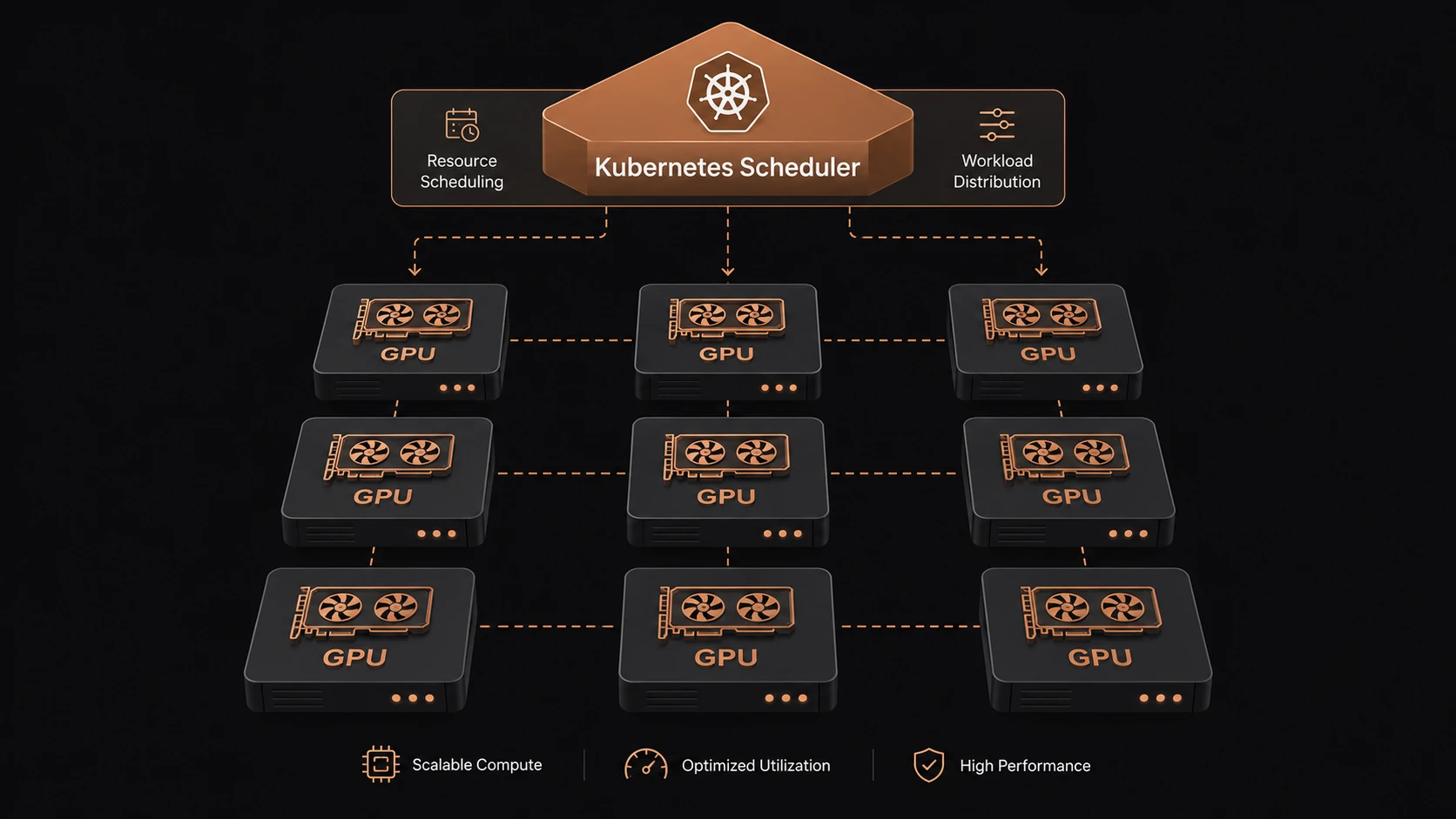
Sustainable Kubernetes
Container orchestration plays a key role in Green Cloud strategies.
Modern Kubernetes platforms support:
- ◆Bin packing optimization
- ◆Predictive auto scaling
- ◆Idle workload consolidation
- ◆Intelligent node scheduling
- ◆Spot instance utilization
- ◆Cluster rightsizing
- ◆Resource quotas
- ◆Energy-efficient deployments
These capabilities reduce infrastructure waste while maintaining application reliability.
---
Measuring Sustainability
A mature Green Cloud platform continuously measures:
- ◆Carbon emissions
- ◆Energy consumption
- ◆Renewable energy usage
- ◆Infrastructure utilization
- ◆Cooling efficiency
- ◆Cost per workload
- ◆Carbon per transaction
- ◆ESG compliance metrics
Real-time sustainability metrics help engineering teams make environmentally informed decisions.
---
Enterprise Benefits
Organizations adopting Green Cloud 2.0 typically achieve:
- ◆Lower carbon emissions
- ◆Reduced cloud costs
- ◆Higher infrastructure utilization
- ◆Better ESG compliance
- ◆Improved energy efficiency
- ◆Smarter workload placement
- ◆Stronger operational resilience
- ◆Enhanced sustainability reporting
Sustainability becomes a measurable engineering outcome rather than a corporate aspiration.
---
Best Practices
| Area | Best Practice |
|---|---|
| Scheduling | Carbon-Aware Workload Placement |
| Infrastructure | Green Kubernetes Clusters |
| Optimization | AI Resource Management |
| Monitoring | Real-Time Carbon Analytics |
| Governance | Sustainability Policies |
| Energy | Renewable-First Computing |
| Operations | Continuous Efficiency Optimization |
| Reporting | Automated ESG Metrics |
---
The Future of Sustainable Cloud Computing
Cloud infrastructure is evolving toward intelligent platforms capable of balancing performance, cost, resilience, and environmental responsibility simultaneously. Green Cloud 2.0 extends cloud-native engineering with carbon-aware decision-making, renewable energy integration, and AI-driven optimization to build infrastructure that is both powerful and sustainable.
Organizations investing in Green Cloud 2.0 today will reduce operational costs, strengthen ESG initiatives, improve resource efficiency, and create resilient cloud platforms that support long-term digital growth while minimizing environmental impact.