Agentic AI
Viewing all posts categorized under Agentic AI.

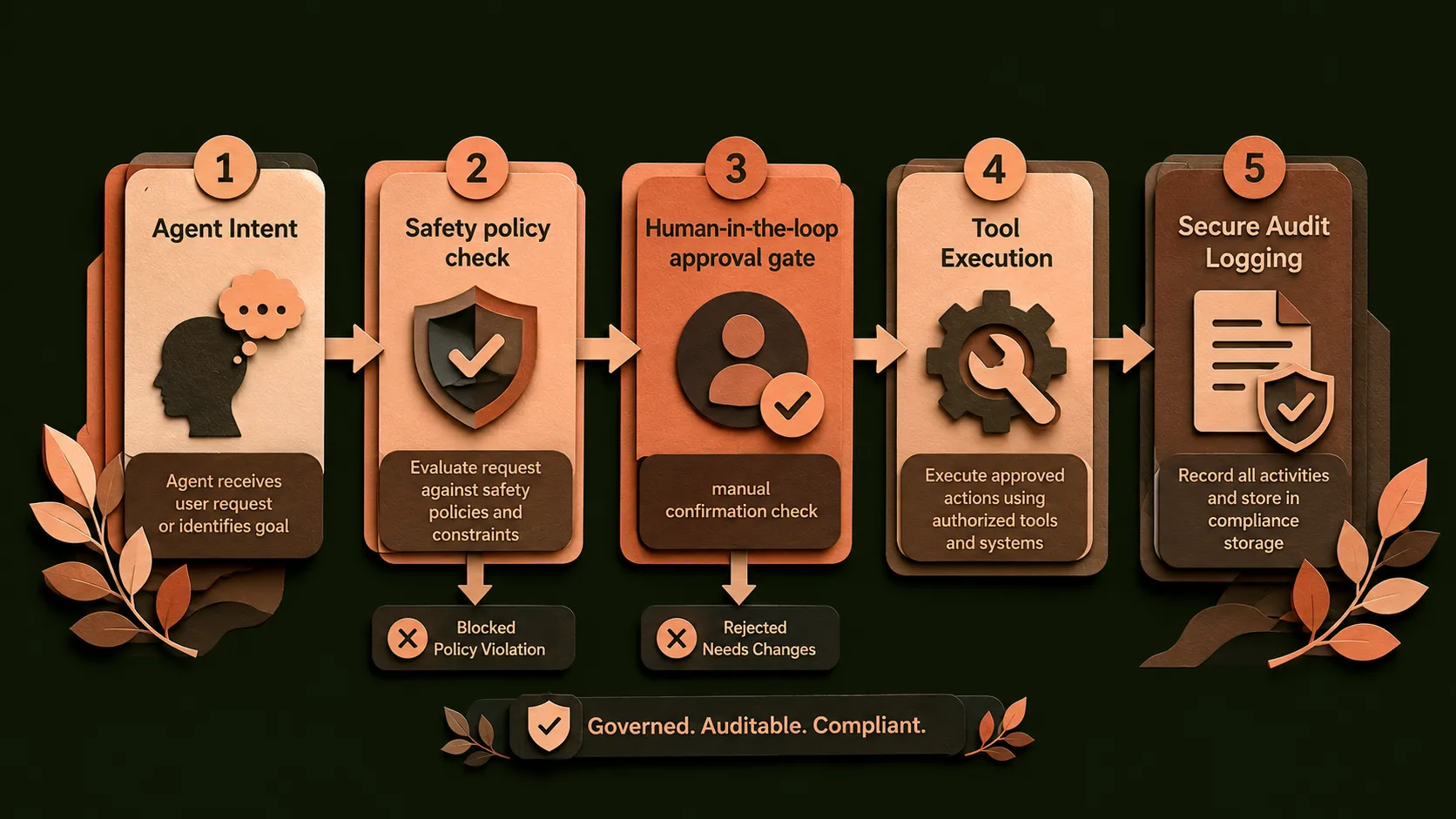
The CIO's Guide to AI Agent Governance
A CIO's guide to establishing robust AI Agent Governance. Learn about audit trails, human-in-the-loop (HITL) systems, and compliance strategies for secure enterprise AI adoption.

Modernize Legacy .NET Applications with Agentic AI: Zero-Rewrite
Unlock the power of Agentic AI to modernize legacy .NET applications without a full rewrite. Learn architectural patterns, implementation steps, and best practices for enterprise success.

6 Stages of Agentic Execution for Enterprise AI
Discover the 6 critical stages of Agentic Execution, a blueprint for building autonomous AI systems that learn, plan, and act in complex enterprise environments.

How to Build HIPAA-Compliant AI Agents: A Governance Checklist for Healthcare CTOs
Deploying HIPAA-compliant AI agents in healthcare demands strict governance. This checklist helps CTOs navigate PHI, ensure data privacy, and maintain regulatory compliance.

The 5 Patterns of Multi-Agent Orchestration: Sequential, Parallel, Hierarchical, Handoff, and Loop
Dive into the 5 core patterns of Multi-Agent Orchestration: Sequential, Parallel, Hierarchical, Handoff, and Loop. Learn to design scalable, intelligent AI workflows for your enterprise.
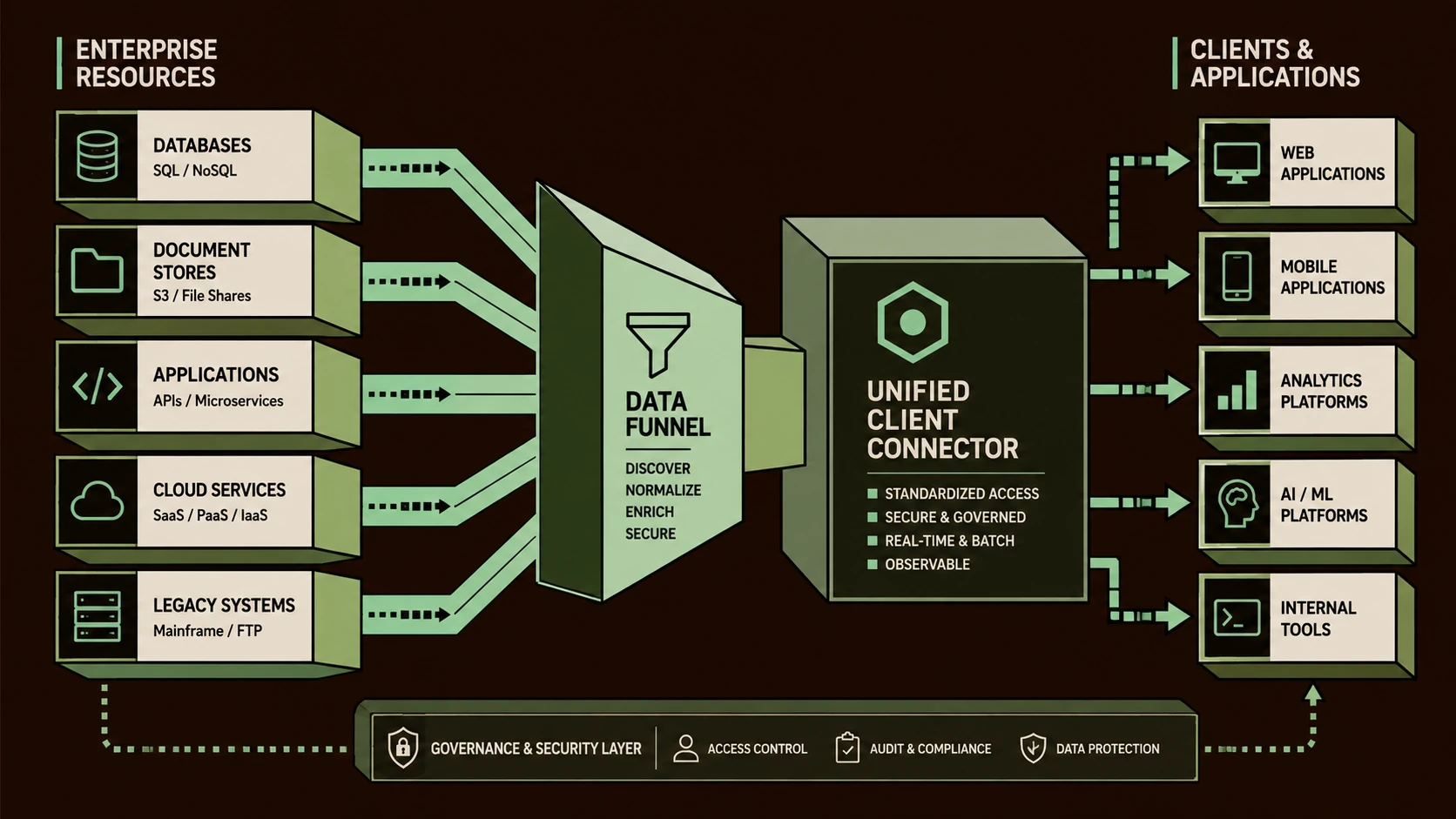
MCP Protocol Explained: Building the Agent Internet for Enterprise
The Model Context Protocol (MCP) is emerging as a standardized communication protocol that enables AI agents, large language models, and enterprise applications to securely discover, access, and interact with external tools, data sources, APIs, and business systems. Rather than building custom integrations for every AI application, organizations can adopt MCP to create reusable, secure, and interoperable connections across enterprise software. This guide explains MCP architecture, core components, communication flows, security considerations, enterprise deployment models, governance, and implementation best practices for building the next generation of agent-native systems.

How to Reduce OpenAI API Costs by 70% Without Downgrading Your Models
OpenAI API costs can increase rapidly as AI applications scale, but reducing expenses does not necessarily require switching to smaller models. By optimizing prompt engineering, context management, caching, retrieval strategies, request routing, batching, and workflow architecture, organizations can significantly lower API spending while maintaining response quality. This guide explains enterprise-grade cost optimization techniques, architectural patterns, performance trade-offs, and operational best practices for building efficient AI applications.

What Is Multi-Agent Orchestration? The Complete 2026 Technical Guide
Multi-agent orchestration is the architectural discipline of coordinating multiple specialized AI agents to work together toward shared business objectives. Rather than relying on a single general-purpose agent, enterprise organizations increasingly deploy teams of autonomous agents responsible for planning, reasoning, collaboration, execution, and governance across business systems. This guide explores orchestration architectures, communication models, planning strategies, coordination patterns, security, observability, scalability, enterprise adoption, and implementation best practices.

What Is Agent-Native Software Architecture? A Practical Guide for Enterprise Leaders
Agent-native software architecture is redefining how enterprise applications are designed by placing autonomous AI agents at the center of business execution. Unlike traditional applications that follow predefined workflows, agent-native systems can reason, plan, collaborate, use enterprise tools, and adapt to changing business conditions. This guide explores architectural principles, core components, governance, orchestration, multi-agent systems, security, scalability, implementation strategies, and enterprise adoption patterns to help technology leaders build intelligent software for the AI era.

Is ASP.NET Core Still Relevant in 2026? Yes, and Here’s Why
Is ASP.NET Core still relevant in 2026? Absolutely. While JavaScript ecosystems dominate rapid product development and Python leads AI workloads, ASP.NET Core remains a powerful choice for secure, scalable, maintainable, and mission-critical enterprise systems. The future is not one framework—it is intelligent architecture using the right technology for each workload.

Why Multi-Model AI Is Becoming the New Enterprise Standard
Enterprise AI is moving beyond the search for one perfect model. Multi-model architectures enable organizations to intelligently route workloads across different AI models based on capability, cost, latency, security, compliance, and availability—creating more efficient, resilient, and future-ready AI systems.
The Next Enterprise Gold Rush Is Not AI Models — It Is AI Governance
Most enterprises know how many employees they have. Few know how many AI agents are operating inside their business, what data they access, what decisions they make, or how much they cost. The next enterprise AI challenge isn't creating more agents—it's governing them.

What Microsoft Build, Google, and AWS Actually Announced
Microsoft Build 2026, Google I/O 2026, and AWS's latest announcements reveal a common industry direction. Beyond new AI models and developer tools, all three companies are investing in agentic platforms, enterprise context, and production-ready AI infrastructure. This article examines what was actually announced and what it means for enterprise technology leaders.

Commander Architecture: How We Cut AI Costs by 70% in Production
A detailed technical breakdown of how Claude Opus as Supreme Commander + local Qwen agents via Ollama creates a multi-agent system that delivers 40–70% AI infrastructure cost reduction — with real numbers.

Thick Clients to Thick Agents: The .NET Migration Playbook
Enterprise .NET applications are entering a new architectural era. This guide explores how organizations can systematically migrate traditional thick-client applications toward AI-powered thick agents while preserving business logic, security, governance, and operational stability.